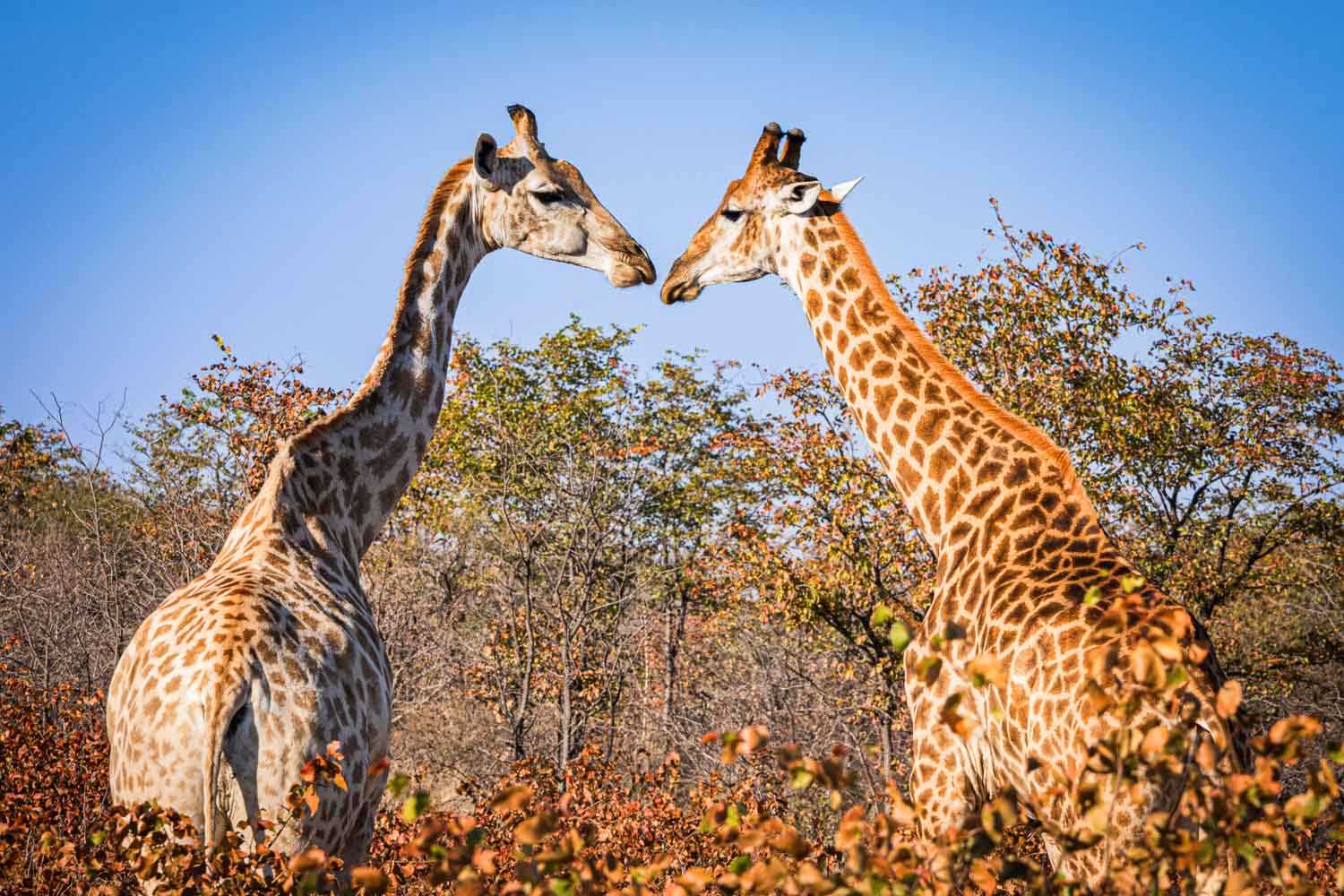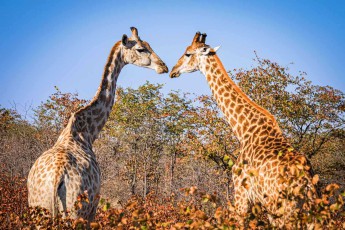
Two necks, one gaze: a pair of giraffes rises above the bush at Lotsane – they came to the reserve only after the land had been cleared.
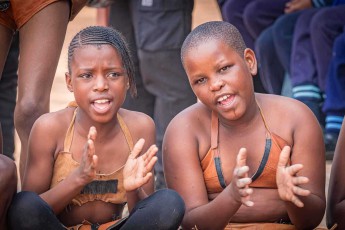
Clapping in time, two girls in leather costumes sing – they provide the music for the dance performance.
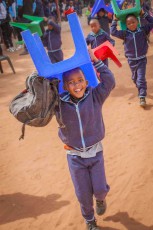
Plastic chair on his head, rucksack in hand: after the performance, a boy heads back to his classroom.
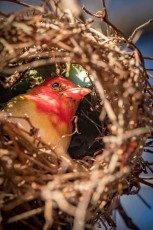
In the entrance of his nest: unlike other weavers, the red-headed weaver builds it not from grass but from twigs and leaf stalks.
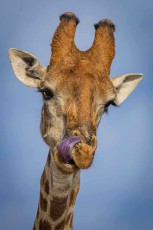
Facing the camera, a giraffe runs its dark tongue over its nostrils – a giraffe’s tongue can grow up to half a metre long.
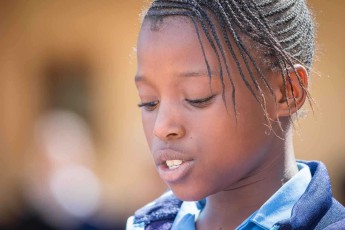
Eyes lowered, her braids pulled tight, a pupil recites something for the guests.
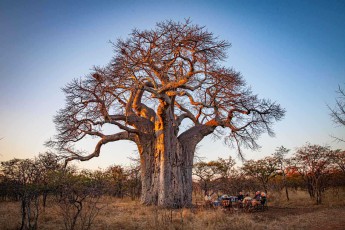
Sundowners at the baobab: guests sit at the foot of the tree – its trunk stores water for the dry season.
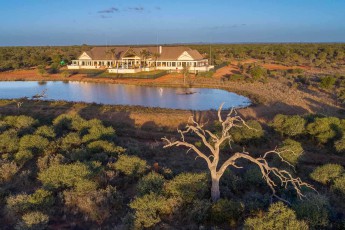
From the air: Shaturia Manor presides over a waterhole, a dead tree spreading its white branches in front – one of Lotsane’s four houses (photo by Lotsane Lodge).
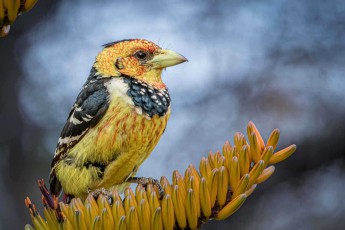
Yellow, black-spotted, with a scruffy crest: a crested barbet in an aloe on Molope Farm – it eats mainly insects, along with fruit and snails.
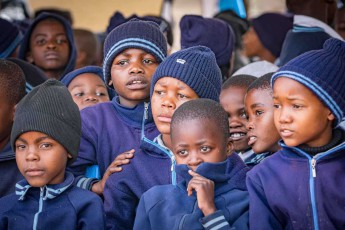
Blue hats, blue jumpers – in the playground of Moletemane Primary School, the audience for the performance crowds together.
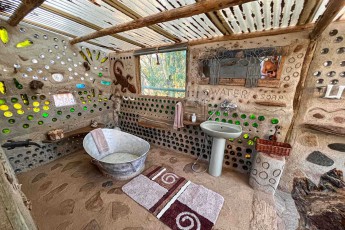
Glass instead of windows: in the bathroom of the Bottle House on Molope Farm, bottle ends glow in the clay wall – below them waits a zinc tub.
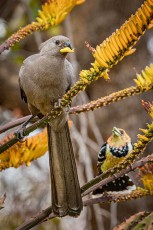
On Molope Farm, a grey go-away-bird plucks flowers from an aloe while a crested barbet peers out below – the go-away-bird owes its name to a call that sounds like ‘go away’.
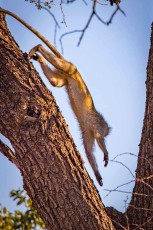
Head first, a vervet monkey leaps from the trunk – these monkeys live in troops and also forage on the ground.
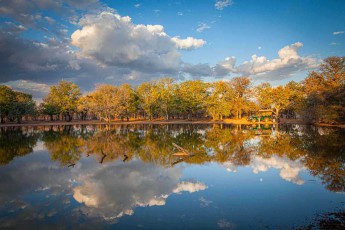
Clouds and trees are mirrored in the still water, the safari vehicle parked on the bank – Lotsane spaces its waterholes far apart, so that the herds keep moving.
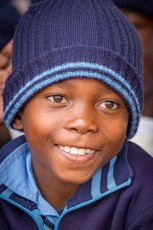
A broad grin under a knitted hat – a pupil of Moletemane Primary School watches the performance.
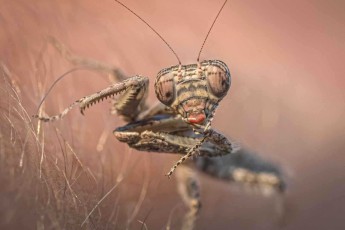
Barely a centimetre long, a young praying mantis climbs across my forearm – even the nymphs carry the grasping forelegs of the adults.
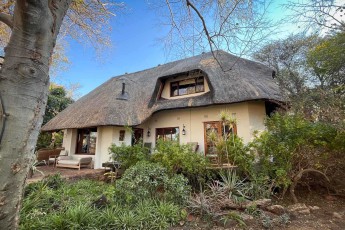
Thatched roof, veranda, greenery right up to the door: the Out of Africa House on Molope Farm is the first stay of the trip.
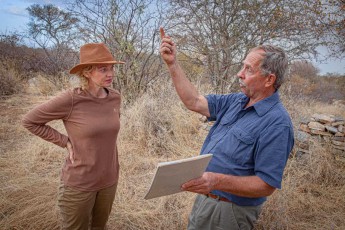
Wim Biemond points upwards, a display board in his hand, while Petra Schorr, owner of Lotsane, listens.
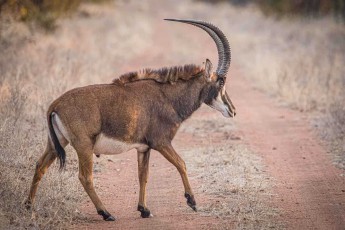
Horns curving far back, a sable antelope crosses the track – Lotsane brought the species in deliberately.
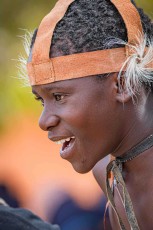
Leather headband, feathers behind his ear: a pupil dances in the performance for the guests.
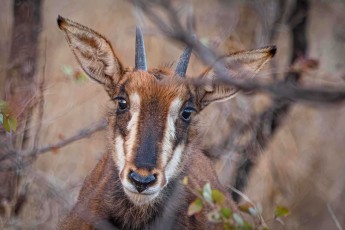
Watchful in the undergrowth: a sable calf – only the bulls will later turn black.
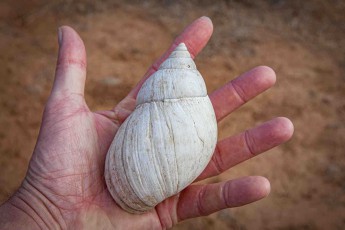
The empty shell of a giant African land snail almost fills the palm of a hand – in the dry season these snails burrow in and wait for rain.
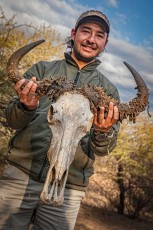
Braam holds the wildebeest skull up to the light – the small tubes on its horns are the nursery of the horn moth.
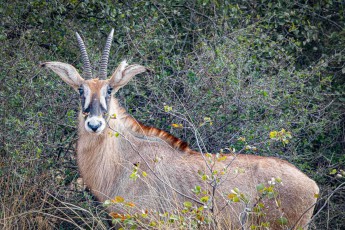
Tufted ears, black-and-white face mask: a roan antelope at the edge of the bush – after the eland it is Africa’s second-largest antelope.
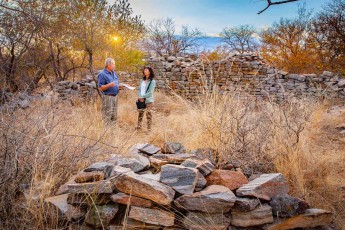
Evening light over the Lotsane ruins: Wim Biemond explains the site to Jutta Lemcke – the granite walls are stacked without mortar.
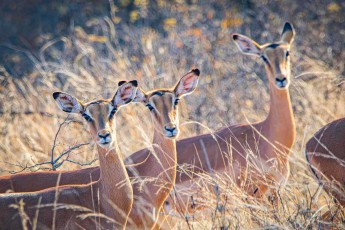
Three female impala lift their heads above the dry grass – in this species only the rams carry horns.