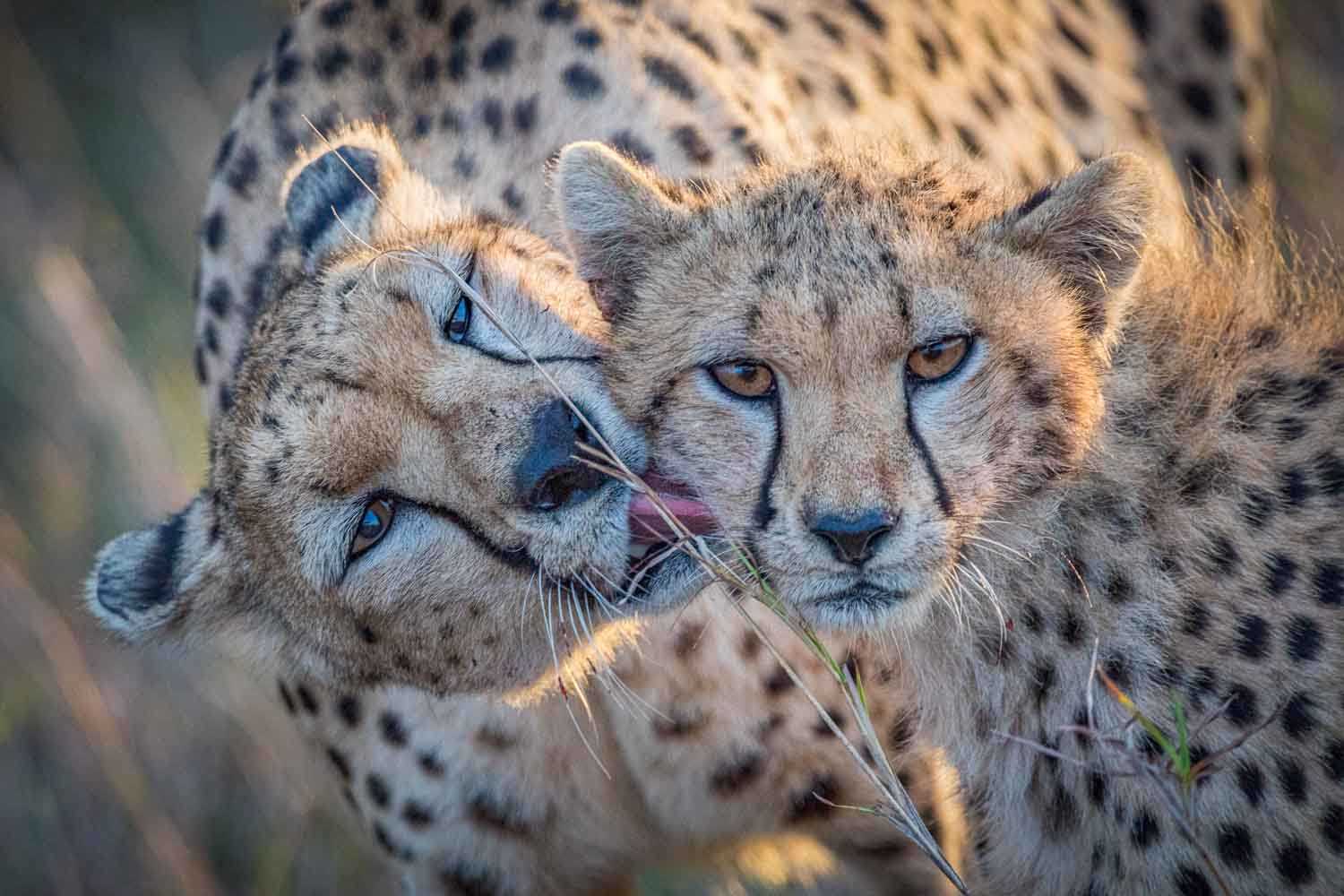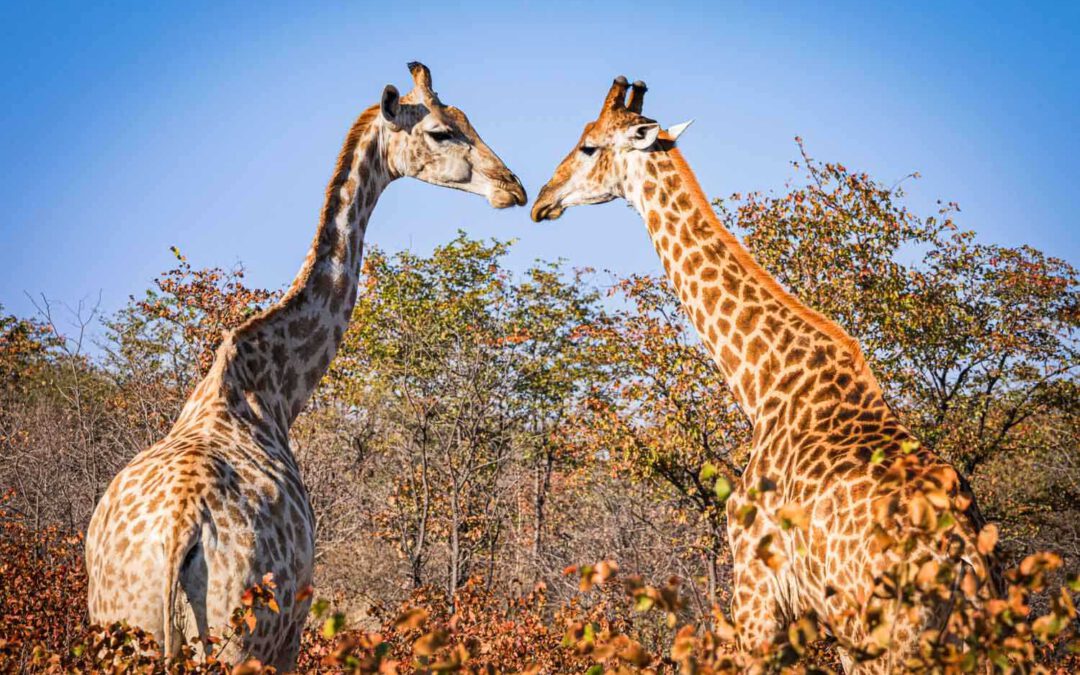
In the last light a cheetah mother cleans her cub's face – the young stay with her for around a year and a half, learning to hunt from her during that time.
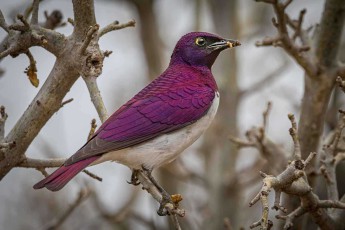
Like a living gemstone, the violet-backed starling sits enthroned in the bare branches. Depending on the angle of the light, its plumage shifts from violet to almost black.

Flight back to Kilimanjaro: hill country under cumulus clouds.
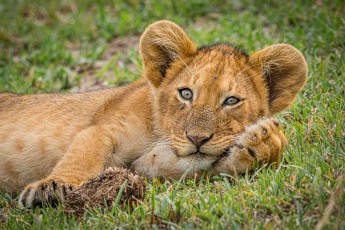
This lion cub is only two and a half months old; the spots on its belly and legs fade over time.
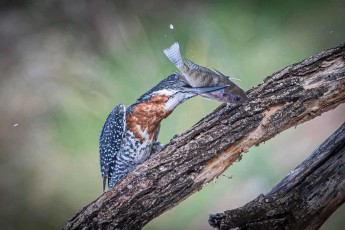
A giant kingfisher beats a tilapia against the dead branch until it stops struggling – at 46 centimetres it is Africa's largest kingfisher.

A dung beetle braces itself against its ball of dung – it rolls it backwards and steers by the sky: by the sun, the moon, and at night even by the band of the Milky Way.
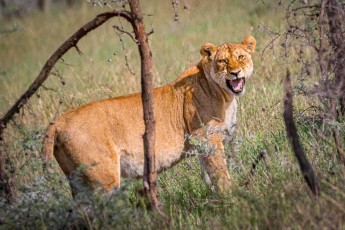
Roaring, a lioness bares her teeth – we startled her on our walk.
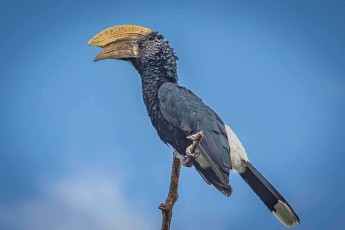
The hornbill's casque is hollow and amplifies its loud call.
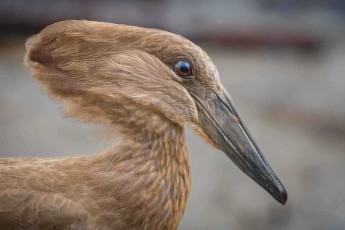
A hamerkop with a focused gaze. The head shape that gives it its name comes from its heavy bill and bushy crest. Its nest is among the largest of any bird – up to two metres across.
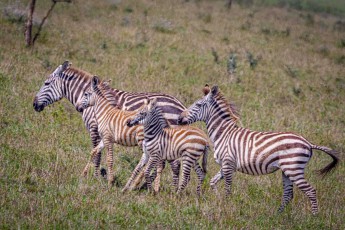
Two zebra foals among the adults, their stripes still brown rather than black – the pigment only darkens over the following months of their lives.

Fischer's lovebirds live almost exclusively in northern Tanzania; the Serengeti is the centre of their small range.
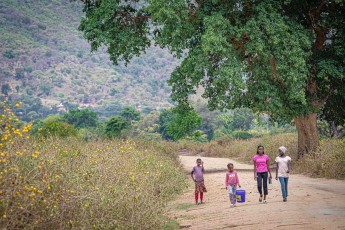
Near the steep wall of the East African Rift Valley, under the spreading canopy of a fig tree, a dusty path leads from village to village. The yellow fruits of the Sodom apple glow along the edge of the path.
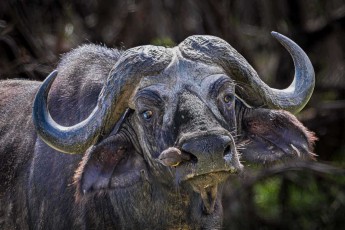
A Cape buffalo fixes us with a stoic stare. Dried mud covers its massive horn boss, while an oxpecker pecks at its nose for parasites.
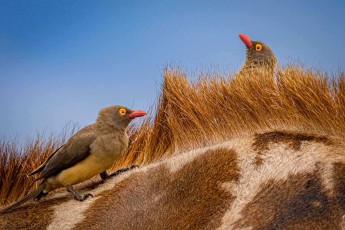
Two red-billed oxpeckers in the mane of a Masai giraffe. The birds pick ticks from its coat and raise the alarm with sharp calls.

With amber eyes, a Sykes' monkey studies me from its high perch in a tree.
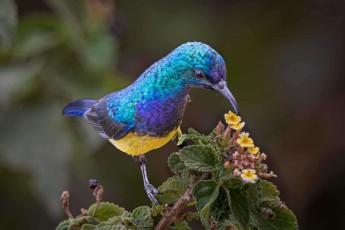
A variable sunbird dips its curved bill into a bloom. Its plumage shimmers in electric blue and turquoise, the bright yellow breast a vivid counterpoint – a flying gemstone.
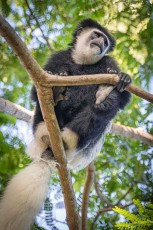
A mantled guereza sits enthroned in the canopy. Its bushy tail, which can reach a length of up to 90 cm, is particularly striking.
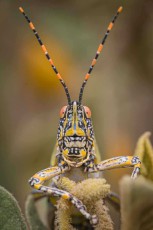
A Zonocerus elegans grasshopper. Its yellow-and-black warning colours and ringed antennae signal: hands off – when threatened, it sprays a foul-smelling secretion.
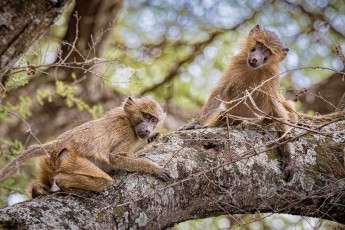
Two young yellow baboons play on a lichen-covered branch. Their amber eyes scan their surroundings attentively, while their fur shimmers in the filtered light of the acacia canopy.

Motionless, a little bee-eater waits on its perch. Its olive-green plumage with golden-yellow throat nearly melts into the background – until a bee buzzes past and the little hunter strikes with lightning speed.
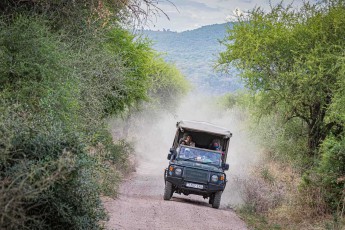
An off-road vehicle makes its way between green thorn bushes and acacia trees at Lake Manyara.
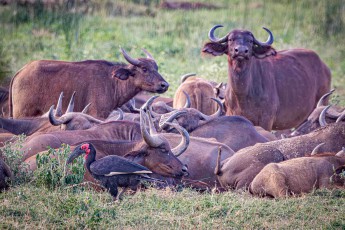
A southern ground hornbill struts through the grass in front of resting Cape buffalo. The ground-dwelling bird searches for snakes, lizards and insects.
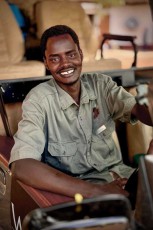
Lekitony Kesoy, 26, a guide at Lake Manyara, at the wheel of his open off-road vehicle – a few minutes later our Cessna takes off for the Serengeti.
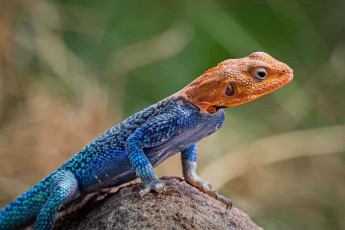
A male red-headed rock agama basks on a boulder. The vivid orange-red head and cobalt-blue body signal dominance and readiness to mate. The more intense the colouring, the higher its rank within the colony's hierarchy.
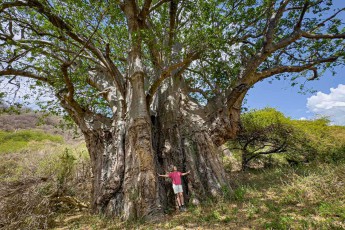
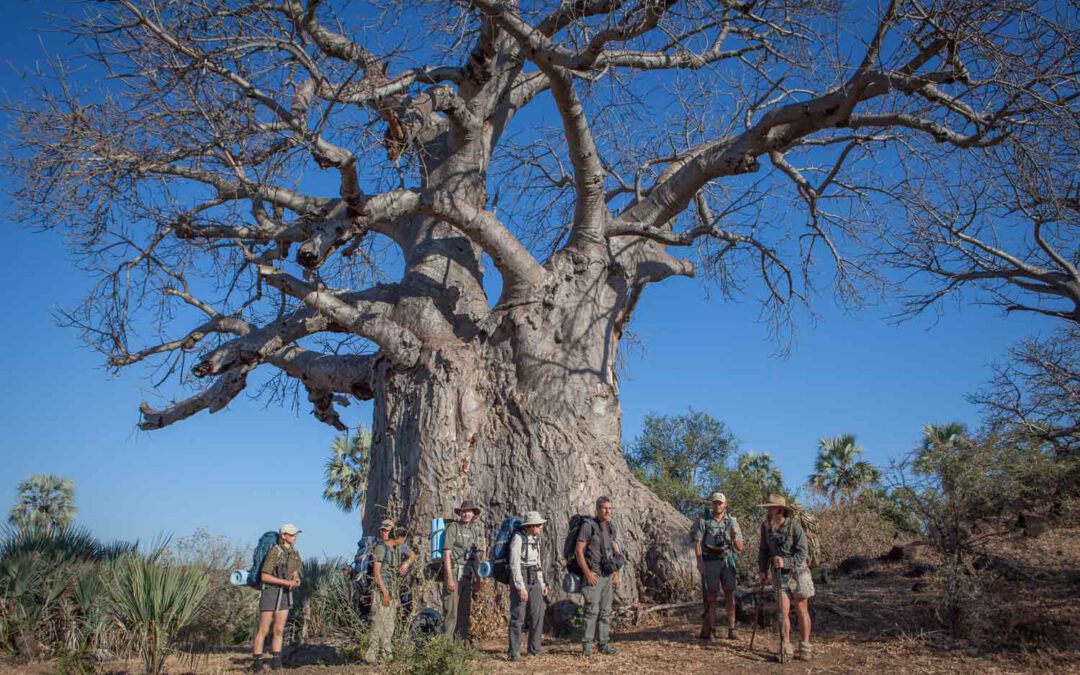
Annette spreads her arms – and looks like a miniature in front of the mighty trunk of a baobab. The tree can live for more than 2,000 years and stores up to 100,000 litres of water in its spongy wood.

Annette paddles between drowned acacias, the guide holding the course astern – Lake Manyara has no outflow, and when heavy rains raised its level, no shoreline woodland survived the salt water. The bare trunks mark where land stood until recently.
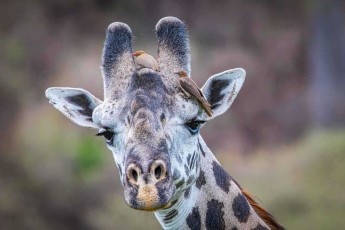
Two red-billed oxpeckers on the head of a Masai giraffe. They work through folds of skin in search of ticks, but also keep wounds open and drink blood. Whether they help or harm is still debated among biologists.
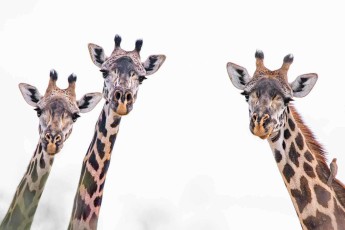
Three Masai giraffes stand silhouetted against the shimmering lake – their spot patterns are as individual as fingerprints and remain unchanged for life.
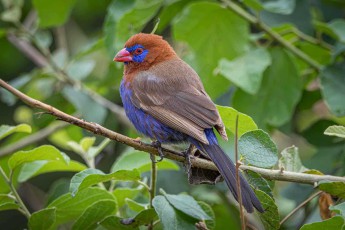
A cobalt-blue mask around a red eye, plus a carmine bill – a male purple grenadier in morning light. The female wears the same markings in muted tones.
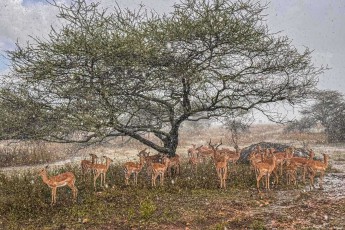
Huddled together, impalas seek shelter from the rain shower beneath an umbrella acacia – anyone standing here is also on the menu of lions, leopards and wild dogs.
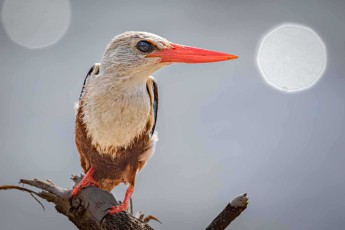
A grey-headed kingfisher waits on dead wood, its coral bill set against the hazy light – unlike most kingfishers it rarely hunts at the water, taking grasshoppers and lizards in dry bush country instead.

Farewell to Lake Manyara from the window of the Cessna: in the distance the highlands disappear beneath a veil of rain.
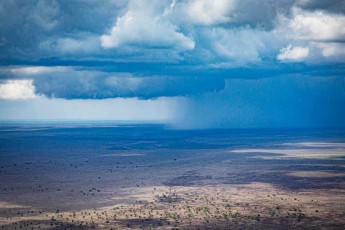
It is the rainy season in East Africa: a grey curtain of rain reaches the Serengeti plain and turns parched grass green within days.
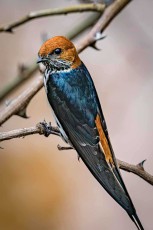
Rufous crown, streaked breast, long tail streamers: a lesser striped swallow. It builds its nest from mud.
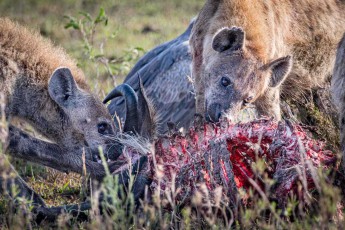
Spotted hyenas at a wildebeest carcass, the vultures waiting behind. In the Serengeti more than 400 vultures were poisoned within two years, often by poachers who do not want circling birds to give them away.
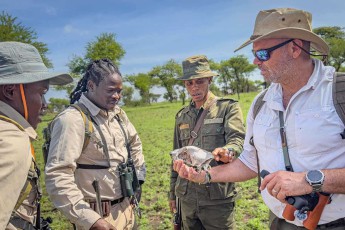
On foot you find what you would never see from the vehicle: this hyena skull, for example. Hyena tracks are easy to recognise – unlike lions, hyenas cannot retract their claws, and these leave clear marks in the print.
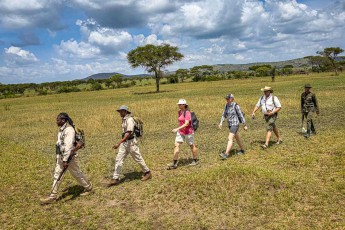
On foot through the Serengeti: the guides in front, the ranger with his rifle at the back, Annette in between. The park authority permits no walking safari without an armed escort.
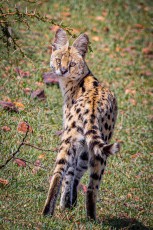
The serval turns its head towards the vehicle only briefly. No cat has larger ears in proportion to its body. With them, the serval can hear rodents even underground.
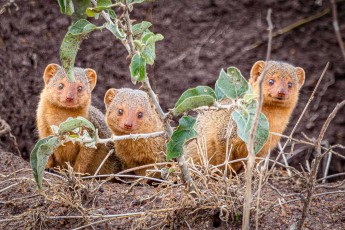
Three dwarf mongooses peer out of their burrow. Weighing under 350 grams, the species is Africa's smallest carnivore.
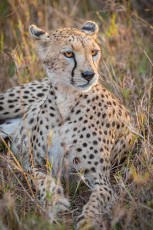
The cheetah lies in the long grass, her eyes on the plain. Her black tear marks, so the usual explanation goes, reduce the glare when she hunts by day.
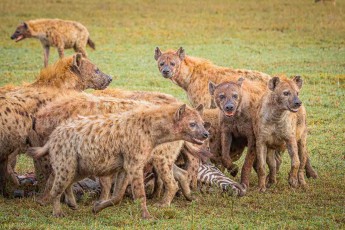
More than 25 spotted hyenas crowd around a dead zebra, while a black-backed jackal waits at the edge for scraps – “Everything here is somehow food for someone,” says our guide.
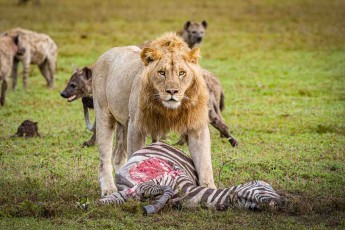
The lion defends the zebra against the hyena clan – two and a half to three years old, the guide reckons, his mane still short and pale.
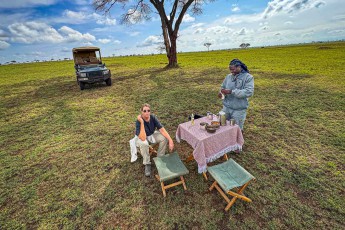
A coffee break in the middle of the plain, in the shade of an acacia: folding stools, a tablecloth, a pot and tin mugs – guide Hesekiel Msangi pours, Annette waits.
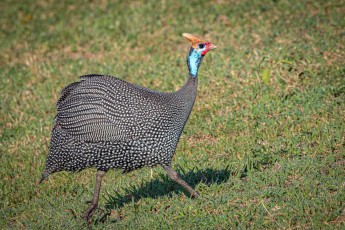
A helmeted guineafowl dashes across the grass, on its head the bony casque that gives it its name. “They taste like chicken,” remarks guide Hesekiel.
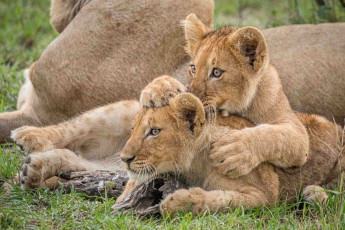
While the lioness dozes on her back, one cub gets the other in a headlock.