Drums, flutes, shouts, ecstasy.
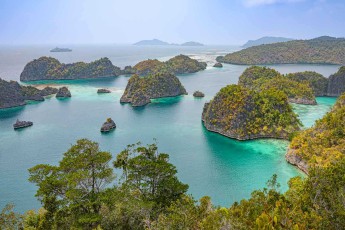
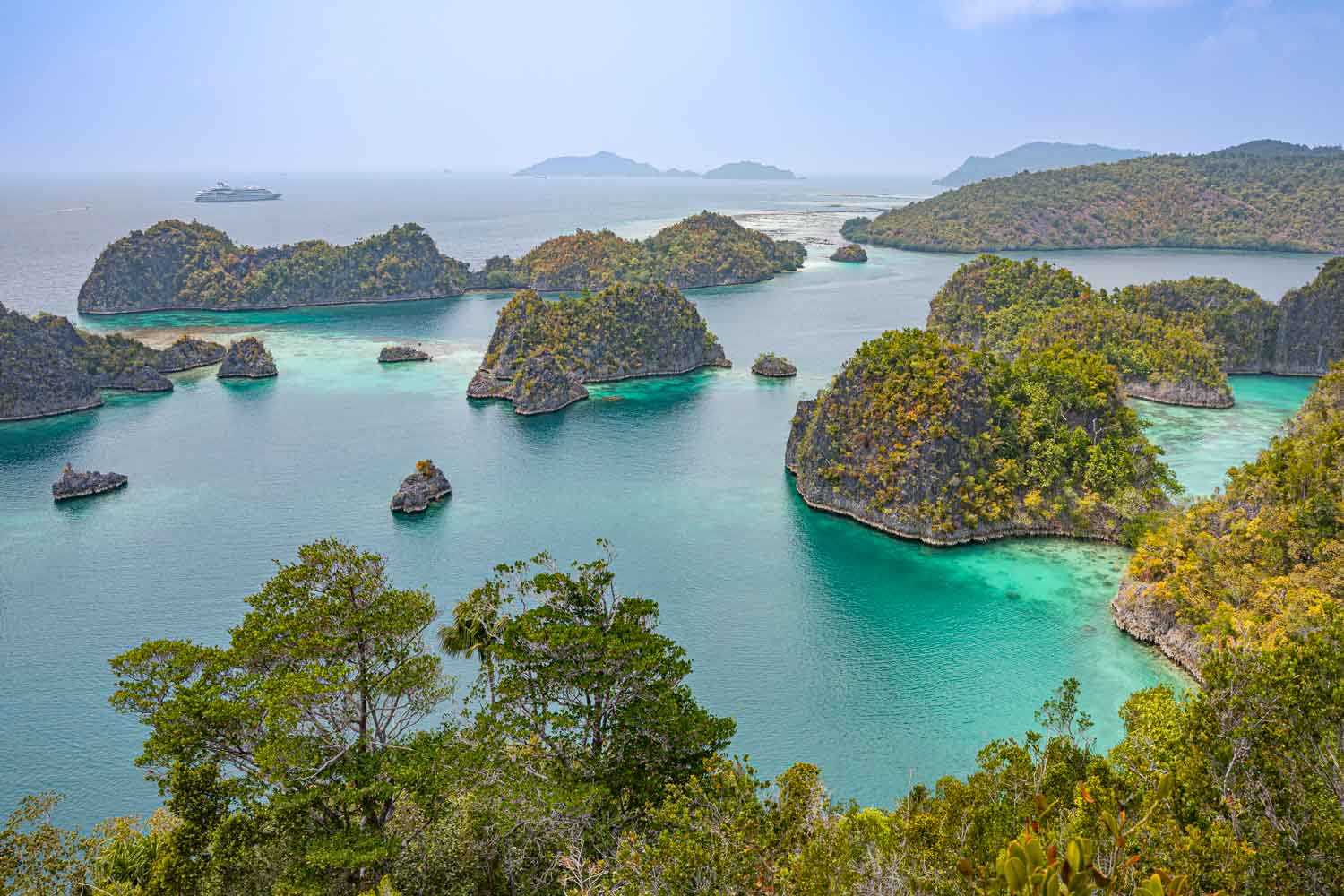
Cone beside cone in turquoise basins, the ship out in the haze – this same landscape is on the back of the hundred-thousand rupiah note.
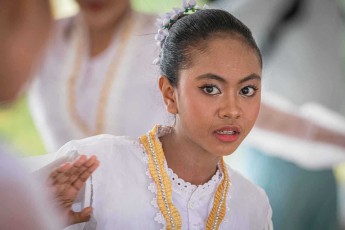
Lenso: the welcome dance of Ambon.
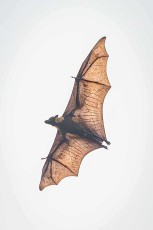
Backlit, the wing membrane glows and shows the bones inside it.
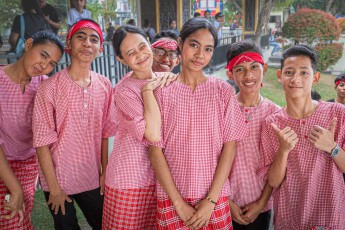
Red and white checked dress, red headbands – the check is called cele, and in the Moluccas it is the national costume.
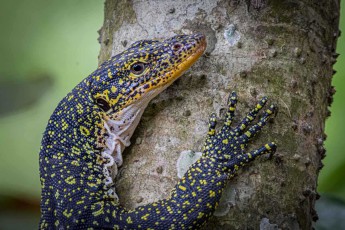
The Kei monitor was described as a species of its own only in 2019, and lives on these islands alone.
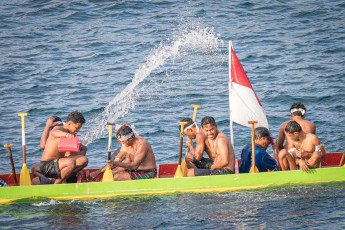
Banda Neira greets its guests with a kora-kora ritual. It is sweating work in those Moluccan longboats, and water goes flying over the line of rowers often enough.
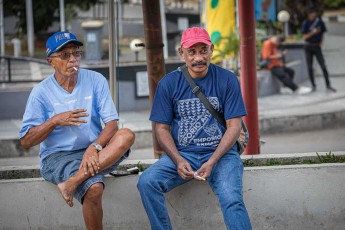
Two men in conversation on a square in the middle of Ambon.
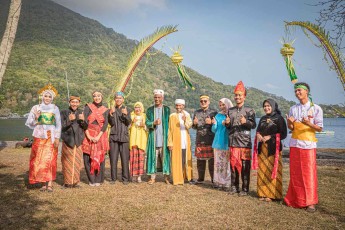
The full welcoming committee: thirteen festival costumes, two arches of young coconut fronds, and behind them Gunung Api at 640 metres.
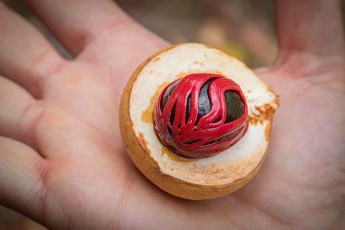
Split open in a palm: pale flesh, and beneath it the scarlet aril webbed around the dark kernel – one fruit, two spices: mace and nutmeg.
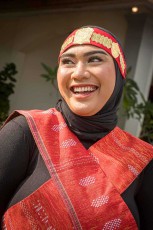
A member of the welcoming committee on Banda Neira.
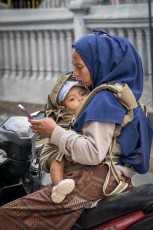
A carrier strap across the chest, a phone in the free hand, the scooter idling – in Banda Neira the motorbike is car, delivery van and school bus in one.
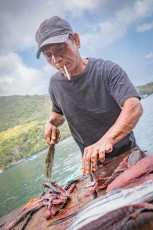
A cigarette in the corner of his mouth, the knife already deep in the dark red flesh – skipjack tuna, cakalang here, is the islands' second livelihood beside nutmeg.
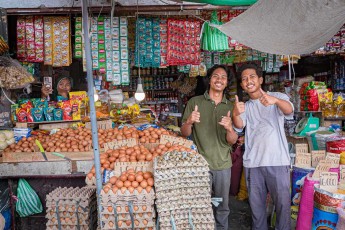
Ambon: at the market everything comes in the smallest quantity that will sell.
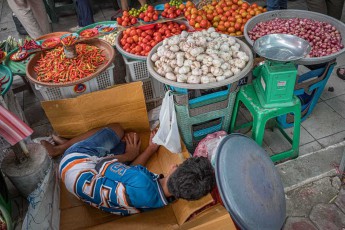
Flattened cardboard for a mattress, garlic, shallots and the spring balance above – in the press of Ambon's market people sleep where they work.
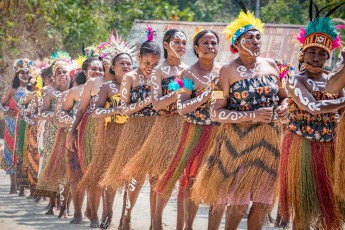
Skirt beside skirt of dyed plant fibre, white hearts and spirals on the skin – the traditional dress is shown with pride.
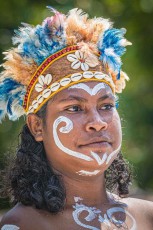
Dyed feathers above a band of cowrie shells – in the New Guinea highlands these shells were money into the twentieth century.
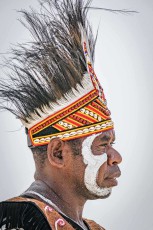
In profile, the crest of feathers from the cassowary, the largest bird on the island.
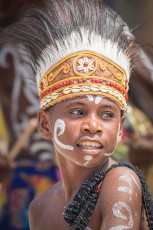
Black and white feathers above the bark band, and on the cheek the spiral, made of lime, the bedrock of these islands.
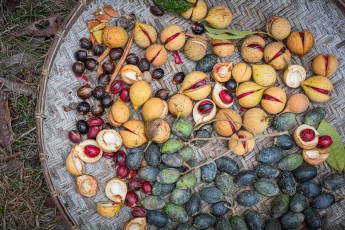
Every stage lies side by side on the woven tray: yellow fruit just before it splits, scarlet mace, kernels dried almost black, and dark kenari nuts – whose trees give the shade that young nutmeg trees need to come on.
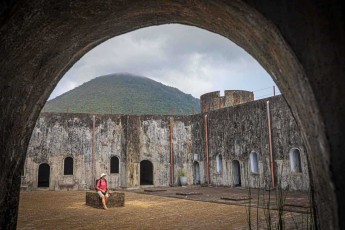
The courtyard opens through a dark vault, Gunung Api standing cloud-capped behind it – Fort Belgica went up on the hill above the town from 1611, to secure the nutmeg and to cow the Bandanese.
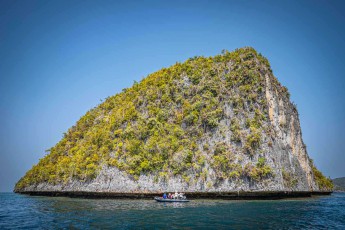
Over thousands of years the surf has worn the limestone away at tide level.
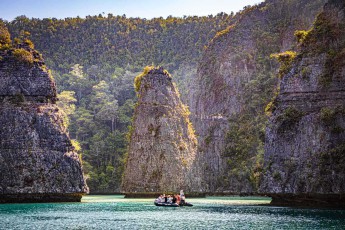
In basins like this the water barely moves; it exchanges through narrow gaps.
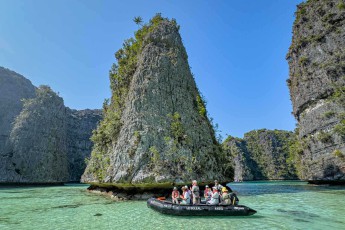
A tower in the middle of the karst lagoon.
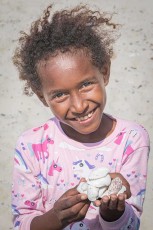
Hands full of shells picked up along the beach – the white sand the girl is standing on is nothing but ground-up shell and coral limestone.
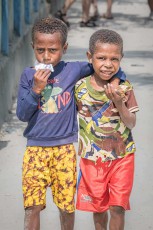
Two friends arm in arm on the village path.
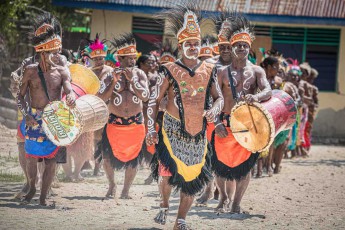
Black feather crests above painted headbands, white spirals on the skin, sixty villagers on the march.
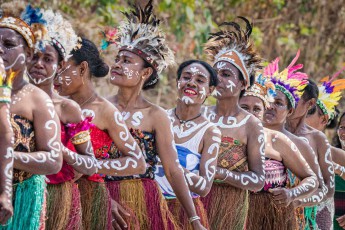
Dyed fibre skirts, everyday sarongs – from the child to the white-haired woman, everyone is in it.
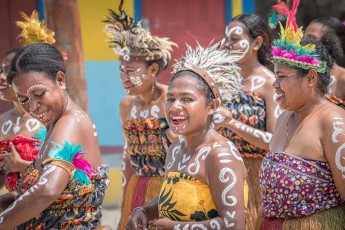
Again and again the line tips over into laughter and the feather crowns slip – the choreography holds; the solemnity not always.
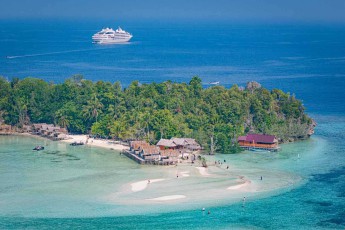
The island of Kri from the air: a few roofs among the palms, sandbanks in front, Le Soléal behind.
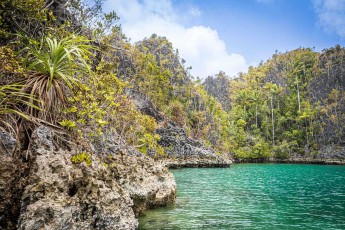
Razor-edged limestone with a screw pine anchored in it. Rain dissolves the rock and opens the pockets where soil can gather.
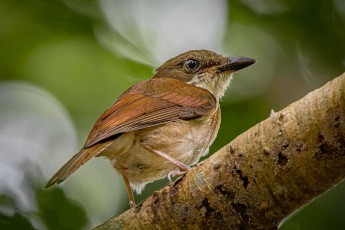
A brown back, a white throat, a heavy bill – an island whistler on the Kei Islands.
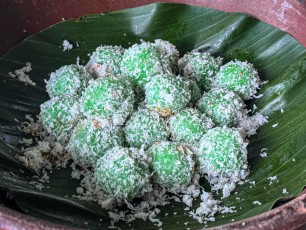
Delicious! Green balls in a coat of coconut on a banana leaf – inside sits solid palm sugar that turns liquid in the pot and runs out at the first bite.