

Published in:

The Stuttgarter newspaper is one of Germany’s leading quality media outlets.
The travel editorial team has been named the best in Germany three times in a row.
Text & photos: Malte Clavin
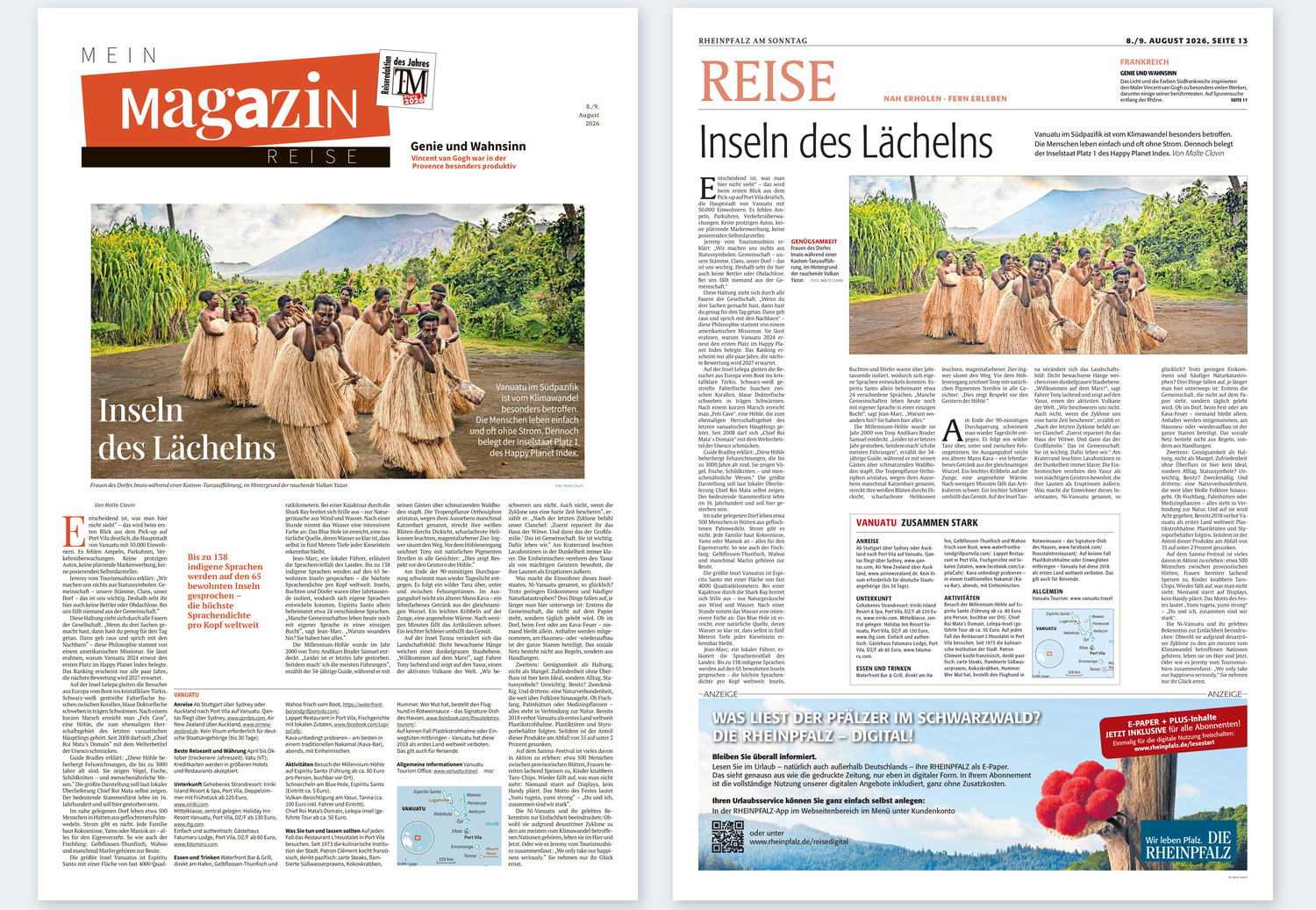
“What matters is what you don’t see here” – that becomes clear the moment you look out of the pick-up at Port Vila, the capital of Vanuatu with its 50,000 inhabitants. There are no traffic lights, no parking meters, no speed cameras. No flashy cars, no blaring brand advertising, no one posing for attention.
Jeremy from the tourism office explains: “We don’t care about status symbols. Community – our tribes, clans, our village – that is what matters to us. That’s why you won’t see any beggars or homeless people here. Nobody falls out of the community.”
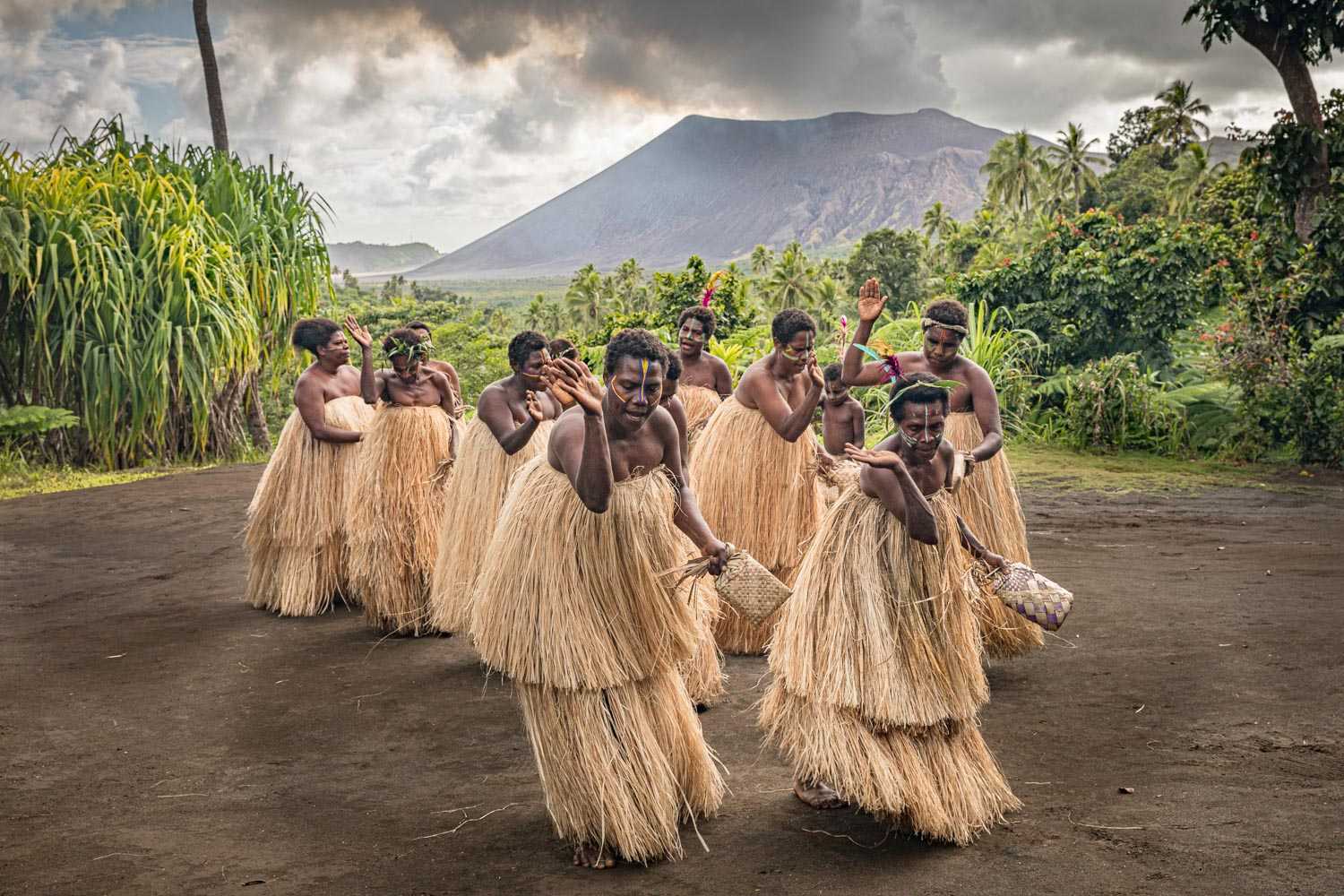
Women from the village of Imaio perform a Kastom dance. Behind them smokes the Yasur, one of the most active volcanoes in the world.
This attitude runs through every fibre of society. “Once you have done three things, you have done enough for the day. Then go out and talk to your neighbours” – that philosophy came from an American missionary. It hints at why Vanuatu once again took first place in the Happy Planet Index in 2024. The ranking appears only every few years; the next assessment is expected in 2027.
Chief Roi Mata’s Domain has carried the UNESCO World Heritage title since 2008.
On the island of Lelepa, visitors from Europe slip from the boat into crystal-clear turquoise. Black-and-white striped butterflyfish dart between corals, blue surgeonfish drift in lazy shoals. A short walk leads to “Fels Cave”, a cavern that once belonged to the domain of the last Vanuatuan chief. Since 2008, “Chief Roi Mata’s Domain” has carried the UNESCO World Heritage title.
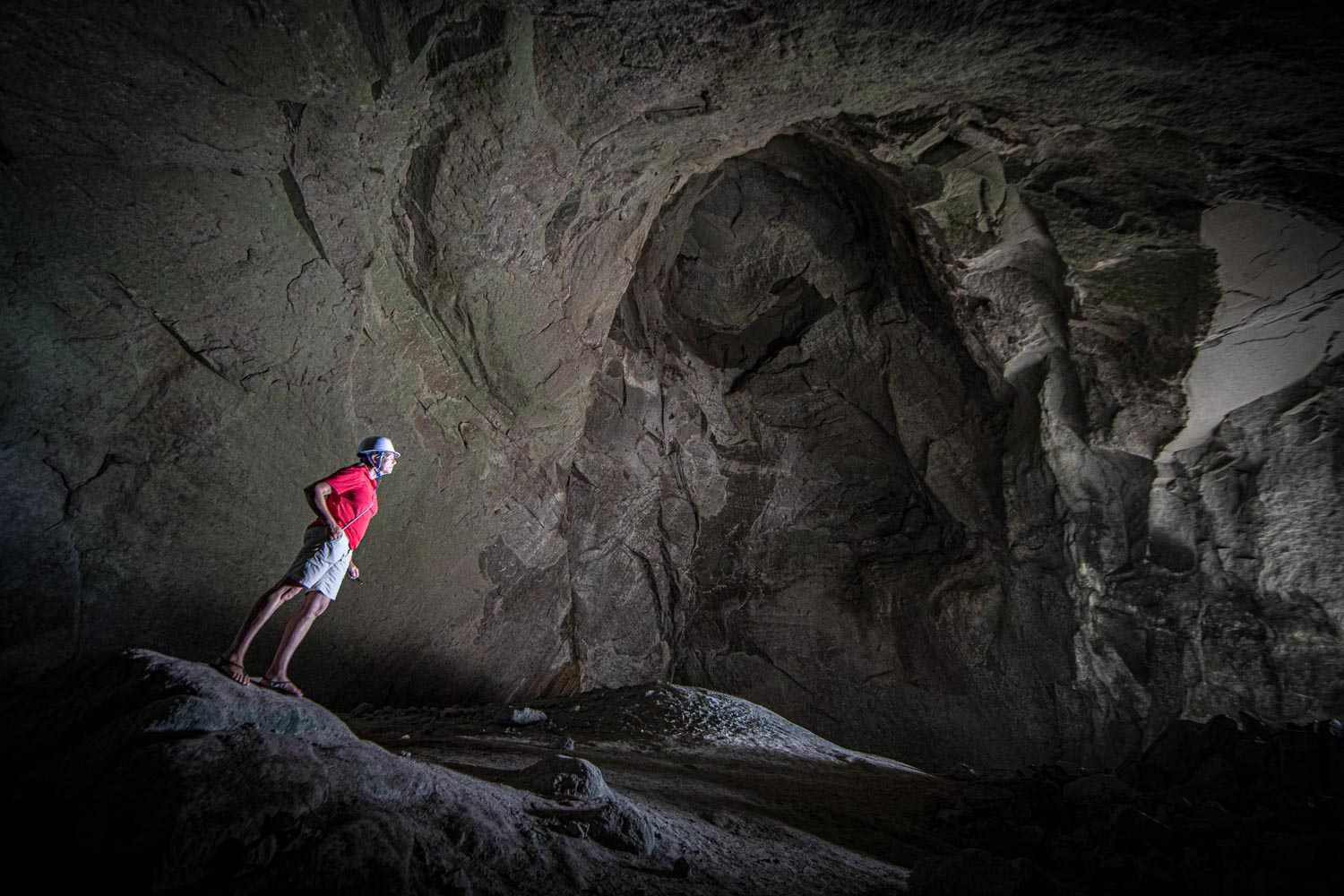
Fels Cave on Lelepa belonged to the domain of the last Vanuatuan chief. Since 2008, “Chief Roi Mata’s Domain” has carried the UNESCO World Heritage title.
Guide Bradley explains: “This cave holds rock paintings up to 3,000 years old. They show birds, fish, turtles – and human-like beings.” According to local tradition, the largest of them depicts Chief Roi Mata himself. The powerful tribal ruler lived in the 16th century and is said to have died here.
In the nearby village, around 500 people live in huts of woven palm fronds. There is no electricity. Every family grows coconuts, yams or cassava – all of it for their own table. The same goes for fishing: yellowfin tuna, wahoo and the occasional marlin end up in the catch.
Every pebble stays visible at five metres down.
The largest island of Vanuatu is Espiritu Santo, covering almost 4,000 square kilometres. On a kayak tour through Shark Bay, silence takes over – nothing but wind and water. After an hour the colour of the water deepens: the Blue Hole, a natural spring so clear that every pebble stays visible at five metres down.
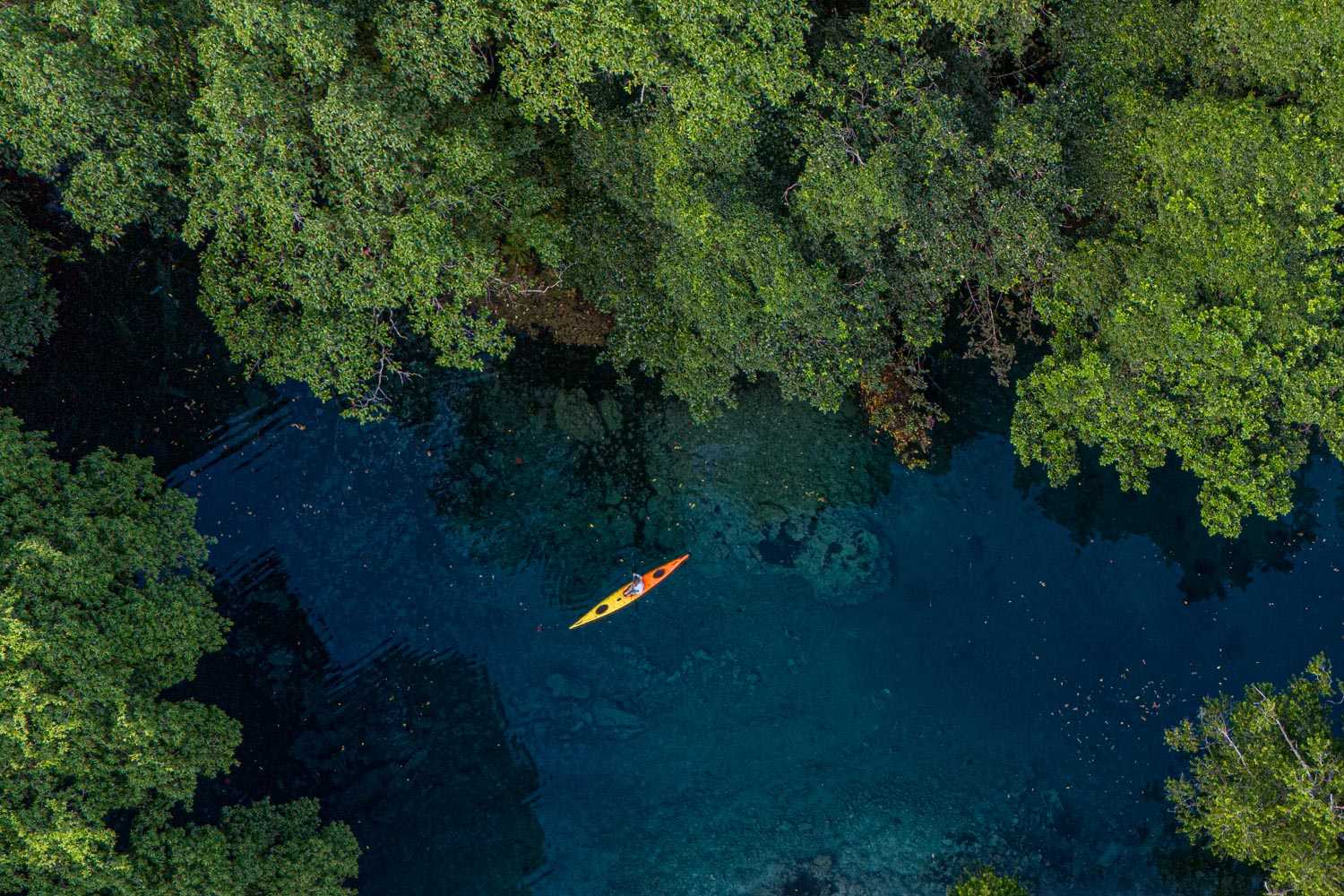
Crystal-clear spring water at the Blue Hole on Espiritu Santo – every pebble stays visible at five metres down.
Jean-Marc, a local guide, explains the country’s linguistic wealth: up to 138 indigenous languages are spoken across the 65 inhabited islands – the highest density of languages per capita in the world. Islands, bays and villages were isolated for thousands of years, which allowed separate languages to develop. Espiritu Santo alone is home to some 24 of them. “Some communities still live with their own language in a single bay,” says Jean-Marc. “Why go anywhere else? They have everything here.”
This shows respect for the spirits of the cave.
The Millennium Cave was discovered in 2000 by Samuel, the brother of Tony Andikar. “Sadly he died last year. Since then I have been doing most of the tours,” says the 34-year-old guide as he tramps across the squelching forest floor with his guests. Orthosiphon aristatus, a tropical plant sometimes called cat’s whiskers because of its appearance, pushes its white blossoms through the thicket; scarlet heliconias glow, magenta ornamental ginger lines the path. At the cave entrance, Tony paints stripes on every face with natural pigments: “This shows respect for the spirits of the cave.”
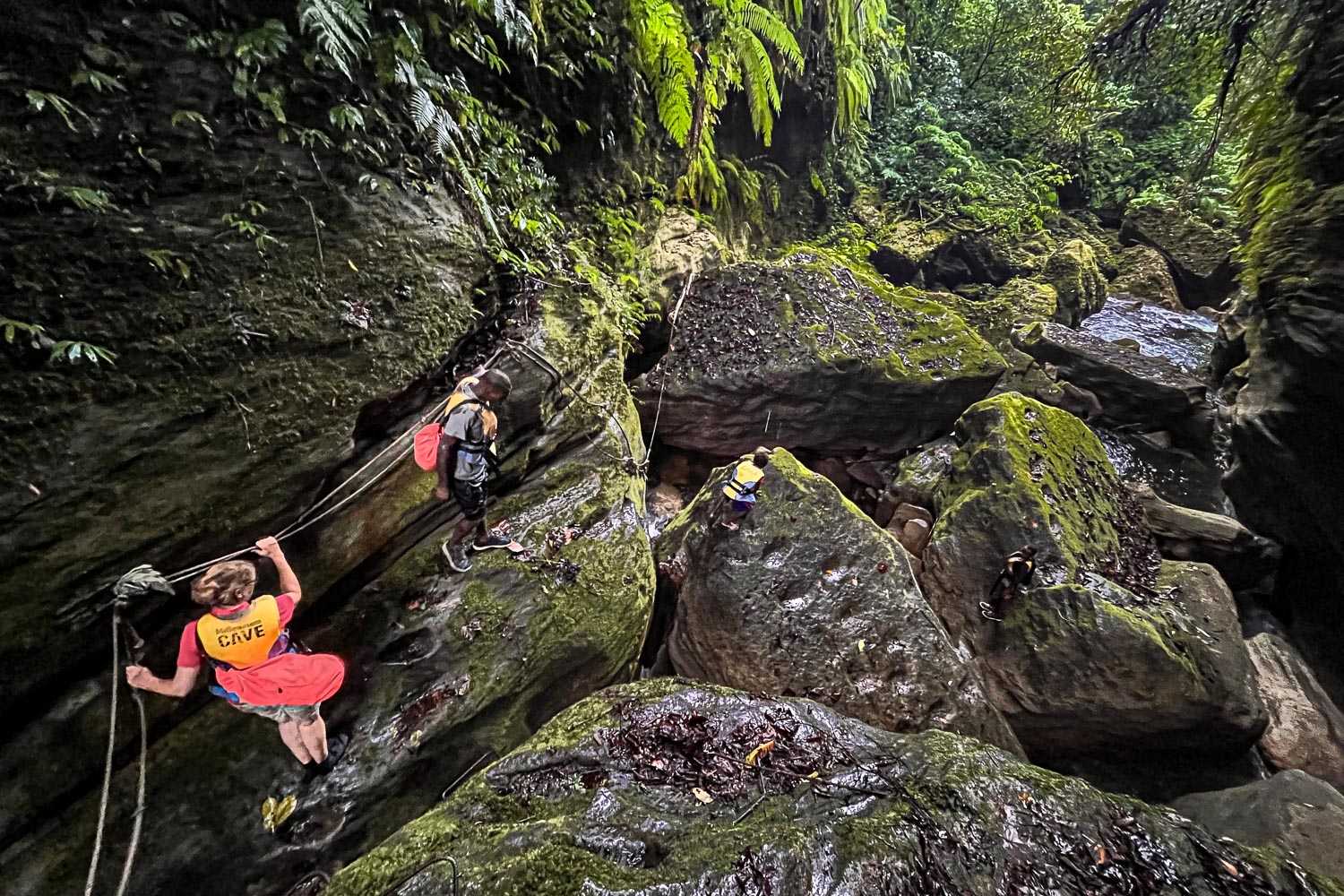
After crossing the Millennium Cave comes a scramble through crevices, over tree trunks and along huge boulders.
At the end of the 90-minute crossing you swim back towards daylight. What follows is a wild dance over, under and between monstrous rocks. In the village at the exit, an older man hands out kava – a clay-coloured drink made from the root of the same name. A light tingling on the tongue, a pleasant warmth. After a few minutes, speaking clearly becomes hard work. A gentle veil settles over the mind.
Welcome to Mars!
On the island of Tanna the landscape changes: densely overgrown slopes give way to a dark grey plain of dust. “Welcome to Mars!” laughs driver Tony, pointing at the Yasur, one of the most active volcanoes in the world. “We don’t complain. Not even when the cyclones give us a hard time,” he says. “After the last cyclone our clan chief ordered: ‘First you repair the widow’s house. Then the one of the extended family.’ That is community. It matters. That is what we live for.” At the crater rim, fountains of lava glow ever more clearly in the dark. Locals revere the Yasur as the home of powerful spirits who express their moods as eruptions.
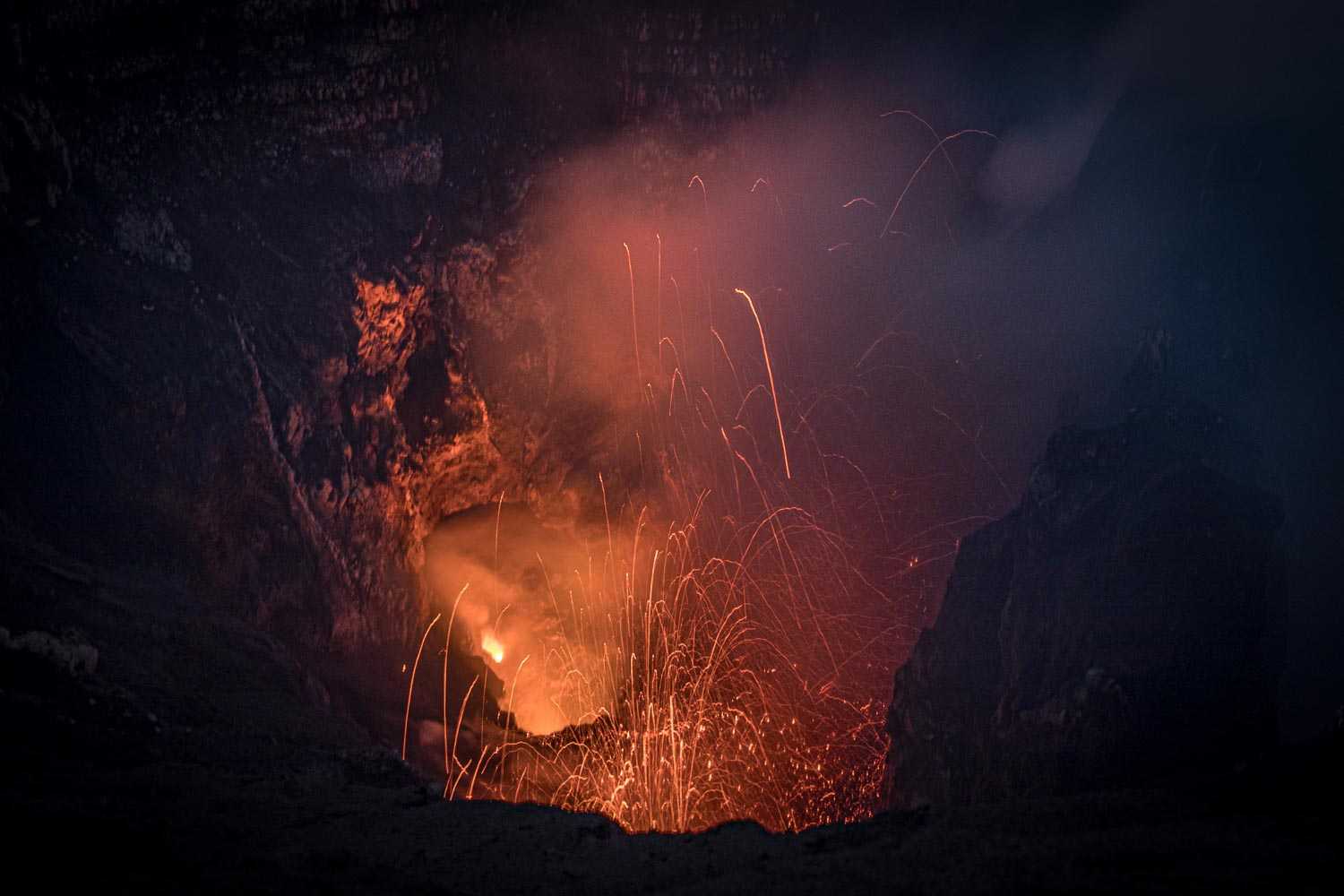
A night-time view into the crater of the Yasur on Tanna. Locals revere the volcano as the home of powerful spirits.
What makes the inhabitants of this island state, called Ni-Vanuatu, so happy? Despite low incomes and frequent natural disasters? Three things stand out the longer you travel here. First, a community that does not exist on paper but is lived every day. In the village, at a festival or around the kava fire – nobody is left alone. Hitchhikers are picked up, and the whole tribe helps when a house is built or rebuilt. The social safety net is not made of rules, but of actions.
Frugality as an attitude, not as a shortage.
Second: frugality as an attitude, not as a shortage. Contentment without abundance is not an ideal here, it is everyday life. Status symbols? Unimportant. Possessions? Practical. And third: a bond with nature that goes far beyond folklore. Fishing, palm huts, medicinal plants – everything is connected to nature. As early as 2018, Vanuatu became the first country in the world to ban plastic straws. Plastic bags and polystyrene containers followed. Since then, the share of these products in the country’s waste has dropped from 35 to under 2 percent.
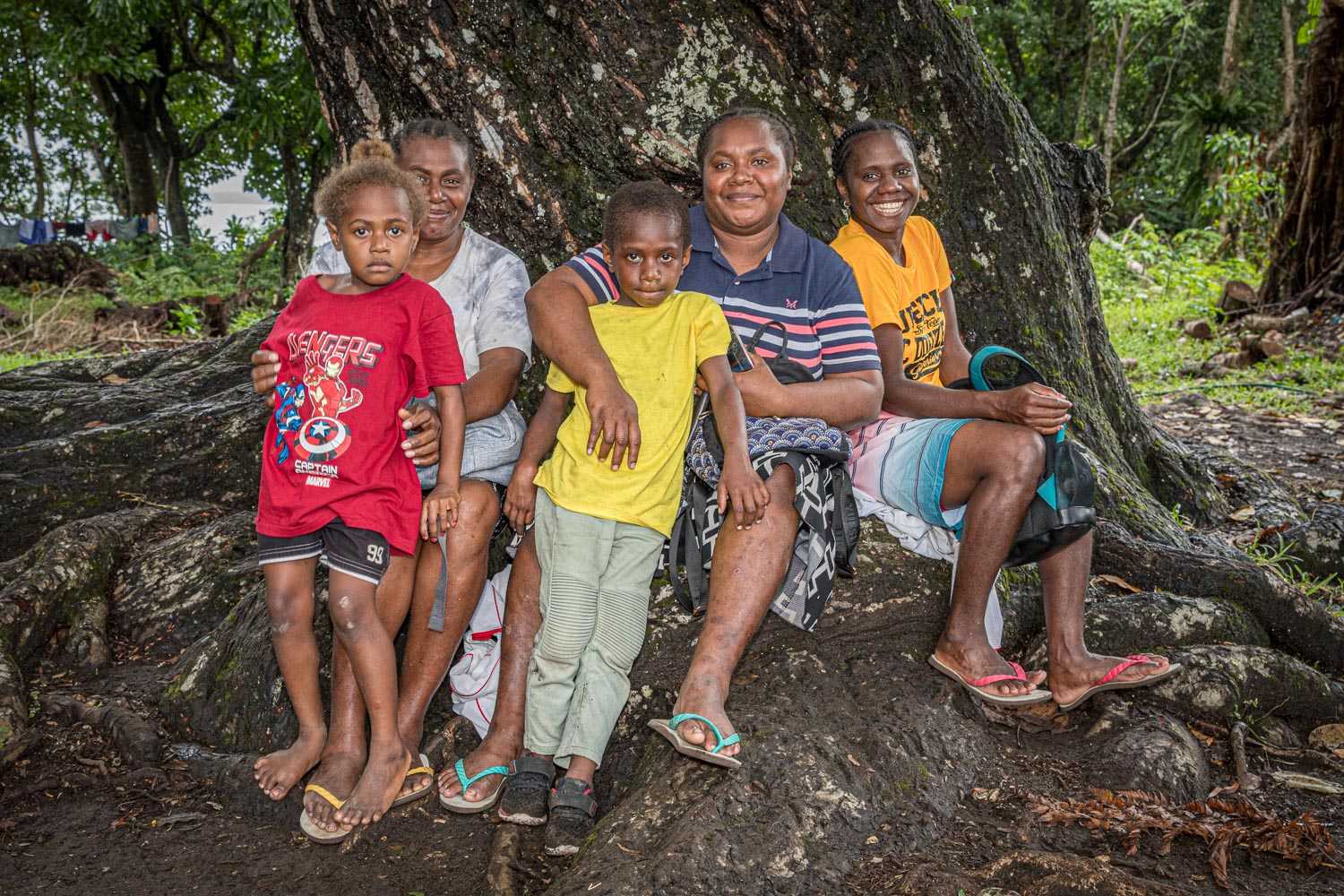
Visitors to the Sanma celebrations in a village outside Luganville on Espiritu Santo.
At the Sanma Festival much of this can be seen in action: around 500 people among makeshift huts, women laughing as they prepare food, children nibbling taro chips. Again, what stands out is what you don’t see: nobody staring at a display, no phone blaring. The motto of the festival is “Yumi tugeta, yumi strong” – “You and I, together we are strong”.
The Ni-Vanuatu and their lived commitment to simplicity leave a mark: although disastrous cyclones make them one of the nations hit hardest by climate change, they live in the here and now. Or, as Jeremy from the tourism office puts it: “We only take our happiness seriously.” They take only their happiness seriously.
Want more of this?
My DISCOVERY LETTER brings you adventurous stories, stunning pictures and challenges to take part in.
Read now:
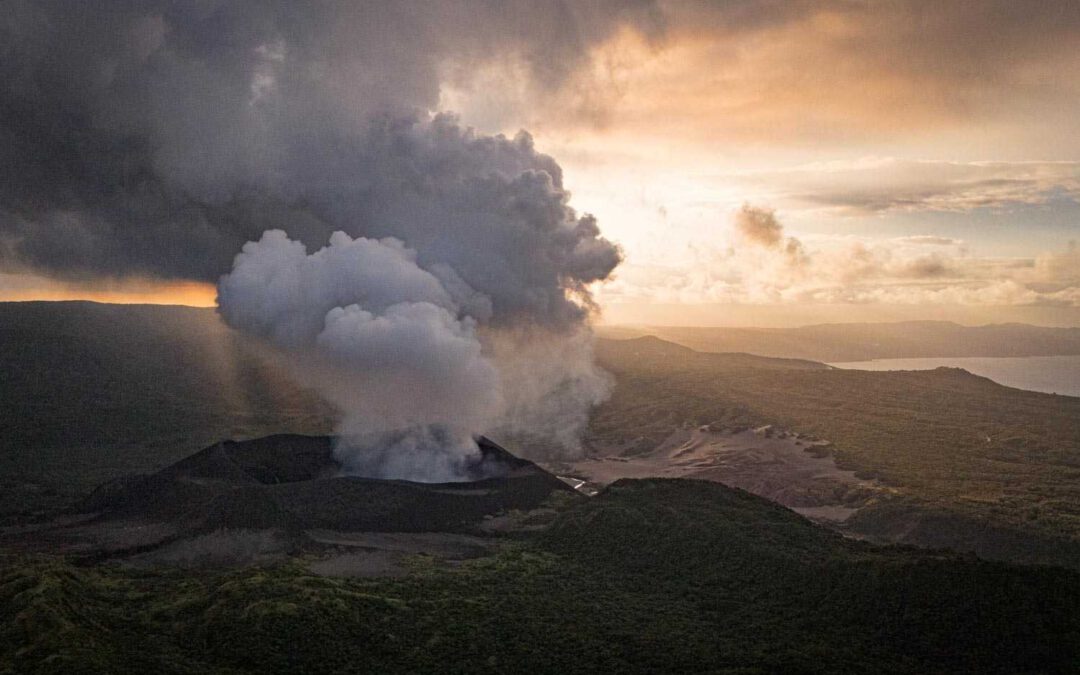
350,000 inhabitants, 67 islands, 110 languages
Vanuatu – Paradise of tranquillity
The Ni-Vanuatu people live on 67 Pacific islands without traffic lights, beggars or hustle and bustle. Where 110 languages are spoken and volcanoes rumble every 15 minutes, visitors can explore sensational caves and then drink kava from wooden bowls. Vanuatu shows that happiness does not need status symbols.
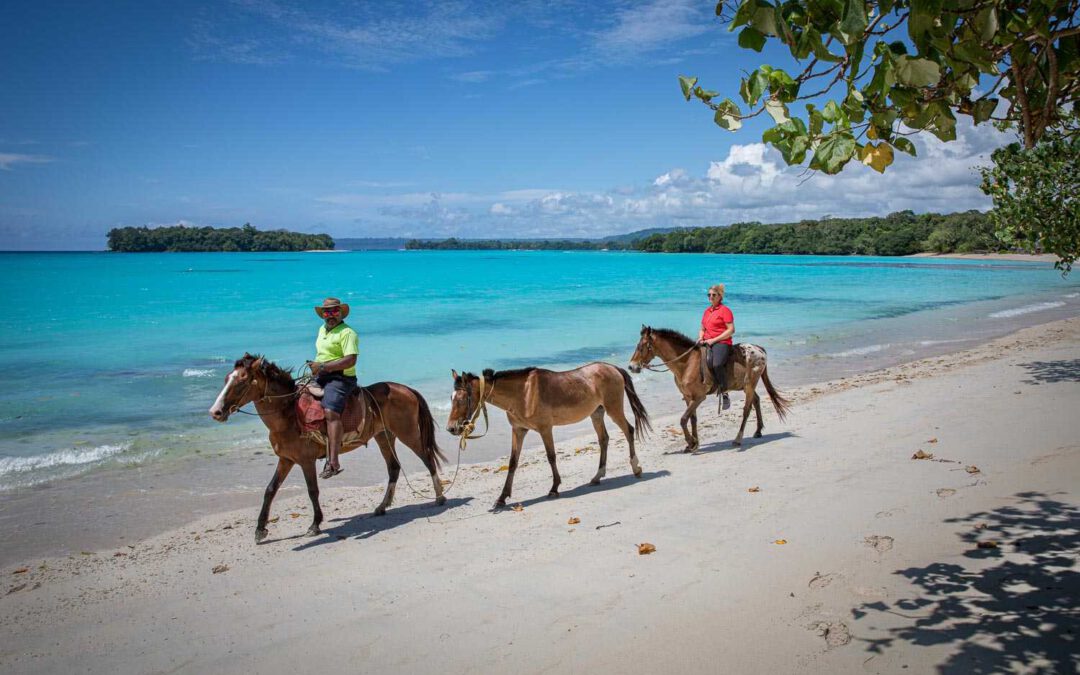
South Sea paradise with volcanic spectacle
Photo gallery Vanuatu
Blue springs in the jungle, lava fountains against the evening sky – this visual journey through Vanuatu reveals a paradise without hustle and bustle, without traffic lights – but with plenty of nature and encounters.
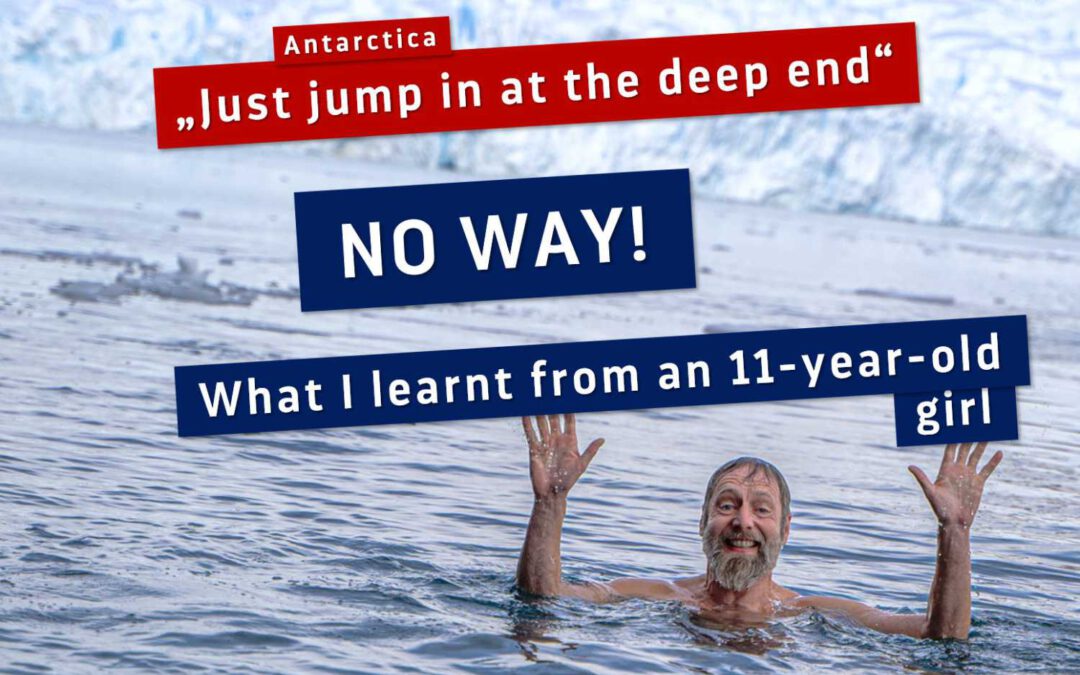
Icy test of courage
Antarctica – What I learnt from an 11-year-old girl
We’ve all heard it before: ‘Just jump in at the deep end!’ Yes, you can – no matter how cold the water is. But there’s more to it than that.