

Published in:

Switzerland’s largest travel magazine
Online, 25 November 2026 | Text & photos Malte Clavin
Read the original on globetrottermagazin.ch (German)
3.24 am. Sunrise. Almost 20 hours of daylight envelop Neko Harbour, and I wonder whether my sense of time will ever work again down here at the end of the world. The light is unreal, milky, almost too soft for a continent considered the harshest on Earth. At 9.44 am we go ashore.
The path leads up through deep snow to a small saddle – every step a struggle, but the panoramic view of the glaciers and Andvord Bay instantly repays the effort.
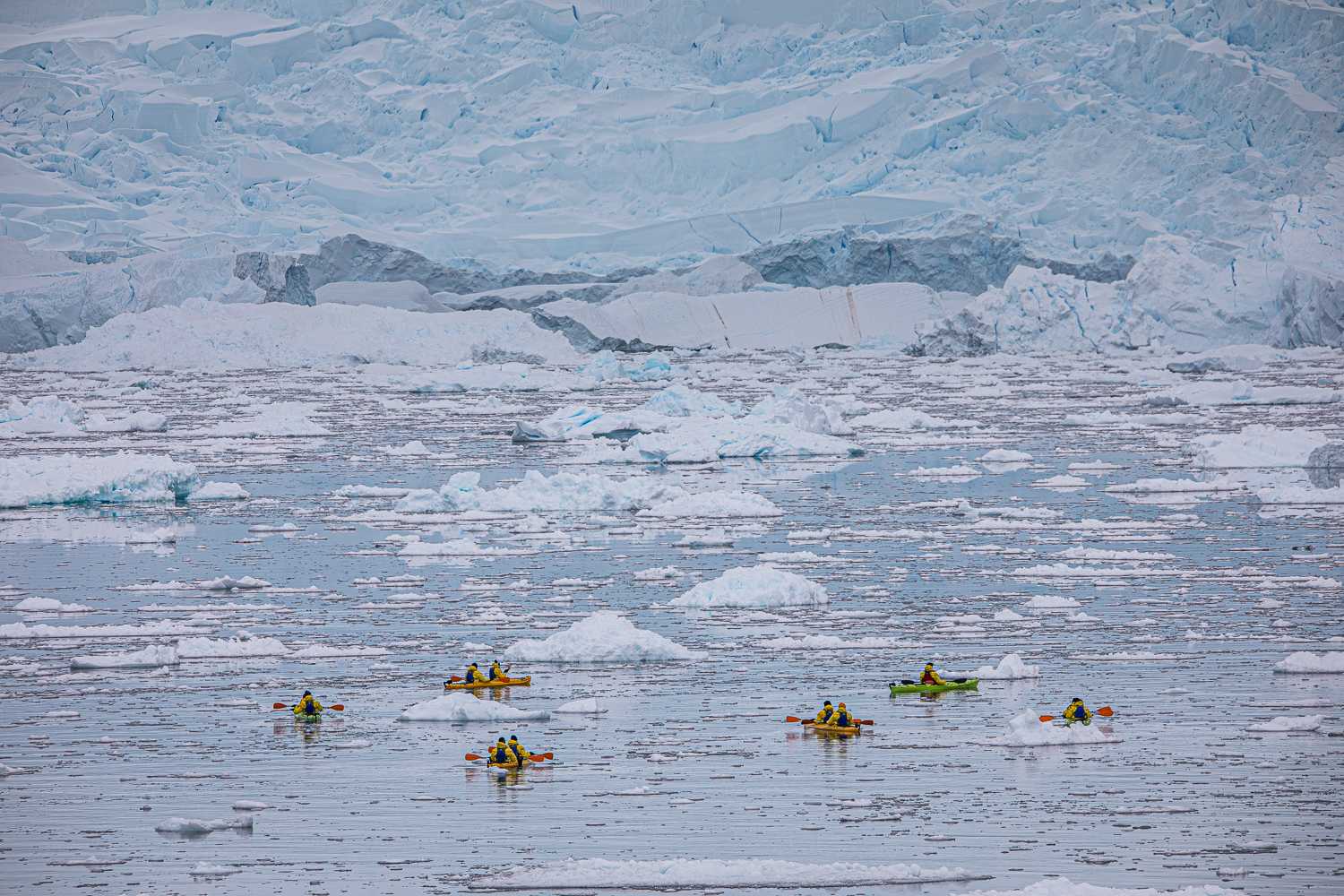
Like colourful dots, kayaks glide through the icy waters of Neko Harbour. The massive glacier fractures behind reveal the scale – the paddlers appear tiny before the crevassed ice wall that could calve at any moment.
Some 1,000 gentoo penguin pairs have made the rock their home. A piercing clamour fills the air, like a donkey’s bray – hence the German name, Eselspinguin: donkey penguin. Winding between them are “penguin highways” – well-worn paths that generations of birds have trampled into the snow.
I have to be careful not to cross their path. Penguins have right of way; those are the rules here. Two chicks huddle together under the watchful eye of their parent. Soon they will swap their grey down for the streamlined plumage of the adults.
“Antarctica is the best place in the world to find meteorites”
Up on the saddle, Dr Alisa Baranskaya is waiting. The geologist and polar researcher has been exploring Arctic and Antarctic regions since 2007. She points to the pink rock beneath us: “That’s leucogranite, formed many millions of years ago deep in the Earth’s crust.”
Then she talks about a phenomenon that astounds me: “Antarctica is the best place in the world to find meteorites. Around 60 per cent of all specimens ever found come from here.”
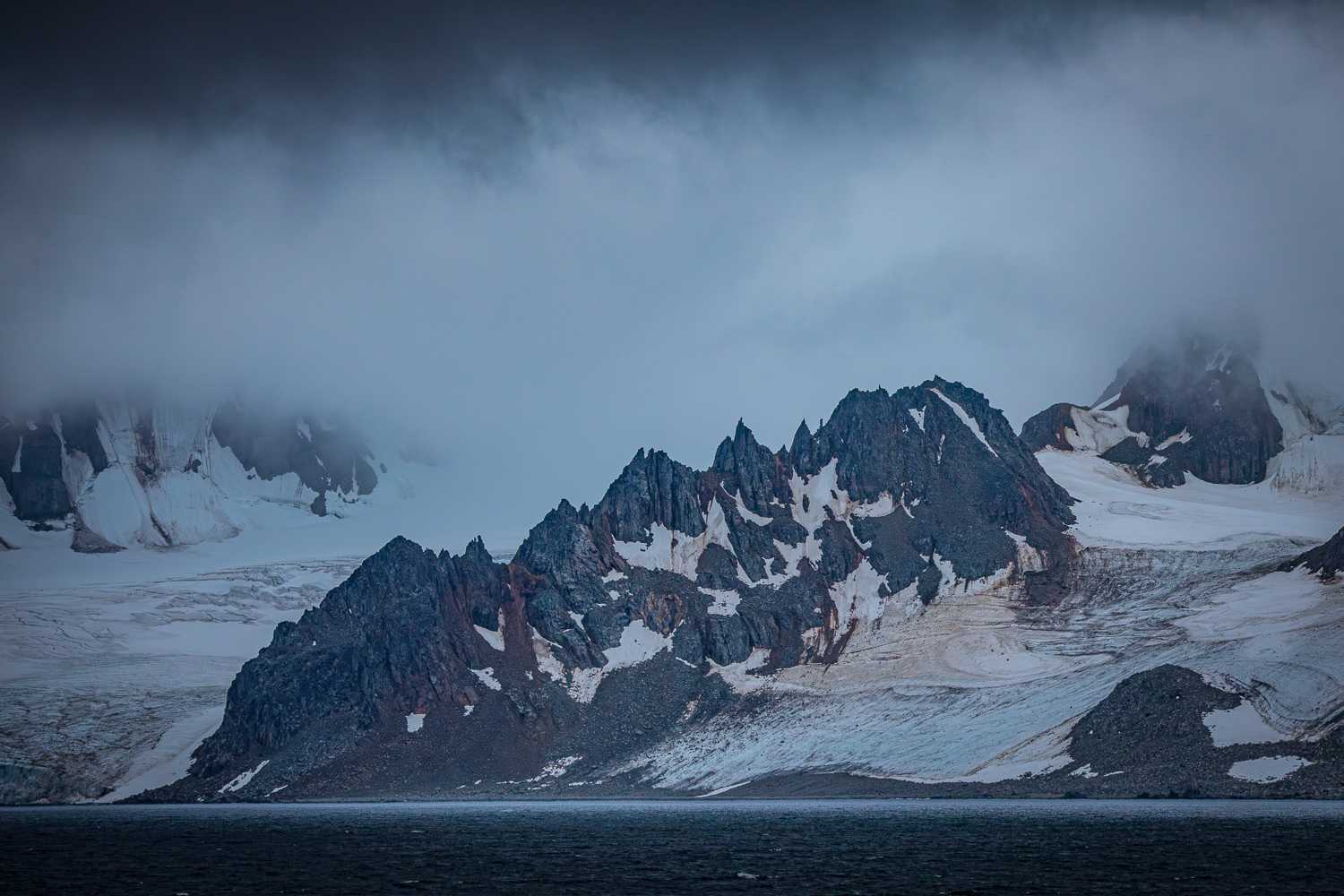
Greenwich Island – my enchanted isle. Jagged rock spires pierce the glacier mantle whilst wisps of mist veil the peaks. In this monochrome world of charcoal and white, time seems to stand still. Primeval, untouched, surreal.
The reason is easy to grasp: dark stones stand out starkly against the white ice, and the cold, dry climate preserves them better than anywhere else. Glacier movement and wind erosion concentrate them in what are known as stranding zones. These celestial messengers give science valuable insights into the early days of our solar system.
On the way back to the Zodiac I spot an unassuming bird. Later I learn that the Arctic tern has the longest migration of any bird in the world. From the Arctic, the region around the North Pole, to here and back again, it covers between 40,000 and 90,000 kilometres every year.
The Arctic tern sleeps in flight – and so copes with the long ordeal
The most astonishing thing of all: the Arctic tern sleeps in flight – and so copes with the long ordeal. One half of its brain rests at a time while the other steers the flight and navigates. I stand there staring after this small creature that circles the planet once a year.
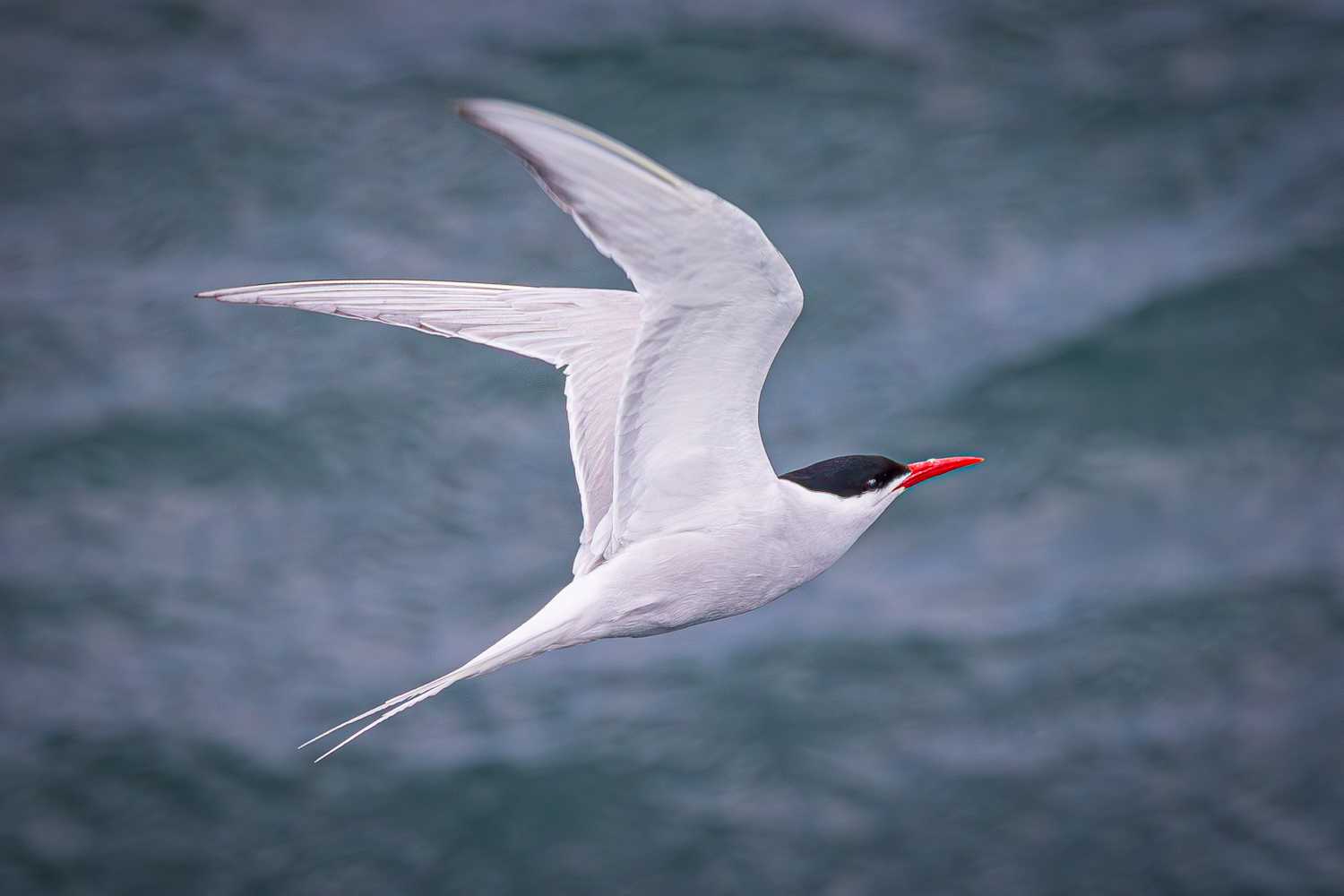
An Arctic tern, the long-distance record holder among all animals: every year, it commutes from the Arctic to the Antarctic and experiences two summers. Some birds cover up to 90,000 km in 10 months.
In the afternoon we glide between icebergs in the Zodiac. “Look closely,” says Gustav Jonsson Länne, naturalist and expedition leader, and throttles back the engine. “It’s not only the many different shapes that fascinate. Look at the mysterious glow that fills crevices, hollows and caverns with blue-violet light.”
The sharp spikes of a weathered iceberg jut skywards like shark’s teeth
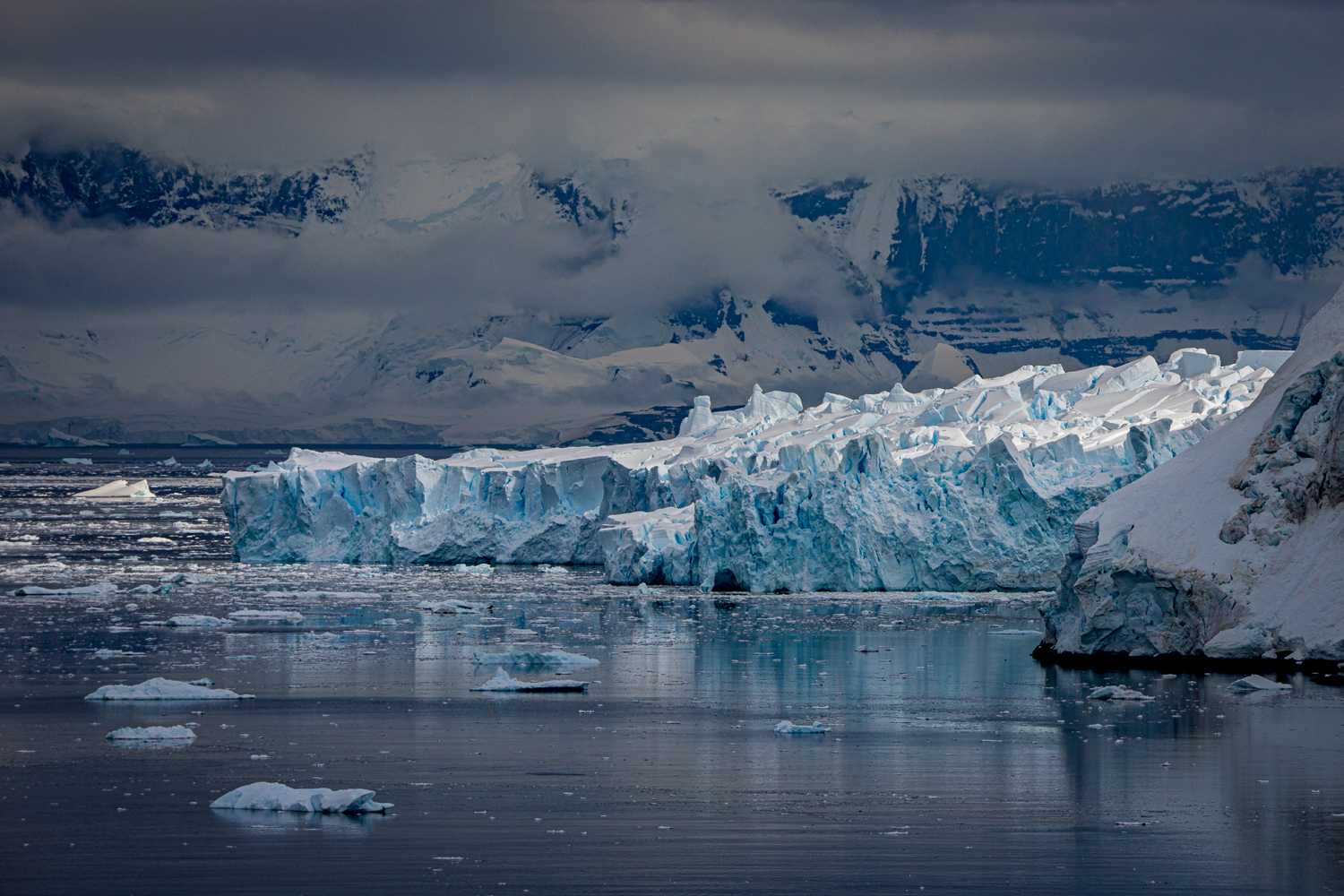
I stare spellbound at a tabular iceberg rising as high as a house out of the water. Deep blue shimmers in its cracks. It looks otherworldly, almost artificial. Behind it, sharp spikes jut skywards like shark’s teeth from a weathered iceberg.
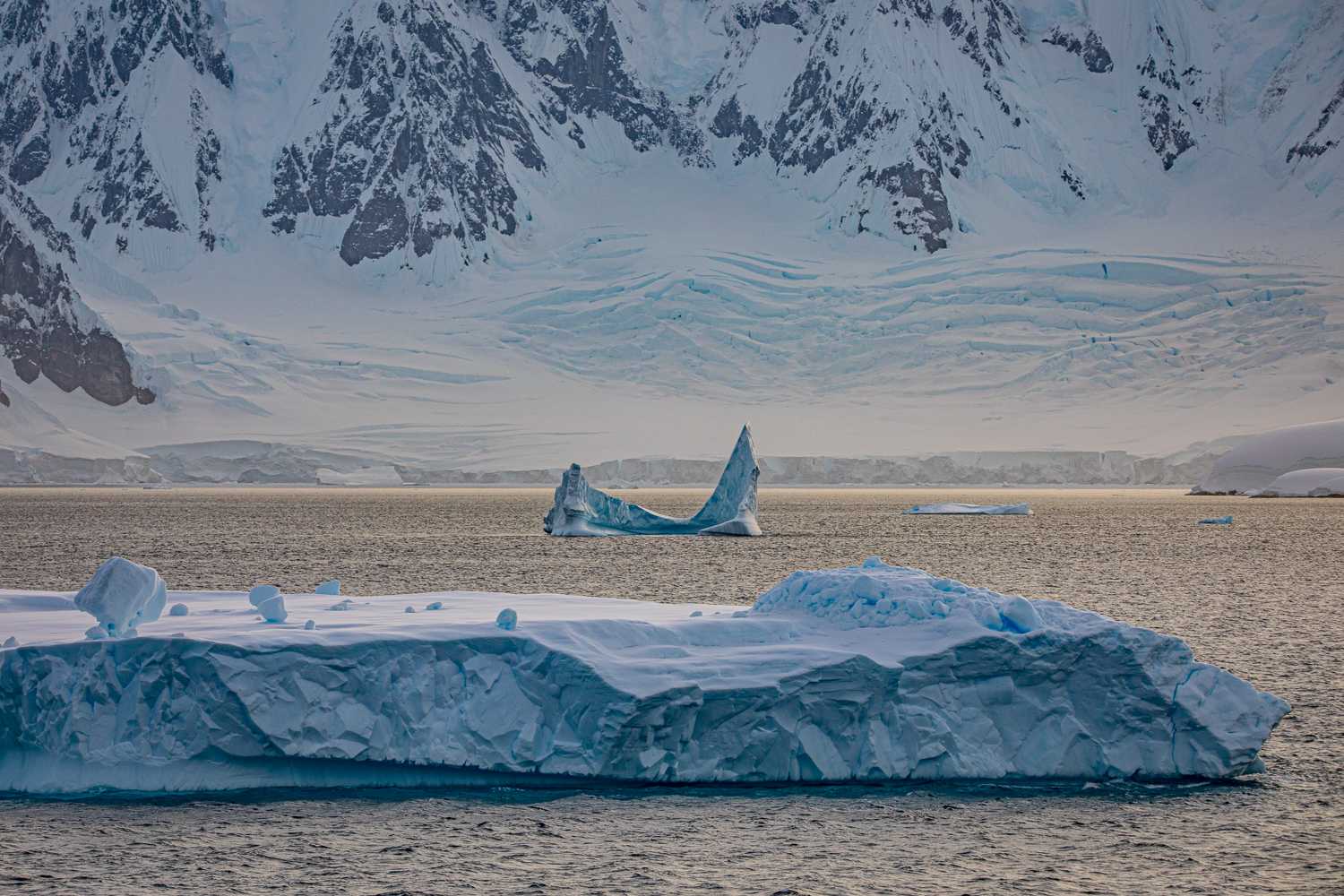
A weathered iceberg behind a table iceberg. The crevasses in the ice shelf tell of enormous forces – this is where the ice giants calve, later drifting through the Southern Ocean.
Later I meet Aleksander “Sasha” Borodin on the outer deck of our expedition ship. The expedition expert, who is of Russian descent, has more than 25 years of polar experience – on foot, on skis, in vehicles, on ships.
As part of a Swiss Polar Institute expedition, he circumnavigated the whole of Antarctica aboard a research vessel in 2016/17. I ask him about the fields of research down here. “Glaciologists analyse ice cores that reach up to 800,000 years into the past,” Sasha explains. “Right now the search is on for ice that could be 1.5 million years old.
“Just imagine a land as big as Australia and Europe combined”
“Atmospheric scientists monitor the ozone hole, oceanographers measure how Antarctic water masses affect the global climate, marine biologists study the nutrient-rich Southern Ocean.”
Then he leans against the railing, and his voice takes on an almost reverent tone: “Just imagine a land as big as Australia and Europe combined. Sunnier than California and yet colder than a freezer. Drier than Arabia, higher than Switzerland, emptier than the Sahara.” He pauses. “There is only one place in the world that fits this description.” Then he smiles.
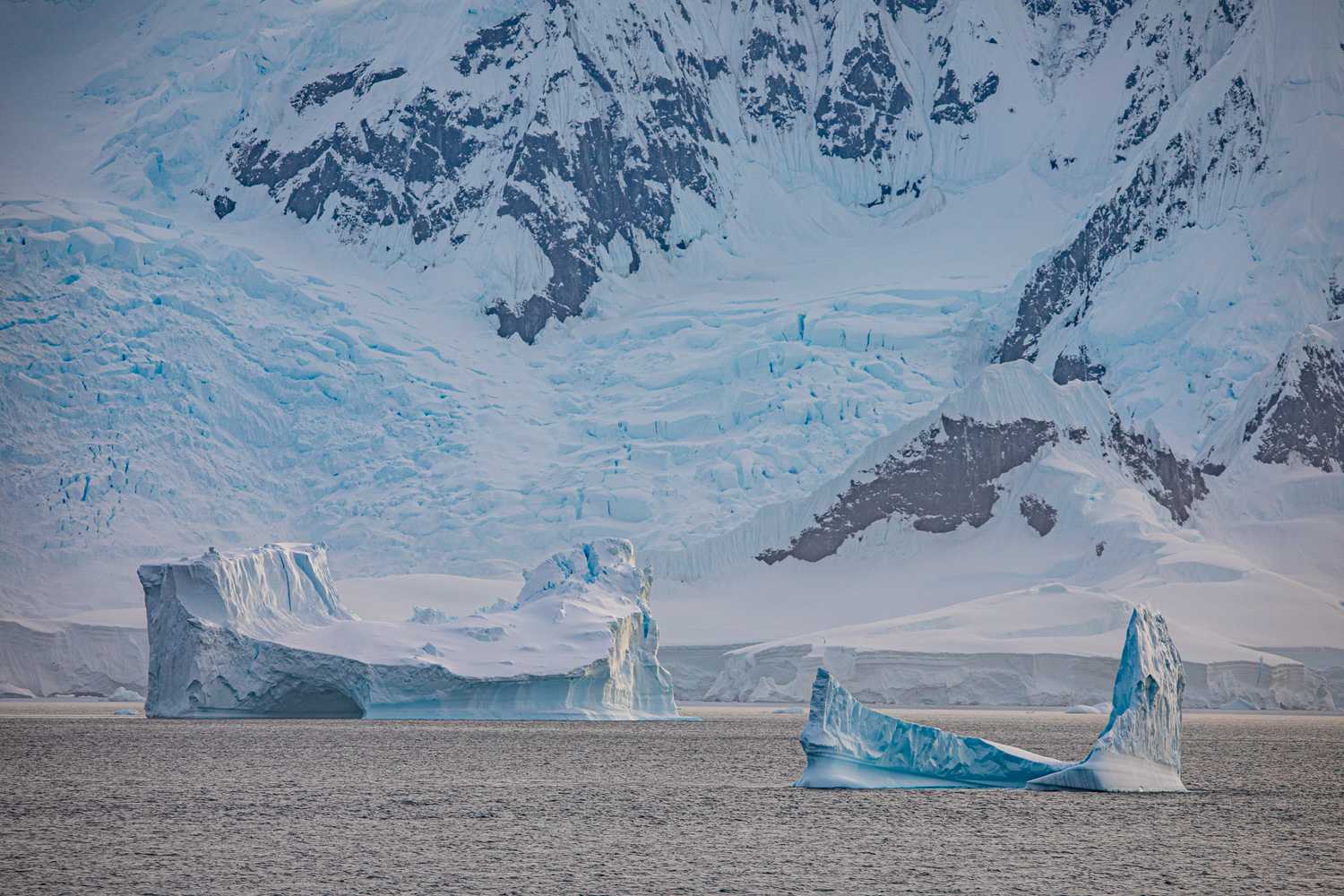
Two icebergs in different stages of weathering drift in front of the mighty glacier landscape, each iceberg telling its own story of pressure, time and decay. On the right, the bright blue reveals ancient ice that was once hidden.
“Whales ahead!” The captain’s announcement spreads like wildfire. Passengers rush out on deck. Ahead of the ship we sight orcas – eight or nine of them. Two of them roll in a tight embrace. I assume it’s a fight. Whale expert Anya Astafurova sets me straight: “No, they’re mating!”
A small population of around a hundred orcas in Antarctica has developed a remarkable hunting technique: “wave washing”. They swim in sync, close together, just below the surface, towards an ice floe. The wave they create washes the prey off the floe and into the water. “With Weddell seals, about four waves are enough,” Anya explains, “but with leopard seals, which put up a fight, they need up to 18.”
The black-and-white dorsal fins slice through the dark water – an image I will never forget
I press the shutter release, again and again. The black-and-white dorsal fins slice through the dark water – an image I will never forget.
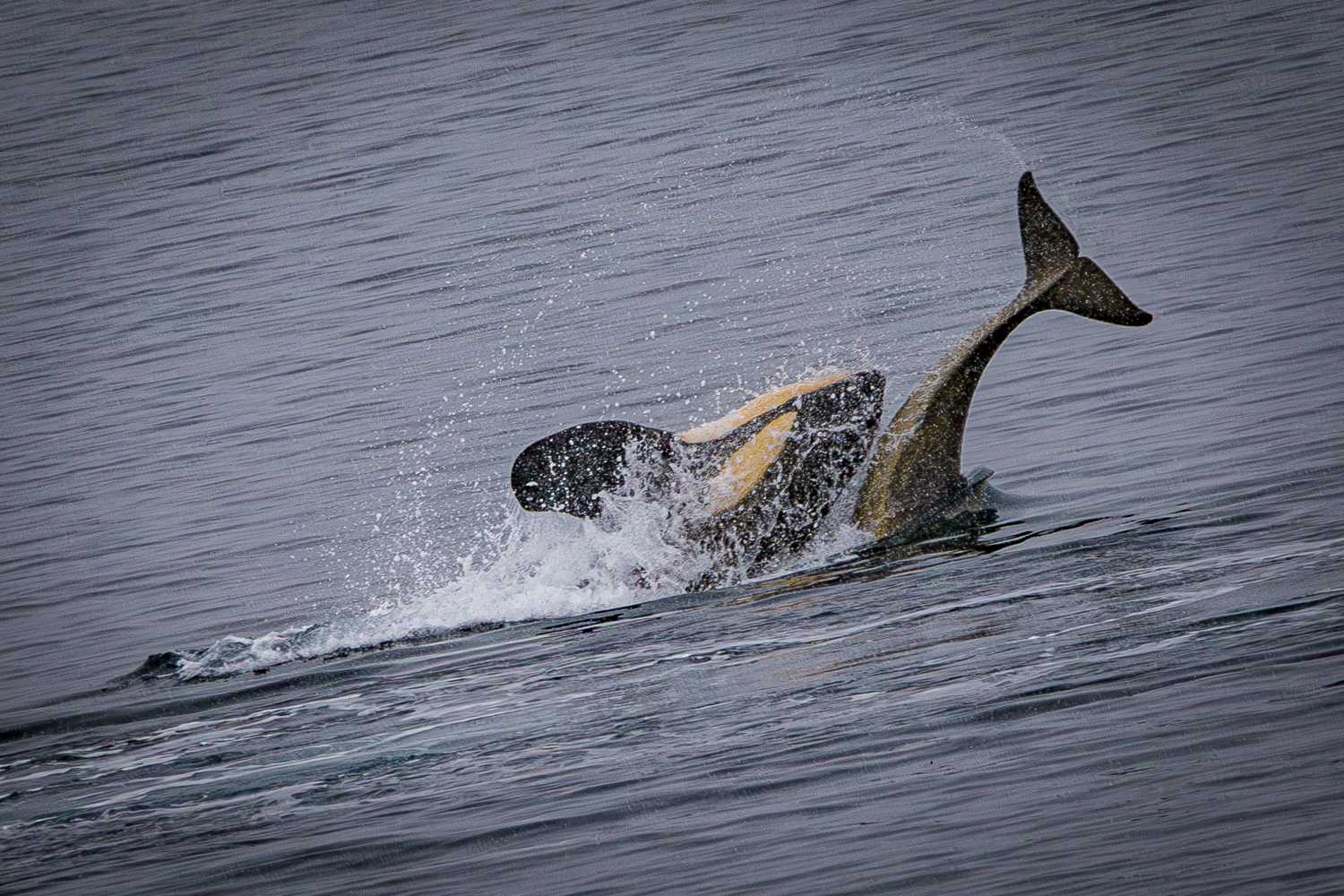
Two orcas swim closely entwined through the Antarctic sea – a rare sight and a typical sign of mating. The yellowish coating on their skin comes from diatoms, which thrive in icy waters.
I look out over the railing. The sun refuses to set and lingers endlessly just above the horizon. The vast snowfields on the rugged mountains glow deep yellow, then orange, then violet. Antarctica holds 90 per cent of all the ice on Earth – unimaginable masses that have existed virtually unchanged for around 14 million years.
It is a continent without countries. Here the world seems to come to an end.
What remains is silence, wonder, humility – and the feeling that some places are greater than anything we humans will ever comprehend.
3.24 am. Sunrise. Almost 20 hours of daylight envelop Neko Harbour, and I wonder whether my sense of time will ever work again down here at the end of the world.
The light is unreal, milky, almost too soft for a continent considered the harshest on Earth. At 9.44 am we go ashore.
Like colourful dots, kayaks glide through the icy waters of Neko Harbour. The massive glacier fractures behind reveal the scale – the paddlers appear tiny before the crevassed ice wall that could calve at any moment.
The path leads up through deep snow to a small saddle – every step a struggle, but the panoramic view of the glaciers and Andvord Bay instantly repays the effort.
A piercing clamour fills the air like a donkey’s bray – hence the gentoo penguin’s German name, Eselspinguin
Some 1,000 gentoo penguin pairs have made the rock their home. A piercing clamour fills the air, like a donkey’s bray – hence the German name, Eselspinguin: donkey penguin.
Winding between them are “penguin highways” – well-worn paths that generations of birds have trampled into the snow.
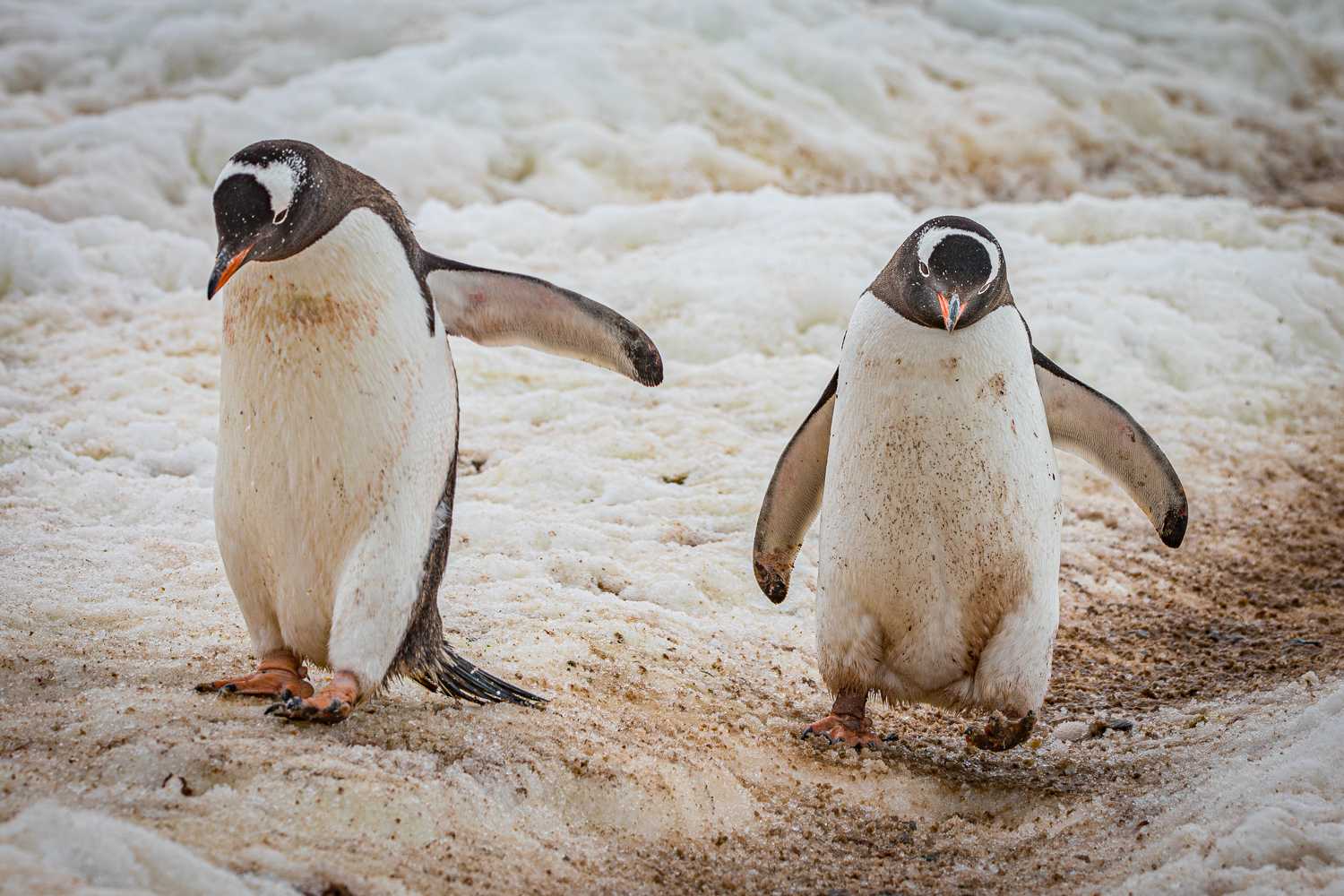
Two gentoo penguins making their way through the snow. Trails like this connect the colony with the sea.
I have to be careful not to cross their path. Penguins have right of way; those are the rules here.
Soon the chicks will swap their grey down for the plumage of the adults
Two chicks huddle together under the watchful eye of their parent. Soon they will swap their grey down for the streamlined plumage of the adults.
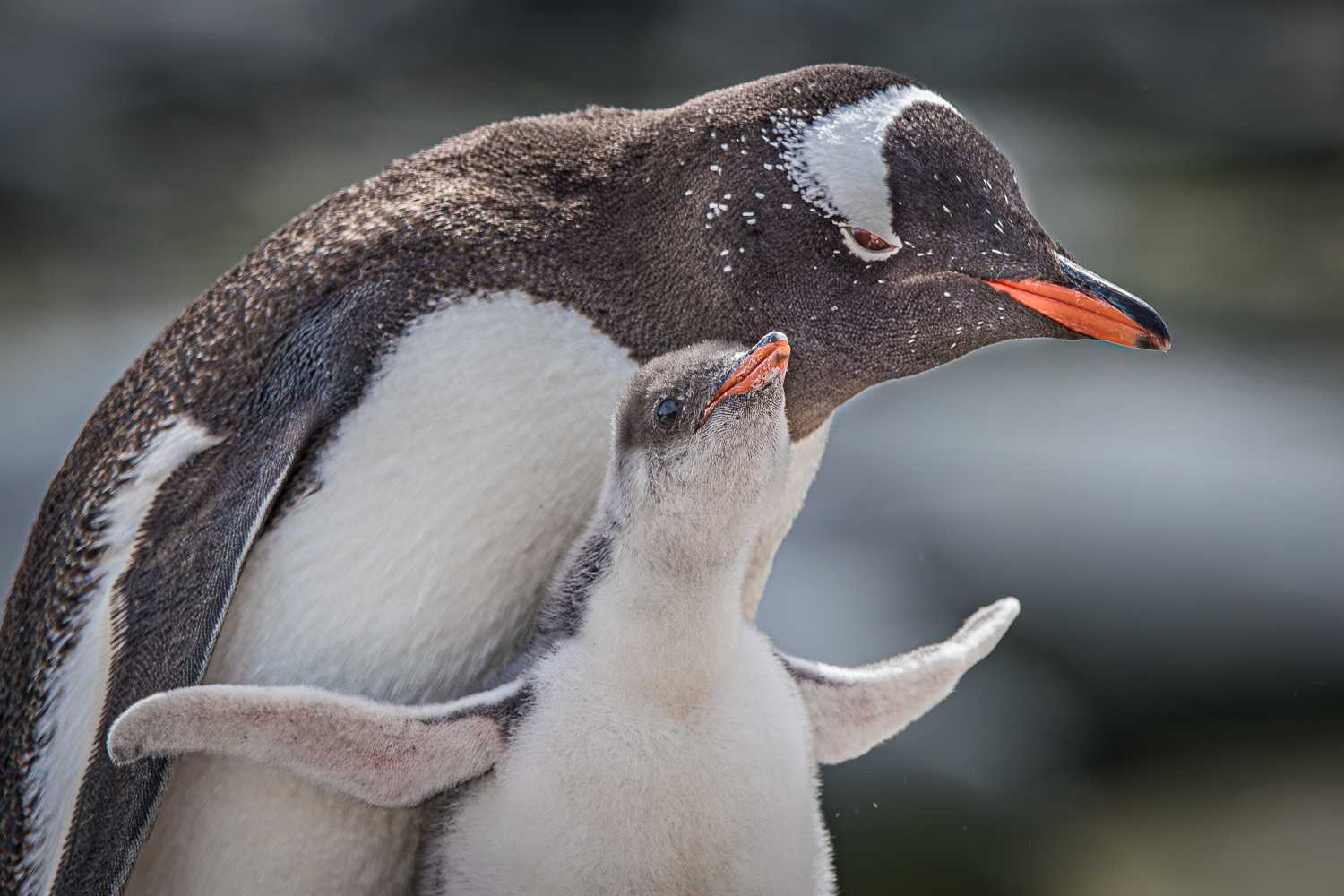
A gentoo penguin chick begs persistently for food, its flippers stretched out wide. Soon, the adult bird will give in and regurgitate the coveted krill.
Up on the saddle, Dr Alisa Baranskaya is waiting. The geologist and polar researcher has been exploring Arctic and Antarctic regions since 2007.
She points to the pink rock beneath us: “That’s leucogranite, formed many millions of years ago deep in the Earth’s crust.”
“Antarctica is the best place in the world to find meteorites”
Then she talks about a phenomenon that astounds me: “Antarctica is the best place in the world to find meteorites. Around 60 per cent of all specimens ever found come from here.”
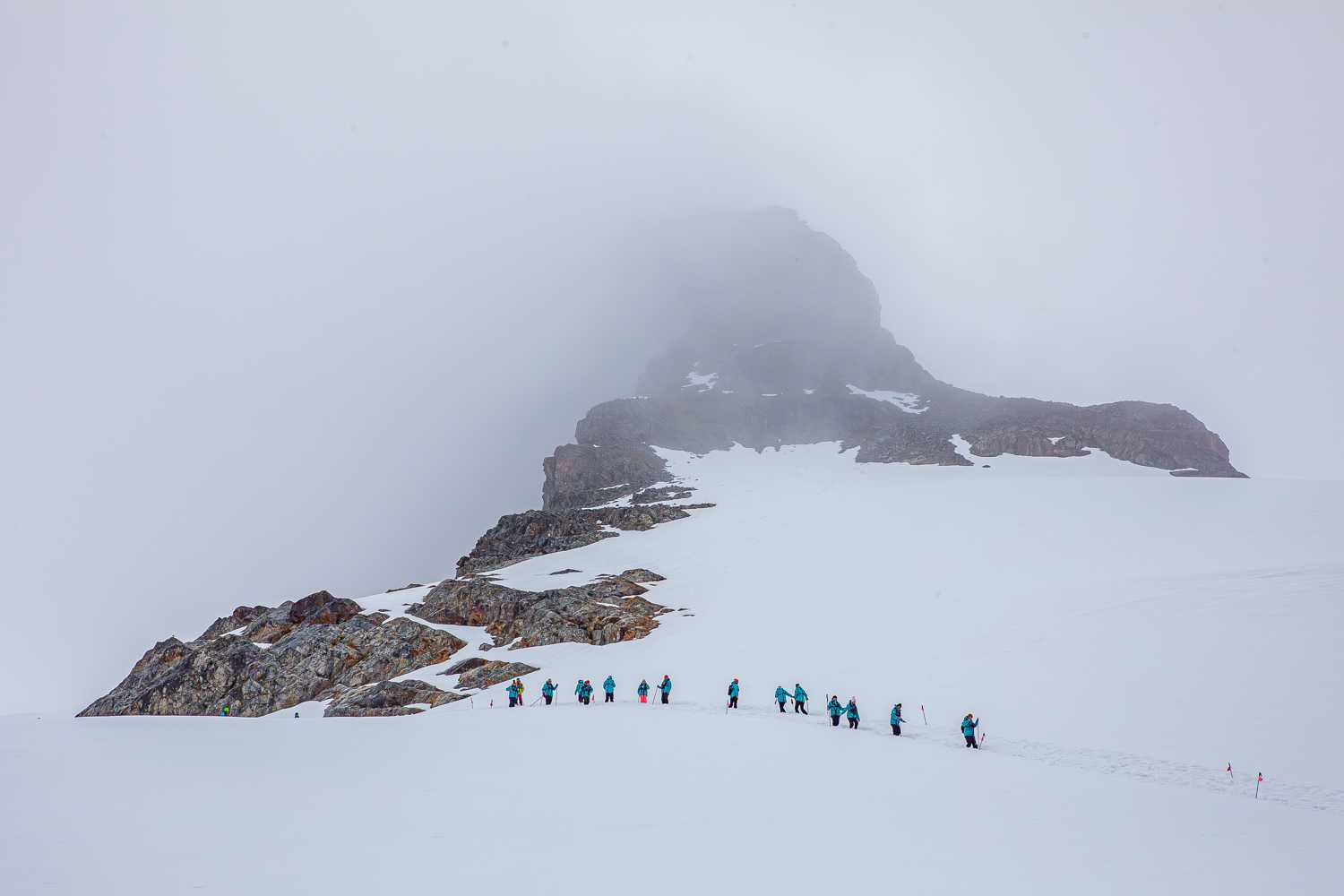
In single file, a group trudges across the snowfield at Meusnier Point. Fog swallows the summit, only dark rock outcrops pierce the white.
The reason is easy to grasp: dark stones stand out starkly against the white ice, and the cold, dry climate preserves them better than anywhere else.
The celestial messengers give science valuable insights into the early days of our solar system
Glacier movement and wind erosion concentrate them in what are known as stranding zones.
These celestial messengers give science valuable insights into the early days of our solar system.
Greenwich Island – my enchanted isle. Jagged rock spires pierce the glacier mantle whilst wisps of mist veil the peaks. In this monochrome world of charcoal and white, time seems to stand still. Primeval, untouched, surreal.
On the way back to the Zodiac I spot an unassuming bird. Later I learn that the Arctic tern has the longest migration of any bird in the world.
From the Arctic, the region around the North Pole, to here and back again, it covers between 40,000 and 90,000 kilometres every year.
The Arctic tern sleeps in flight – and so copes with the long ordeal
The most astonishing thing of all: the Arctic tern sleeps in flight – and so copes with the long ordeal.
An Arctic tern, the long-distance record holder among all animals: every year, it commutes from the Arctic to the Antarctic and experiences two summers. Some birds cover up to 90,000 km in 10 months.
One half of its brain rests at a time while the other steers the flight and navigates. I stand there staring after this small creature that circles the planet once a year.
In the afternoon we glide between icebergs in the Zodiac
In the afternoon we glide between icebergs in the Zodiac. “Look closely,” says Gustav Jonsson Länne, naturalist and expedition leader, and throttles back the engine.
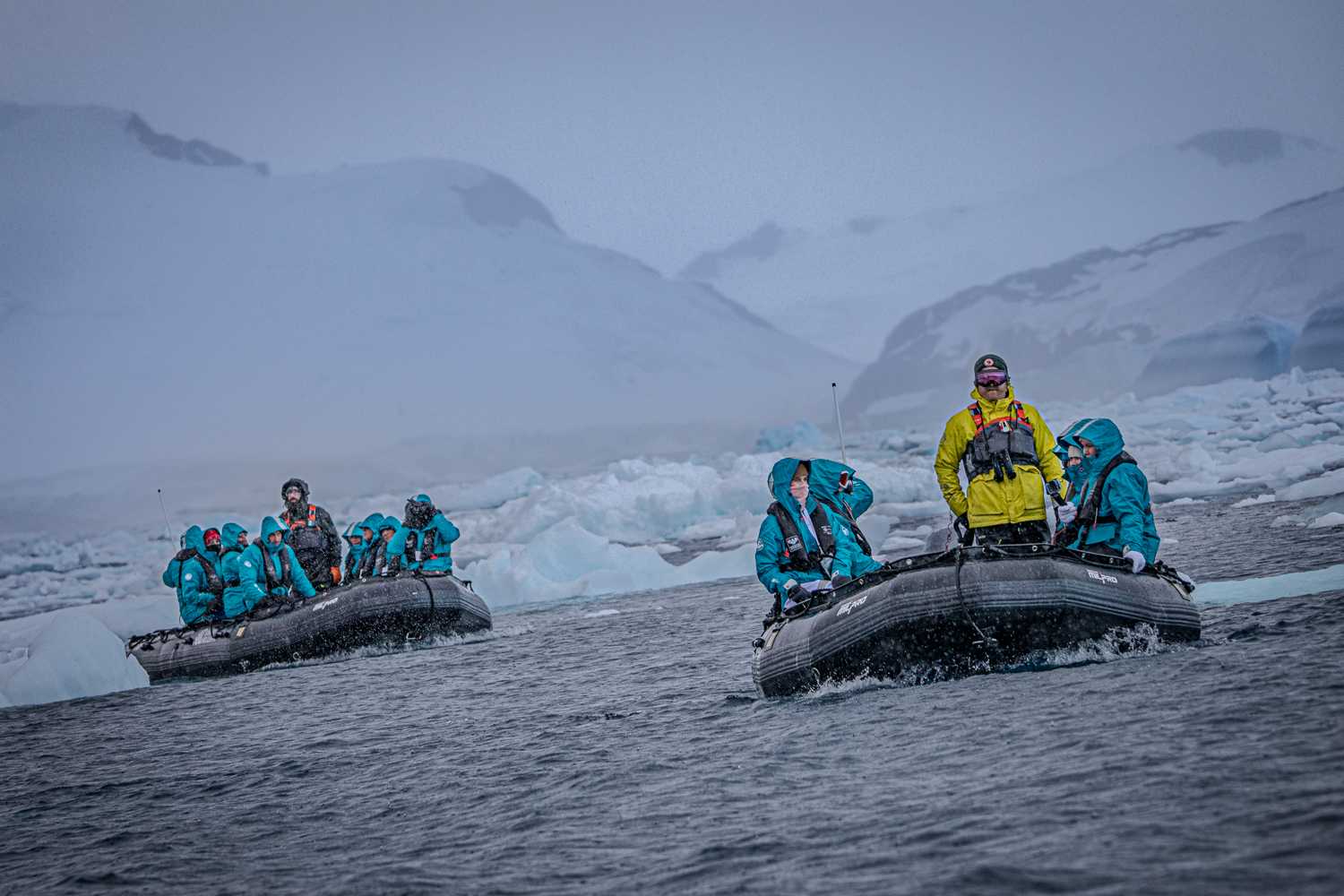
Two Zodiacs plough through the icy Antarctic waters whilst ice floes drift past. Every outing holds new discoveries in this silent wilderness.
“It’s not only the many different shapes that fascinate. Look at the mysterious glow that fills crevices, hollows and caverns with blue-violet light.”
The sharp spikes of a weathered iceberg jut skywards like shark’s teeth
I stare spellbound at a tabular iceberg rising as high as a house out of the water. Deep blue shimmers in its cracks.
It looks otherworldly, almost artificial. Behind it, sharp spikes jut skywards like shark’s teeth from a weathered iceberg.
A weathered iceberg behind a table iceberg. The crevasses in the ice shelf tell of enormous forces – this is where the ice giants calve, later drifting through the Southern Ocean.
Later I meet Aleksander “Sasha” Borodin on the outer deck of our expedition ship.
The expedition expert, who is of Russian descent, has more than 25 years of polar experience – on foot, on skis, in vehicles, on ships.
As part of a Swiss Polar Institute expedition, Sasha Borodin circumnavigated the whole of Antarctica in 2016/17
As part of a Swiss Polar Institute expedition, he circumnavigated the whole of Antarctica aboard a research vessel in 2016/17. I ask him about the fields of research down here.
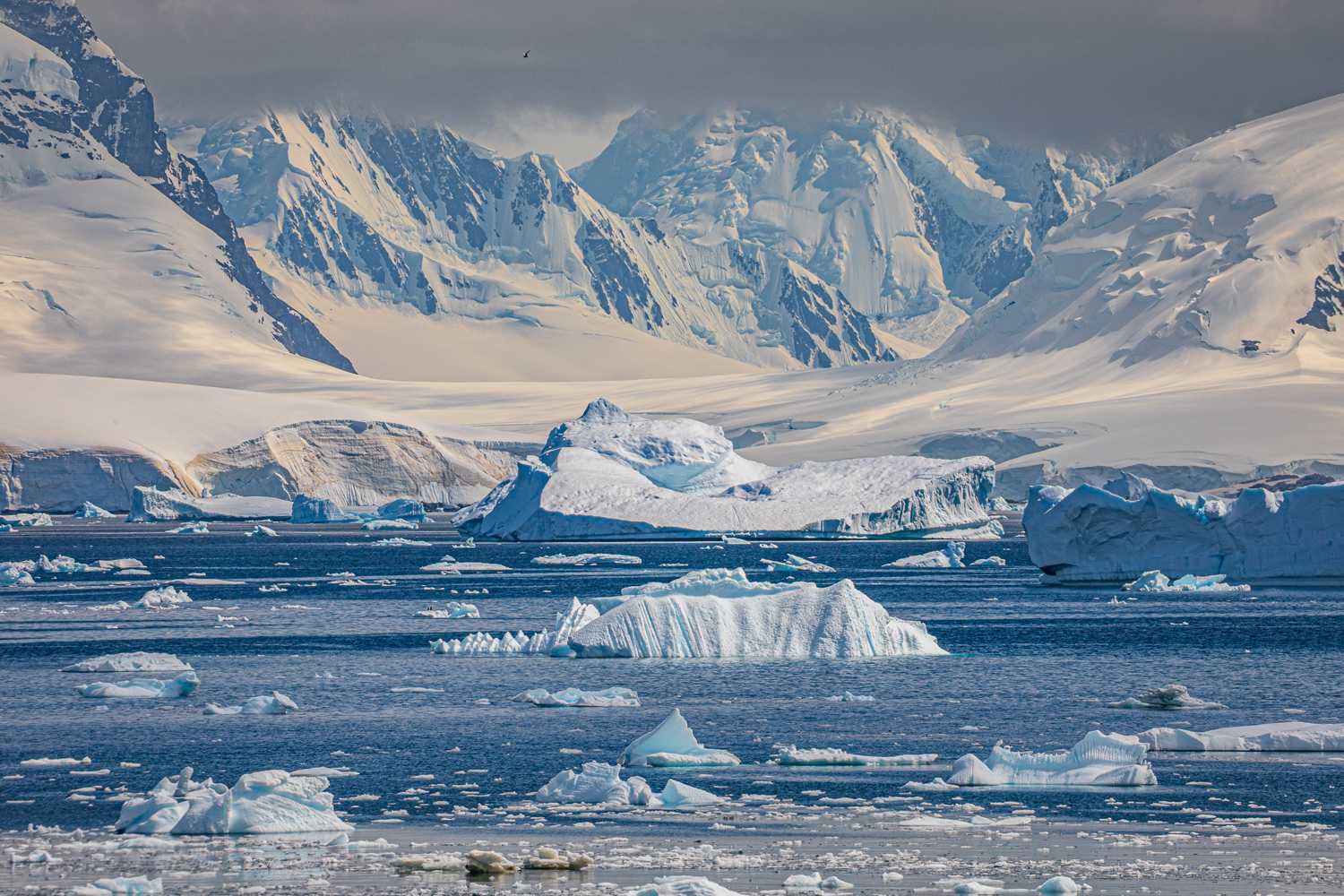
Paradise Bay lives up to its name. Icebergs drift like white islands through the deep blue water, behind them snow-capped peaks tower in dramatic layers in the soft light – a place like something from another world.
“Glaciologists analyse ice cores that reach up to 800,000 years into the past,” Sasha explains. “Right now the search is on for ice that could be 1.5 million years old.
“Just imagine a land as big as Australia and Europe combined”
“Atmospheric scientists monitor the ozone hole, oceanographers measure how Antarctic water masses affect the global climate, marine biologists study the nutrient-rich Southern Ocean.”
Then he leans against the railing, and his voice takes on an almost reverent tone: “Just imagine a land as big as Australia and Europe combined.
Two icebergs in different stages of weathering drift in front of the mighty glacier landscape, each iceberg telling its own story of pressure, time and decay. On the right, the bright blue reveals ancient ice that was once hidden.
“Sunnier than California and yet colder than a freezer. Drier than Arabia, higher than Switzerland, emptier than the Sahara.”
He pauses. “There is only one place in the world that fits this description.” Then he smiles.
Whale expert Anya Astafurova sets me straight: the orcas are not fighting, they are mating
“Whales ahead!” The captain’s announcement spreads like wildfire. Passengers rush out on deck. Ahead of the ship we sight orcas – eight or nine of them.
Two of them roll in a tight embrace. I assume it’s a fight. Whale expert Anya Astafurova sets me straight: “No, they’re mating!”
Two orcas swim closely entwined through the Antarctic sea – a rare sight and a typical sign of mating. The yellowish coating on their skin comes from diatoms, which thrive in icy waters.
A small population of around a hundred orcas in Antarctica has developed a remarkable hunting technique: “wave washing”.
They swim in sync, close together, just below the surface, towards an ice floe. The wave they create washes the prey off the floe and into the water.
With Weddell seals, about four waves are enough, but with leopard seals, which put up a fight, the orcas need up to 18
“With Weddell seals, about four waves are enough,” Anya explains, “but with leopard seals, which put up a fight, they need up to 18.”
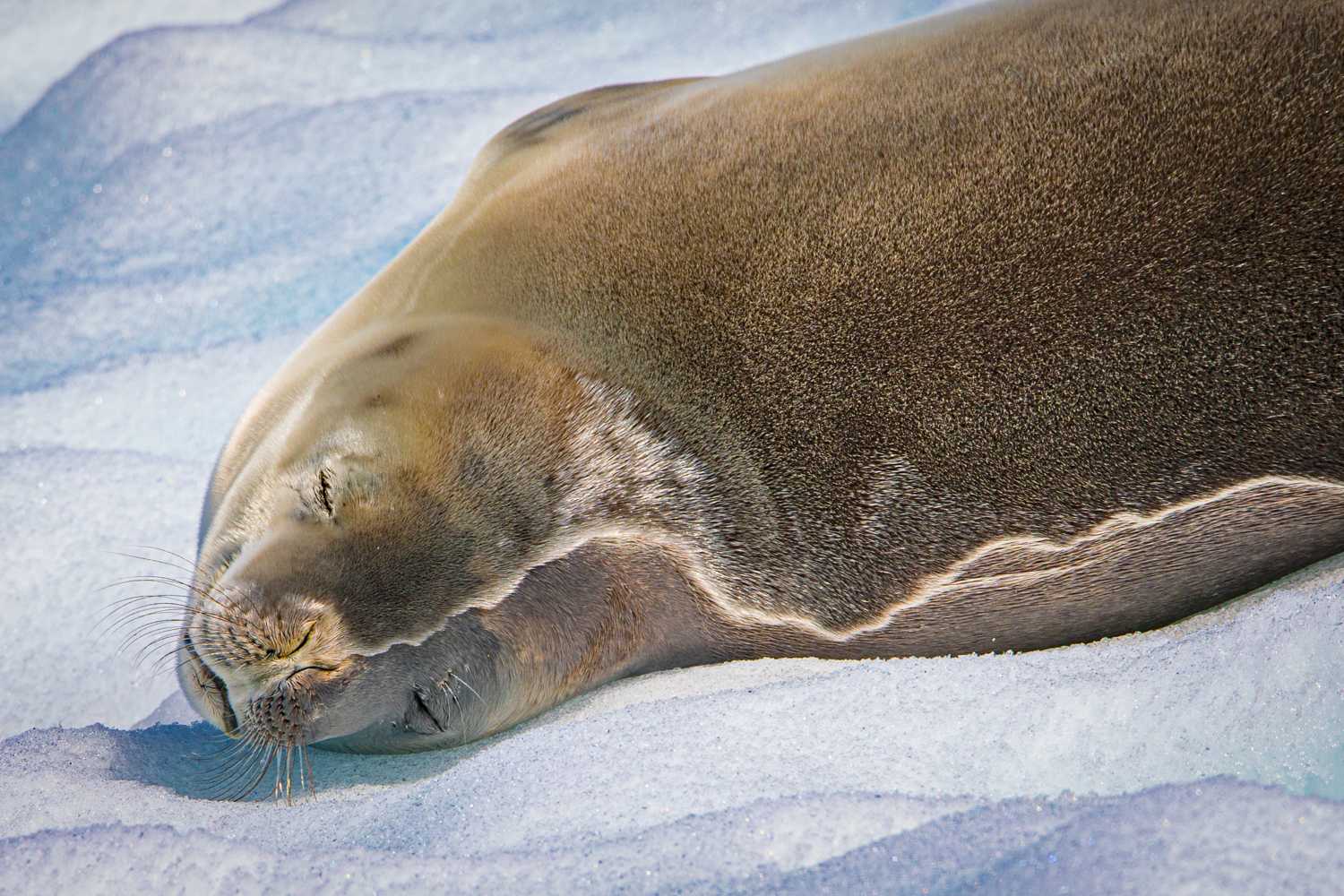
A crabeater seal resting on an ice floe.
I press the shutter release, again and again. The black-and-white dorsal fins slice through the dark water – an image I will never forget.
I look out over the railing. The sun refuses to set and lingers endlessly just above the horizon.
Antarctica holds 90 per cent of all the ice on Earth
The vast snowfields on the rugged mountains glow deep yellow, then orange, then violet.
Antarctica holds 90 per cent of all the ice on Earth – unimaginable masses that have existed virtually unchanged for around 14 million years.
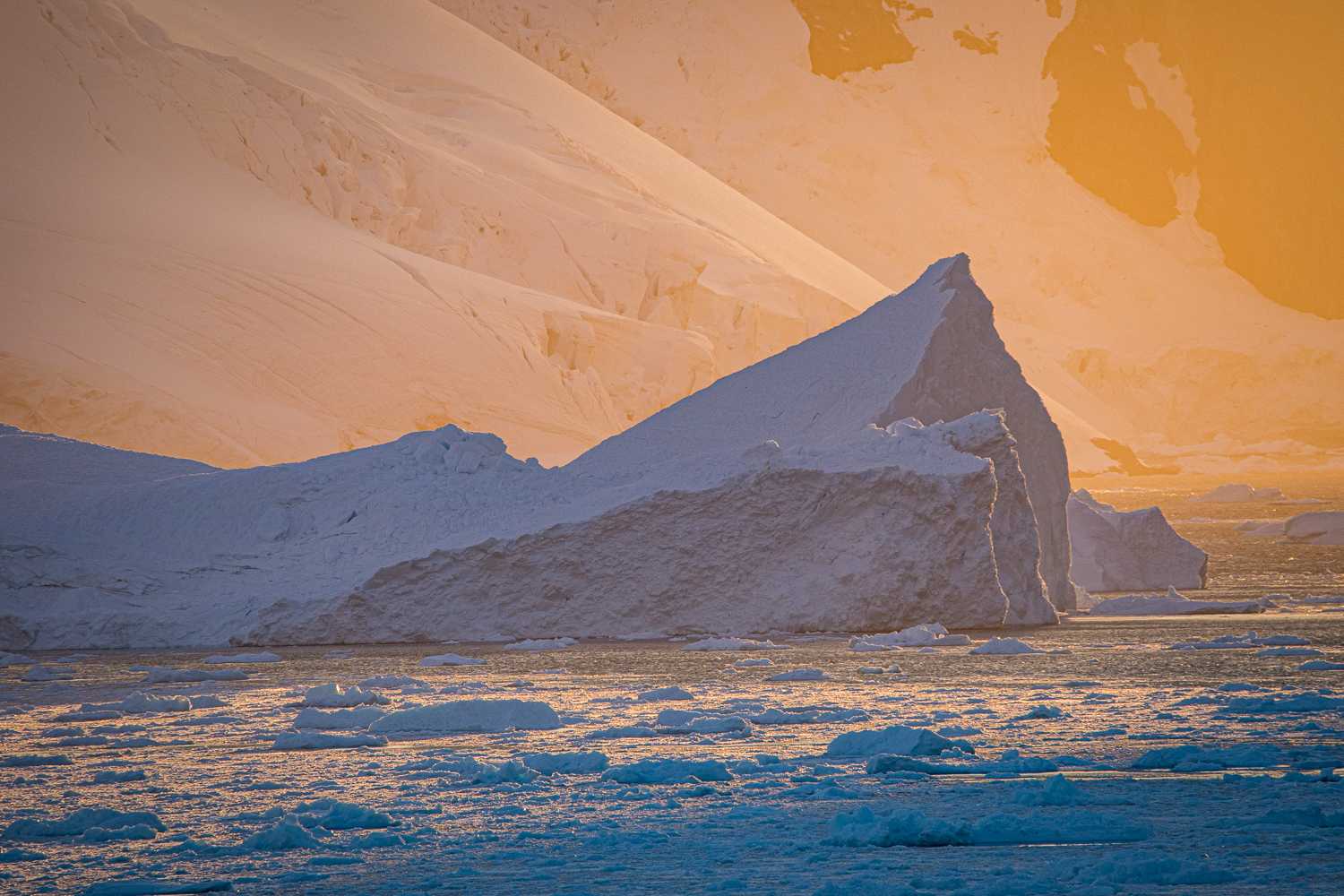
The setting sun behind the Lemaire Channel bathes everything in magical shades of orange and blue.
It is a continent without countries. Here the world seems to come to an end.
What remains is silence, wonder, humility – and the feeling that some places are greater than anything we humans will ever comprehend.
Want more of this?
My DISCOVERY LETTER brings you adventurous stories, stunning pictures and challenges to take part in.
Read now:
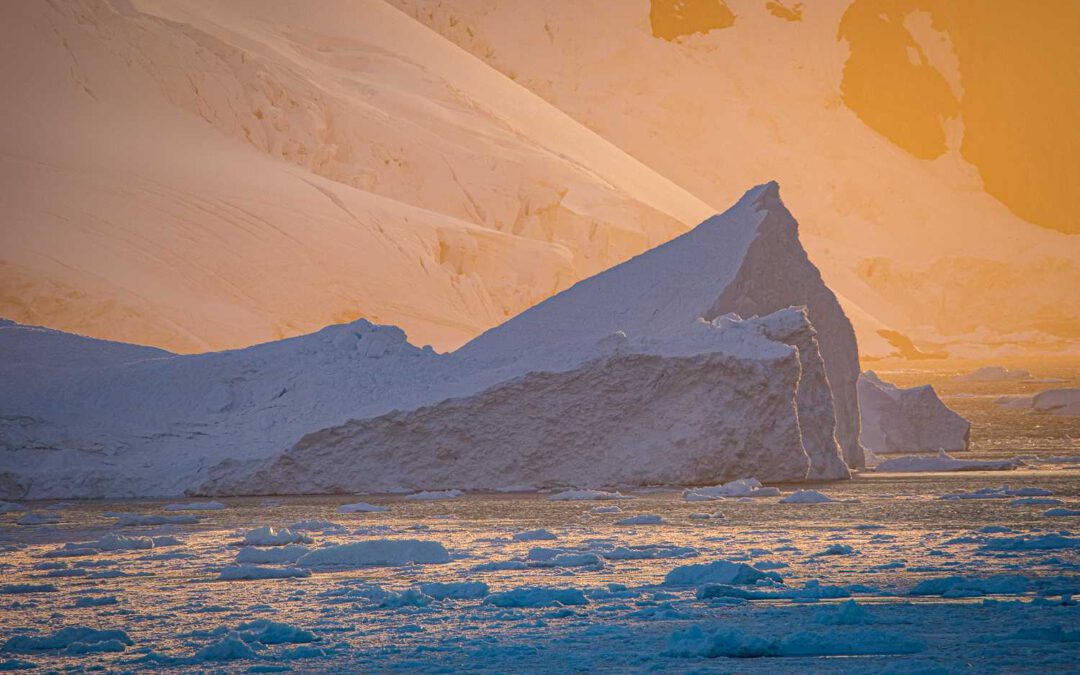
The 30 most beautiful photos from the coldest continent
Photo gallery Antarctica
Larger than Europe and Australia combined. More barren and dry than the Sahara. The coldest, windiest, most inhospitable continent on Earth. 90% of the world’s ice, up to 4.8 kilometres thick, lies there. No continent commands more awe. These 30 images attempt to do so nonetheless.
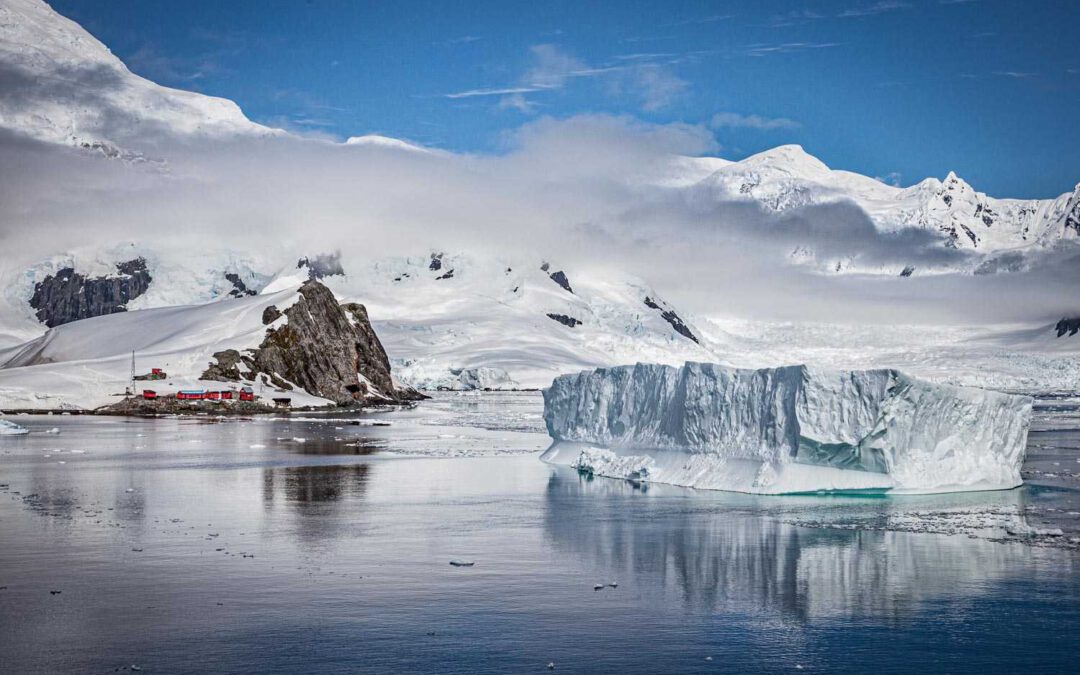
Article published in the Stuttgarter newspaper
Where the world ceases to exist
Zwischen den Wellenbergen der Drake-Passage und den Pinguin-Stätten der Antarktischen Halbinsel liegt eine Welt im Wandel. Eine Schiffsreise zu einem Kontinent, der so verletzlich ist wie nie zuvor.