

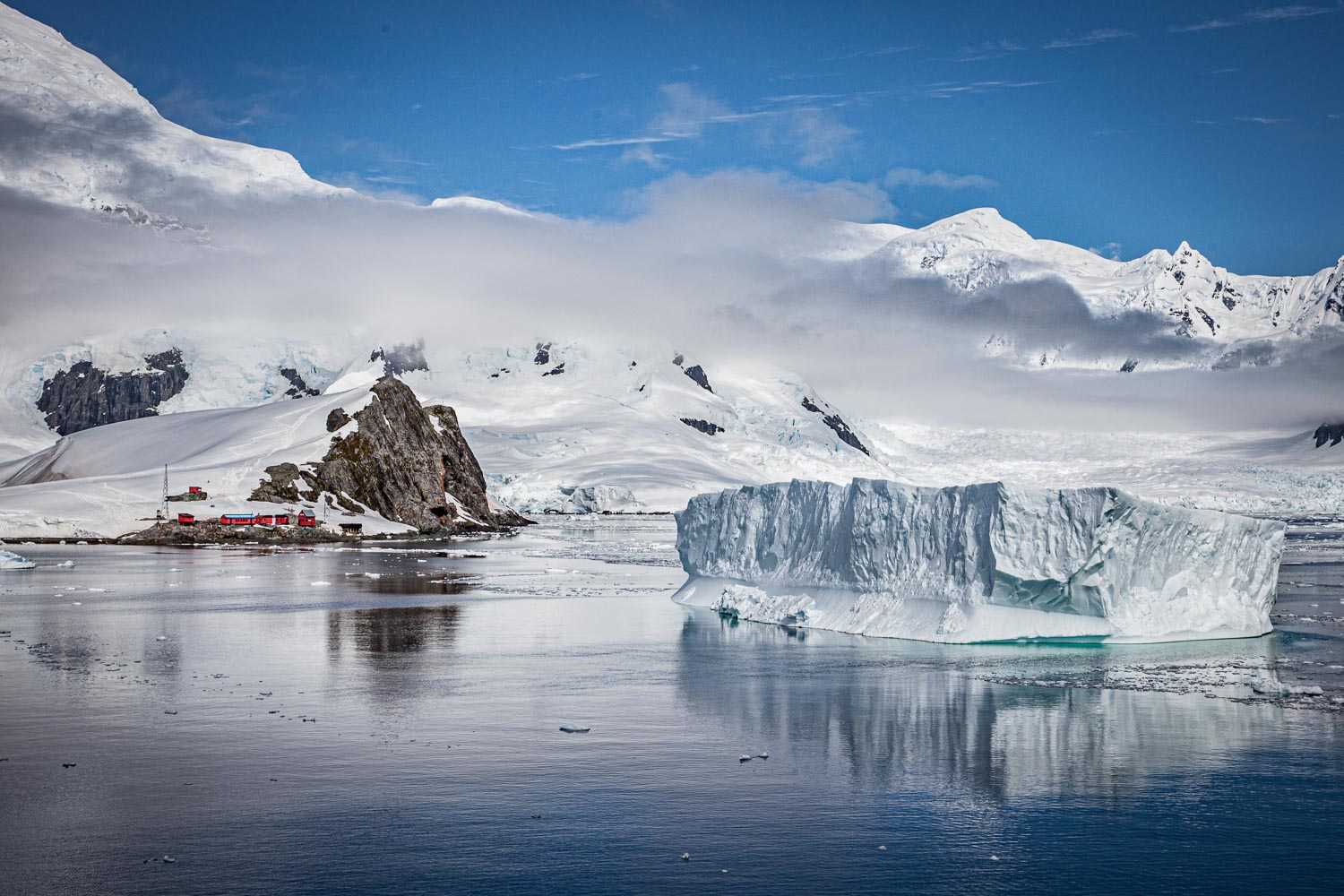
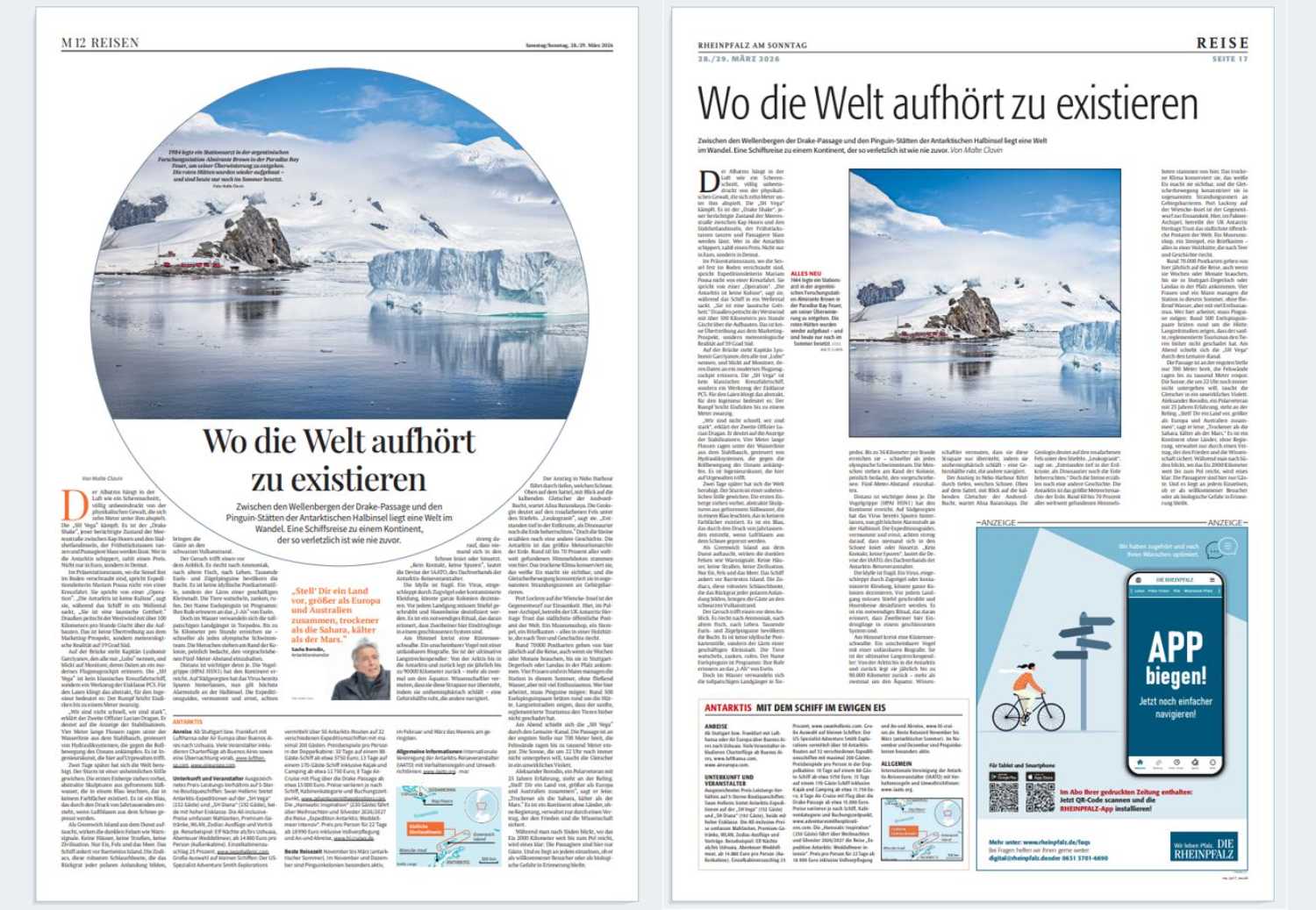
Published in:

The Stuttgarter newspaper is one of Germany’s leading quality media outlets.
The travel editorial team has been named the best in Germany three times in a row.
Text & Photos: Malte Clavin
The albatross hovers in the air like a paper cutout, completely unfazed by the physical force unfolding ten meters below it.
The “SH Vega” is struggling. It’s the “Drake Shake” – that notorious condition in the strait between Cape Horn and the South Shetland Islands that makes breakfast cups wobble and passengers turn pale.
Anyone who sails to Antarctica pays a price – not just in euros, but in humility.
In the presentation room, where the chairs are firmly bolted to the floor, expedition leader Mariam Pousa doesn’t refer to this as a cruise. She calls it an “operation.” “Antarctica isn’t just a backdrop,” she says as the ship dips into the trough of a wave, “it’s a capricious deity.”
Outside, the westerly wind is whipping spray over the superstructure at over 100 kilometers per hour. This isn’t an exaggeration from a marketing brochure, but a meteorological reality at 59 degrees south.
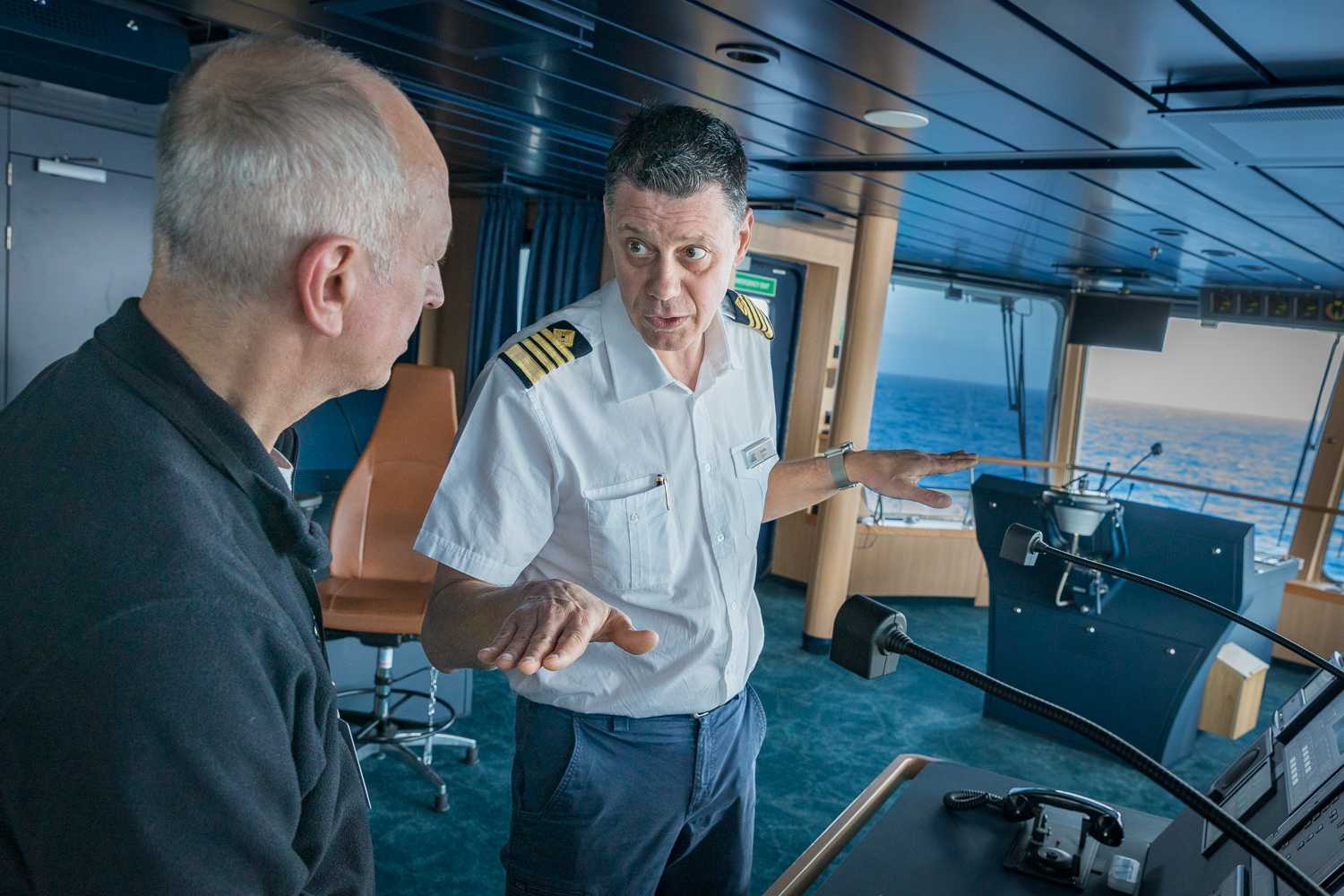
Captain Lubo explains to a guest how the ship’s stabilizers work.
Standing on the bridge is Captain Lyubomir Garciyanov – whom everyone calls “Lubo” – looking at monitors whose data resembles that of a modern aircraft cockpit. The “SH Vega” is not a traditional cruise ship, but a PC5-class icebreaker. To the layperson, that sounds abstract; to the engineer, it means the hull can break through ice up to one meter twenty thick.
Four-meter-long fins protrude from the steel hull below the waterline.
“We’re not fast, we’re strong,” explains Second Officer Lucian Dragan. He points to the stabilizer display.
Four-meter-long fins protrude from the steel hull below the waterline, controlled by hydraulic systems that counteract the ocean’s rolling motion. It is engineering at its finest, confronting the forces of nature.
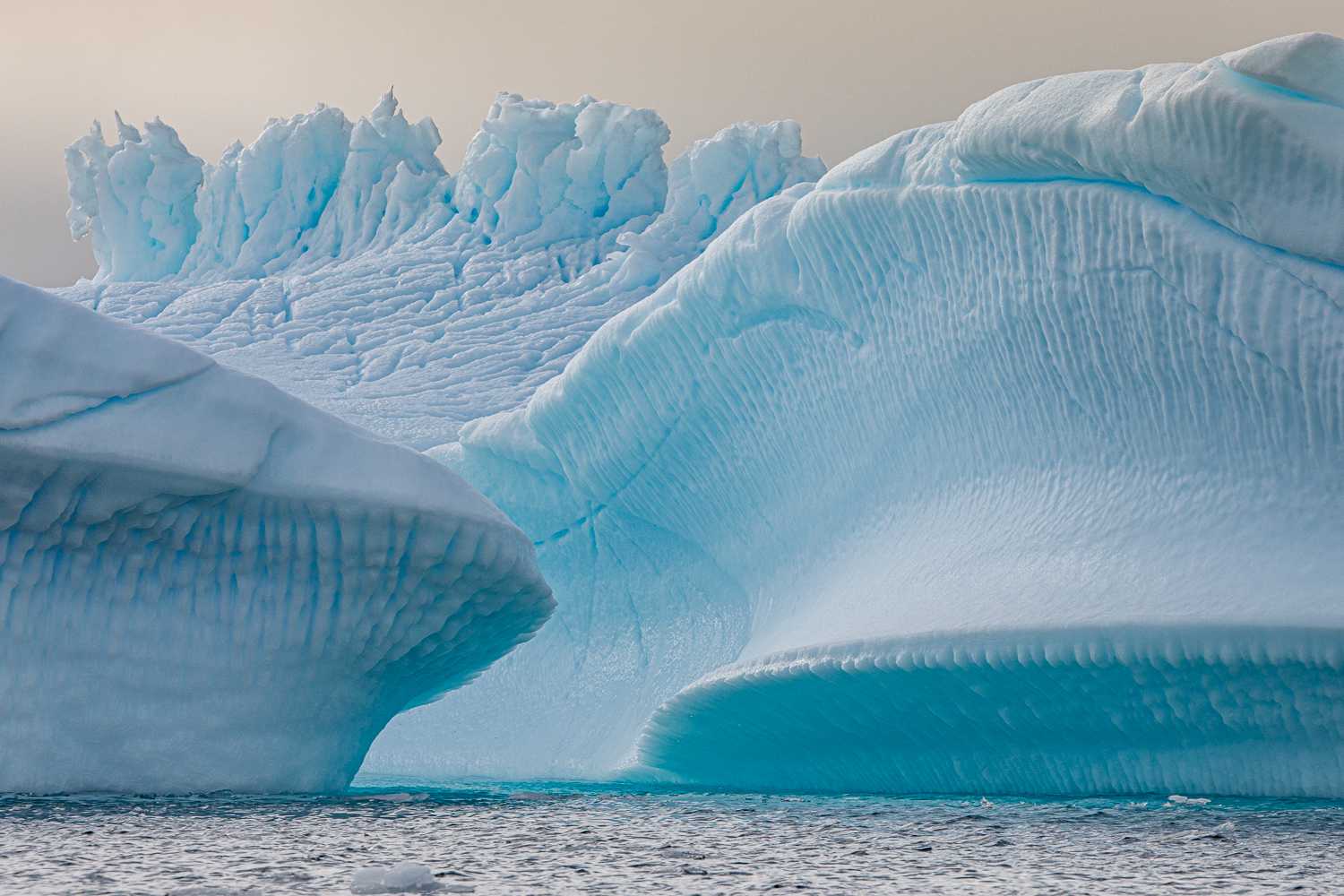
Icebergs merge into a symphony of blue and white. Meltwater channels have carved delicate patterns into their sides.
Two days later, the world has calmed down. The storm has given way to an eerie silence. The first icebergs drift by – abstract sculptures of frozen freshwater, glowing with a blue that doesn’t exist in any color chart.
It is a blue color created by the pressure of millennia as air bubbles are squeezed out of the snow.
The dark rocks look like warning signs
As Greenwich Island emerges from the haze, the dark cliffs look like warning signs. No houses, no streets, no civilization. Just ice, rock, and the sea.
The ship is anchored off Barrientos Island. The Zodiacs – those sturdy inflatable boats that form the backbone of every polar landing – take the guests to the black volcanic beach.
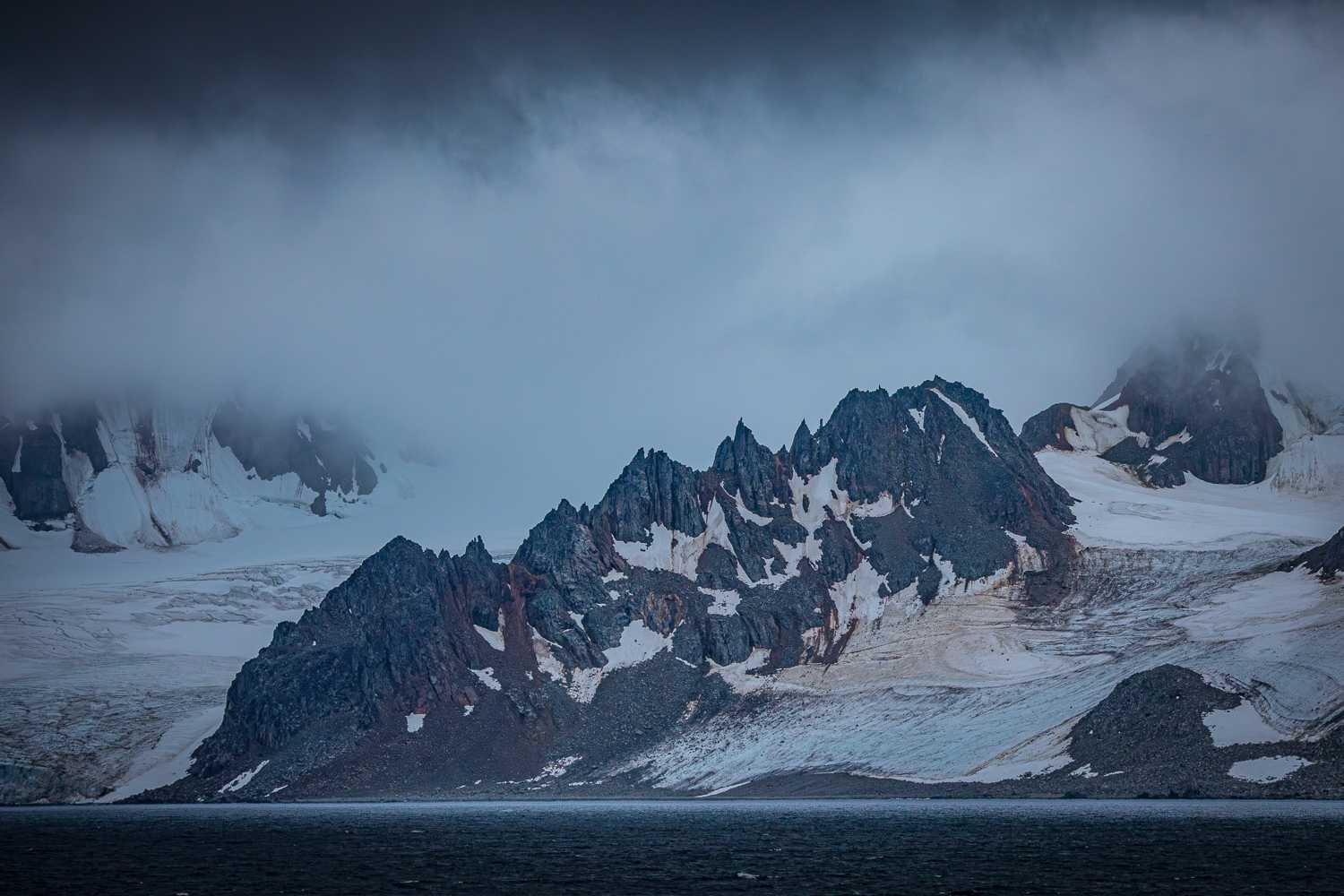
Greenwich Island – my magical island. Rugged rocky outcrops pierce the glacial ice sheet, while wisps of fog shroud the peaks. In this monochromatic world of anthracite and white, time seems to stand still. Primordial, untouched, surreal.
The smell hits you before you even see it. It smells like ammonia, like old fish, like life. Thousands of gentoo and chinstrap penguins populate the bay.
It’s not the idyllic, postcard-perfect silence, but rather the noise of a bustling small town. The animals waddle, squabble, and call out. The name “donkey penguin” says it all: their calls sound like the “ee-ah” of donkeys.
Gentoo penguins swim at up to 36 km/h
But in the water, these clumsy land dwellers turn into torpedoes. They can reach speeds of up to 36 kilometers per hour – faster than any Olympic swim team.
People are standing at the edge of the colony, taking great care to maintain the required five-meter distance.
Social distancing is more important than ever. Avian influenza (HPAI H5N1) has reached the continent. The virus has already taken its toll on South Georgia, and the peninsula is now on high alert.
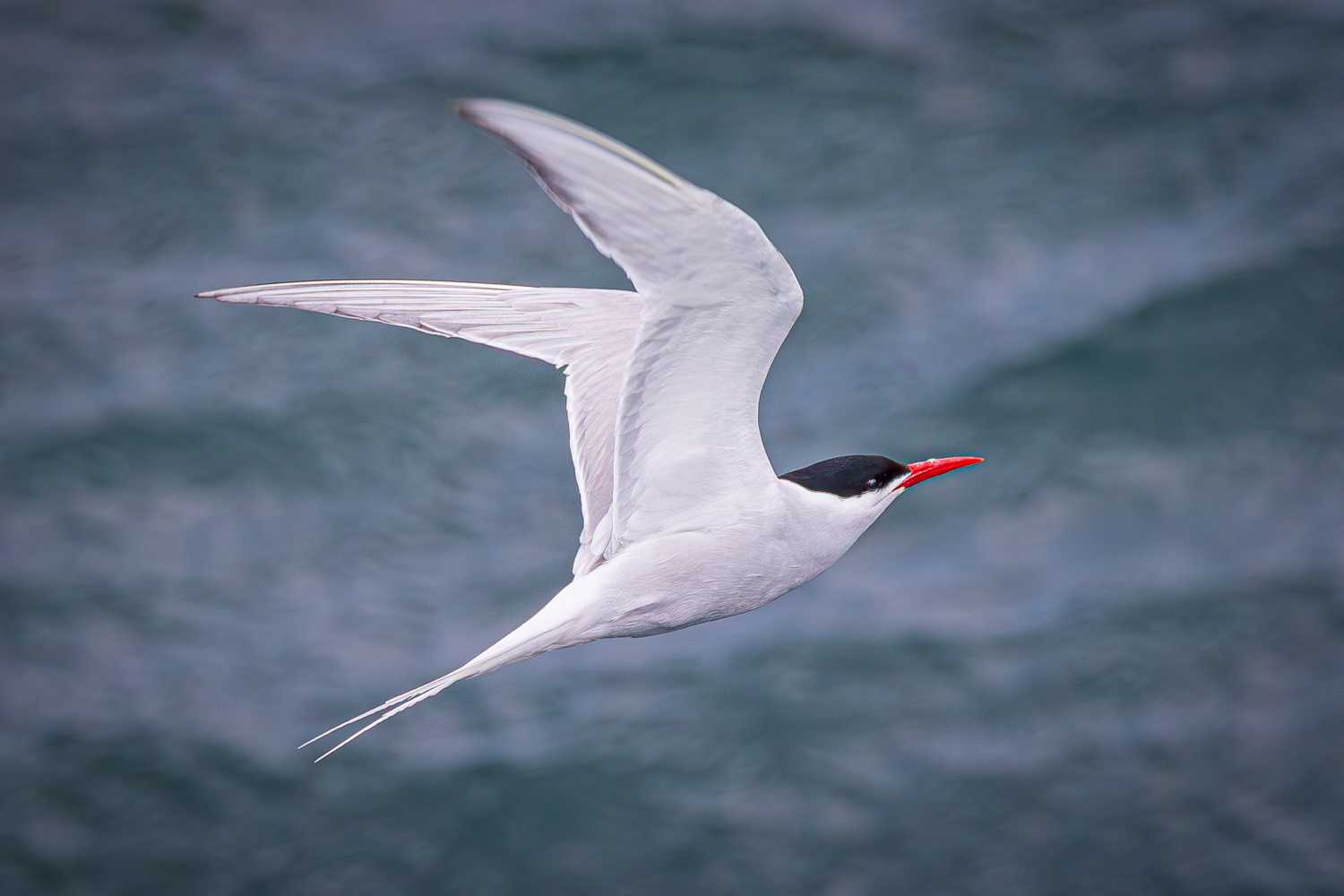
A coastal tern, the long-distance record holder among all animals: Every year, it migrates from the Arctic to the Antarctic and experiences two summers. Some birds travel up to 90,000 km in 10 months.
The expedition guides, hooded and serious, strictly ensure that no one kneels or sits down in the snow. “No contact, no tracks” is the motto of IAATO, the umbrella organization for Antarctic tour operators.
This bird travels up to 90,000 kilometers each year.
A coastal tern circles in the sky. An unassuming bird with an incredible life story.
It is the ultimate long-distance traveler: Every year, it travels up to 90,000 kilometers from the Arctic to Antarctica and back – more than twice around the equator.
Scientists suspect that it survives this ordeal only by sleeping in a unihemisphantic manner – one hemisphere rests while the other navigates.
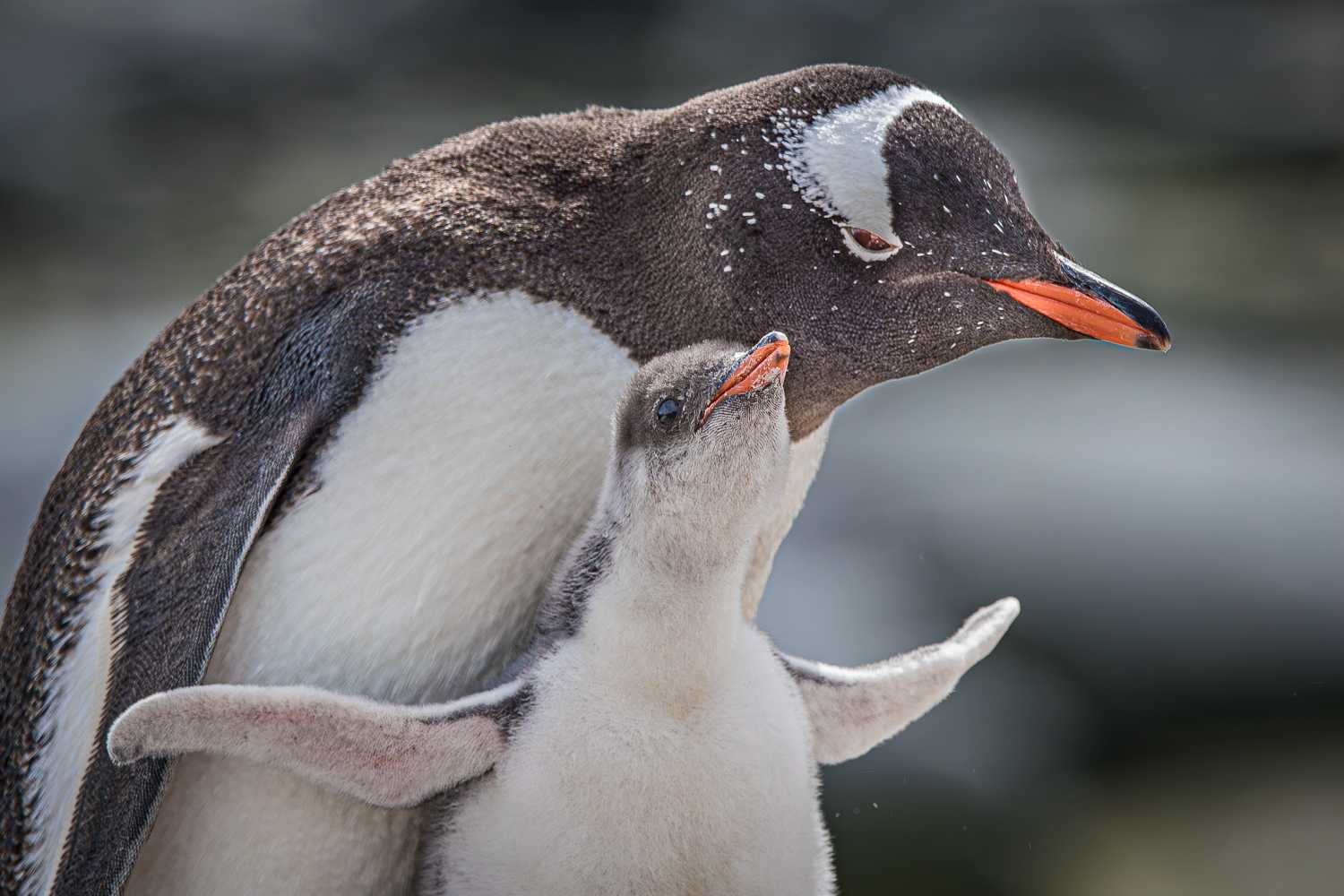
A gentoo penguin chick persistently begs for food, holding its flippers out wide. Soon, the parent will give in and regurgitate the coveted krill.
The ascent to Neko Harbor winds through deep, soft snow. At the top of the saddle, overlooking the calving glaciers of Andvord Bay, Alisa Baranskaya is waiting.
The geologist points to the pink rock beneath her boots. “Leukogranite,” she says. “It formed deep within the Earth’s crust when dinosaurs still ruled the Earth.”
Antarctica is the largest meteorite archive on Earth.
But the rocks tell yet another story. Antarctica is the largest meteorite archive on Earth. About 60 to 70 percent of all meteorites found worldwide come from here.
The dry climate preserves them, the white ice makes them visible, and glacial movement concentrates them in so-called stranding zones at mountain barriers.
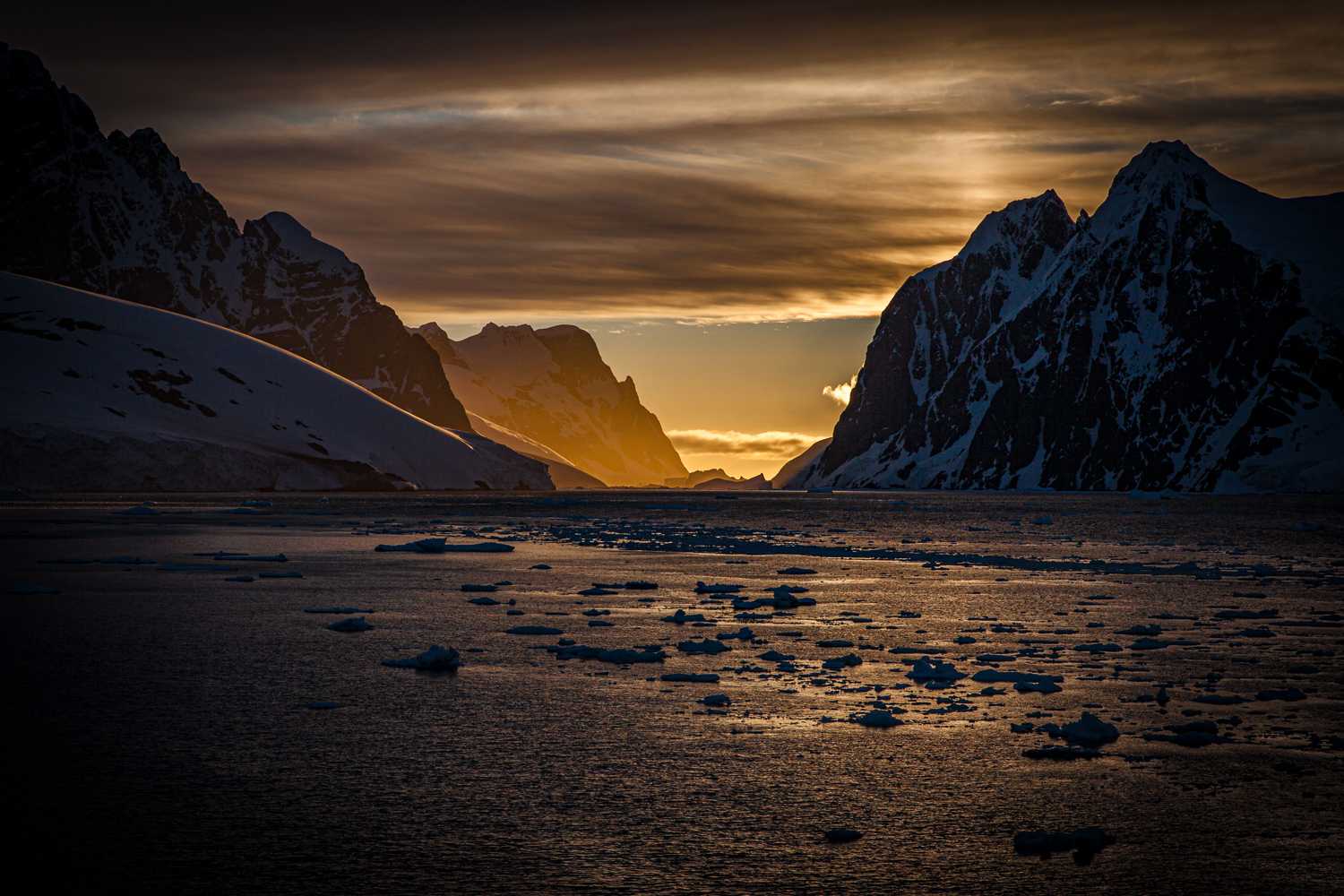
The sun behind the Lemaire Channel doesn’t seem to want to set.
Port Lockroy on Wiencke Island is the antithesis of solitude.
Here, in the Palmer Archipelago, the UK Antarctic Heritage Trust operates the world’s southernmost public post office. A museum shop, a postmark, a mailbox – all housed in a wooden hut that smells of tar and history.
About 70,000 postcards are sent from here each year, even though it takes weeks or months for them to reach Stuttgart-Degerloch or Landau in the Palatinate.
Anyone who works here has to like penguins.
Four women and one man are running the station this summer – without running water, but with plenty of enthusiasm.
Anyone who works here has to like penguins: About 500 gentoo penguin pairs breed around the hut. Long-term studies show that gentle, regulated tourism has not harmed the animals so far.
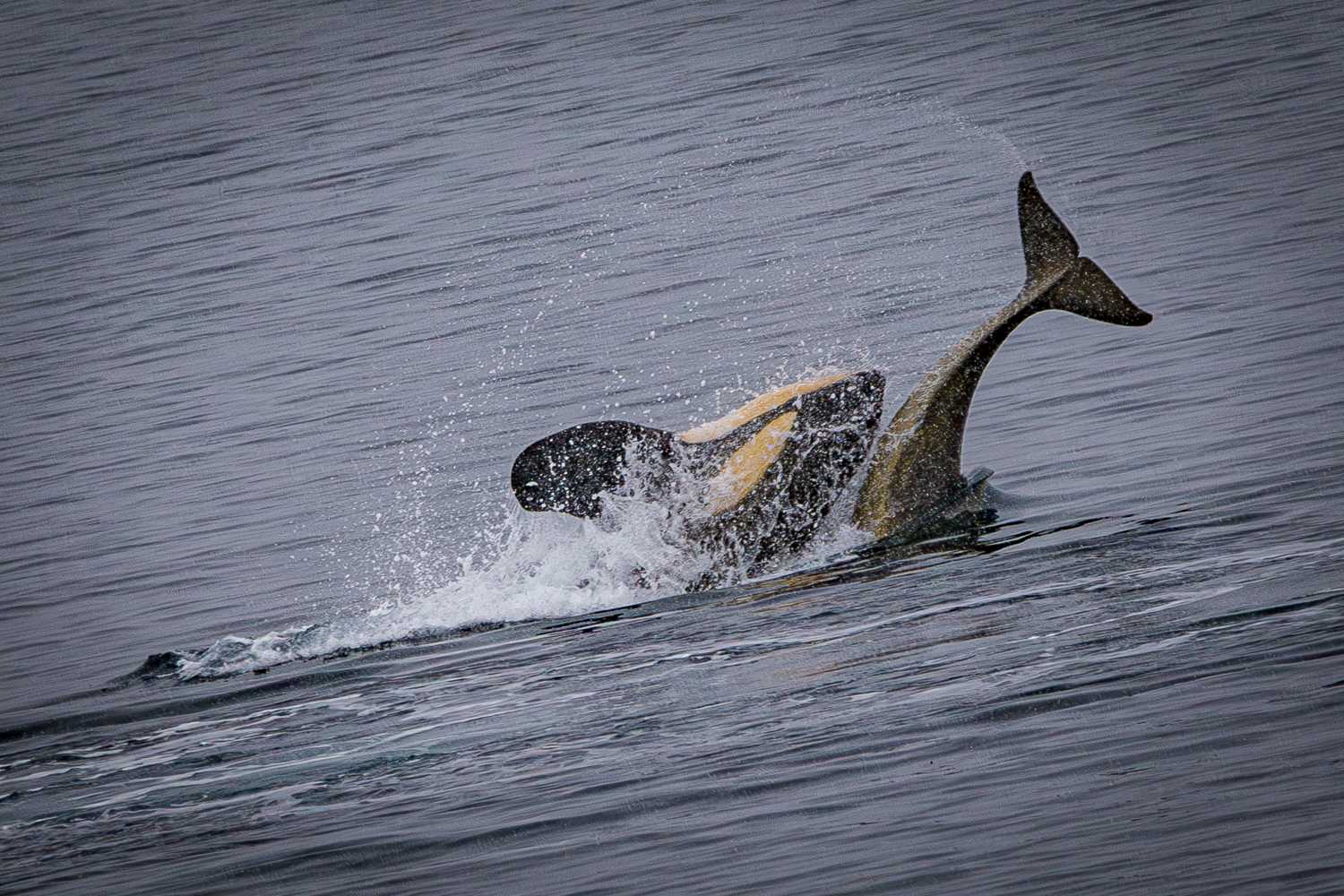
Two orcas swim through the Antarctic waters, tightly entwined – a rare sight and a typical sign of mating. The yellowish coating on their skin comes from diatoms that thrive in icy waters.
In the evening, the “SH Vega” makes its way through the Lemaire Channel. At its narrowest point, the channel is only 700 meters wide, and the rock walls rise up to a thousand meters. The sun, which still refuses to set at 10 p.m., bathes the glaciers in an otherworldly violet glow.
“Imagine a country larger than Europe and Australia combined, drier than the Sahara, and colder than Mars.”
Aleksander Borodin, a polar veteran with 25 years of experience, stands at the railing. “Imagine a land larger than Europe and Australia combined,” he says quietly. “Drier than the Sahara, colder than Mars.”
It is a continent without countries or a government, governed solely by a treaty that ensures peace and the advancement of science.
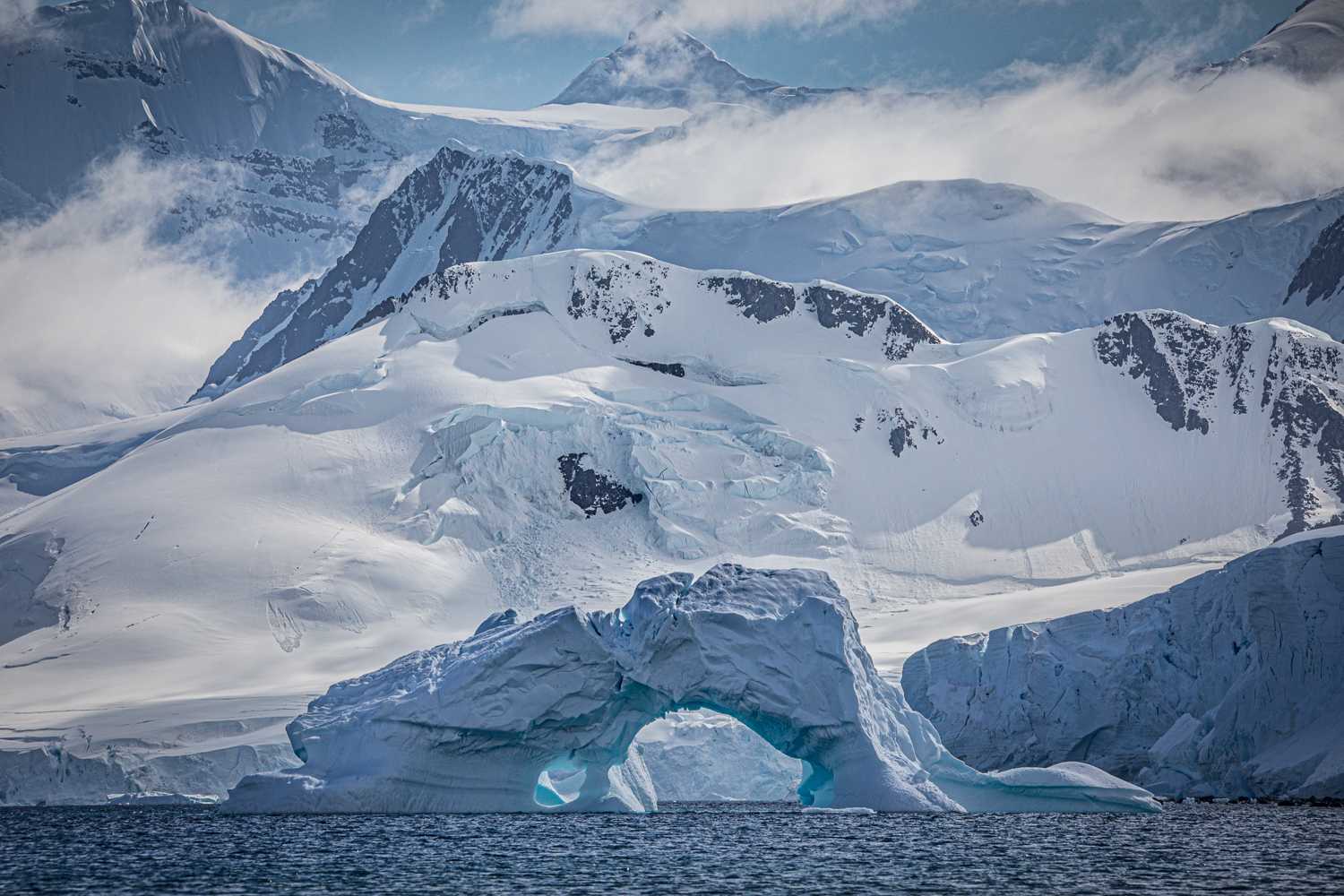
A massive ice arch frames the view of the glaciers beyond. Waves and meltwater have created this gateway – a fleeting work of art set against timeless, snow-capped peaks.
As you look south, where the ice stretches 2,000 kilometers all the way to the pole, one thing becomes clear: The passengers are merely guests here. And it’s up to each individual whether they’ll be remembered as a welcome visitor or as a biological threat.
Want more of this?
My DISCOVERY LETTER brings you adventurous stories, stunning pictures and challenges to take part in.
Read now:

3-min clip about Wim Hof workshop in Poland
Ice video scores 100,000 views on YouTube
I am very happy that my YouTube video about my Poland Ice Transformation has now been viewed over 100 000 times! 2 hours of shirtless mountain hiking in shorts – with a wind chill down to -19 degrees?! Together with 60 people from all over the world I learned incredible breathing techniques, ice baths and other great tools.

Changing perspectives
A redefinition of fear
Everything starts with a thought. Here’s one: Why not rethink ANGST? And how, pray tell? Let’s start by breaking down ANGST, in this case the word, and then put it together with new, empowering terms – so that a new meaning emerges.

With scientists on board
Arctic photo gallery
On board the ‘Resolute’, a comfortably equipped ship under the flag of the Royal Canadian Geographic Society, zoologists, ornithologists, oceanographers and glaciologists will conduct scientific surveys and counts over the next 10 days. And in the middle of it all, me, as a ‘temporary researcher’.