The breathtaking Cathedral Gorge in Purnululu National Park in Western Australia is a natural wonder – over millions of years, the interplay of wind, water and time has created a mighty cathedral of sandstone here. The bizarre walls, streaked with ochre-coloured bands, rise up like the columns and arches of an ancient sacred building.
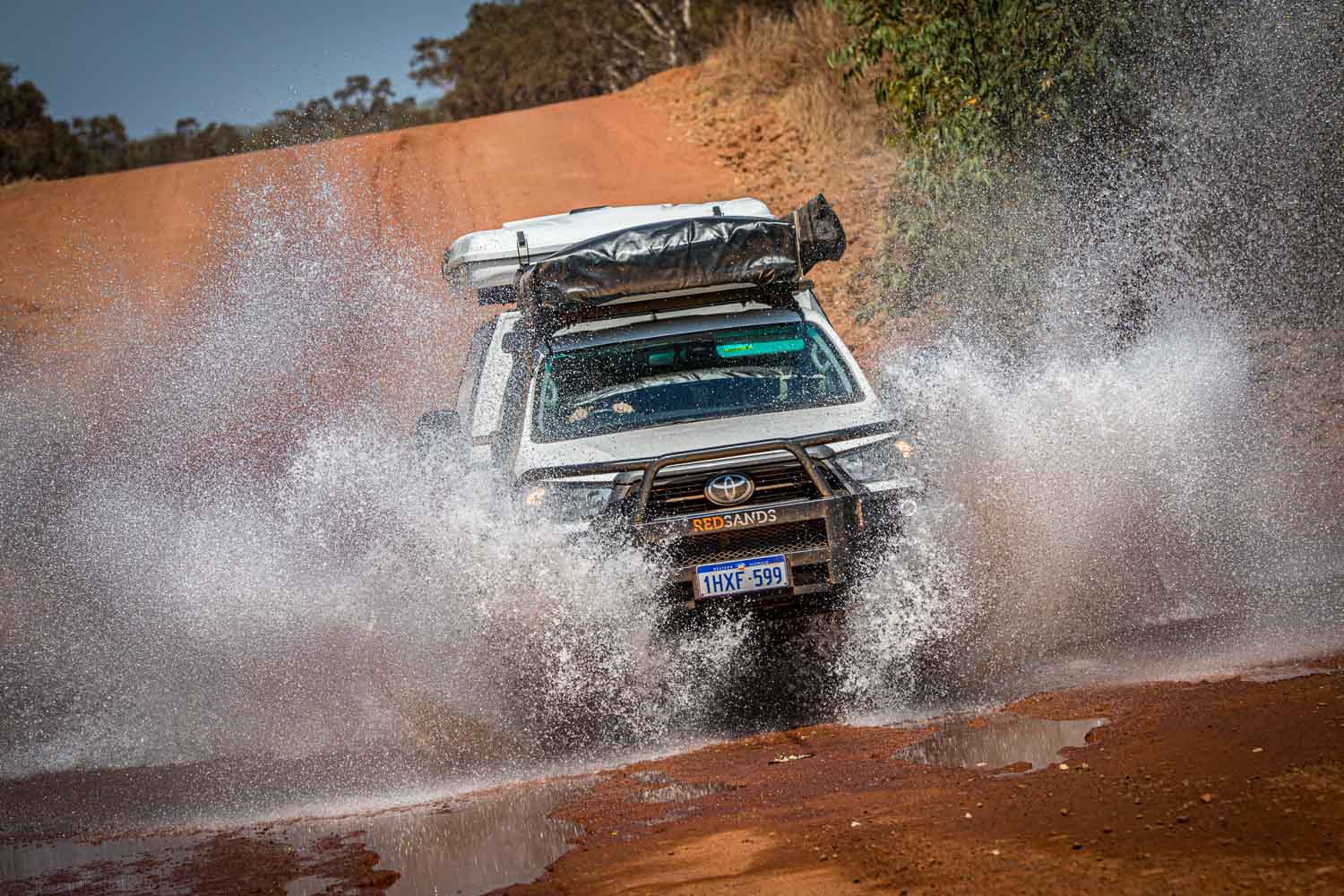
Annette ploughs through a water ford on Gibb River Road – such creek crossings are an everyday endurance test for vehicles and drivers in the Kimberley region, where even dry riverbeds can turn into raging torrents within minutes after rainfall.
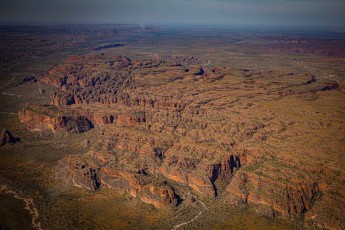
Rock formations that resemble a cathedral of geological history – monumental evidence of the tectonic and climatic forces that shaped Western Australia's north-west long before humans first set foot on this continent.
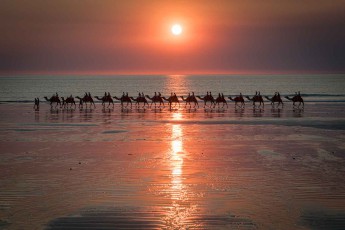
Like silhouettes cut from paper, camels parade through the blazing evening light at Cable Beach. Their shapes mirror in the wet sand as the Indian Ocean slowly swallows the sun.
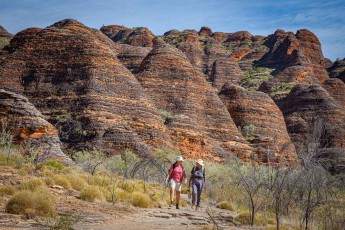
Annette and our guide Rebecca Sampy explore the breathtaking landscape of Purnululu National Park in Western Australia – the bizarre sandstone formations of the Bungle Bungle Ranges, shaped by wind and weather, rise like giant beehives into the blue sky.
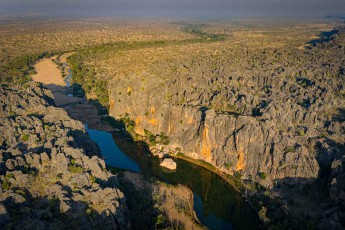
The Lennard River winds like a turquoise ribbon through the ancient Windjana Gorge in the Kimberley region, carving its path between limestone walls that rise up to 100 metres high—once part of a prehistoric barrier reef and now home to freshwater crocodiles and remarkable geological formations sculpted over millions of years.
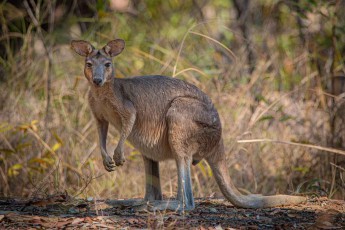
An antilopine kangaroo pauses at the roadside along the Gibb River Road, alert eyes surveying its surroundings—the smallest of the three large kangaroo species inhabits the rocky hills and spinifex grasslands of the Kimberley region, using its powerful hind legs to bound effortlessly across boulders and rugged terrain.
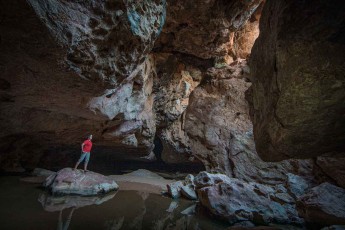
Annette in Dimalurru Cave, also known as “Tunnel Creek”.
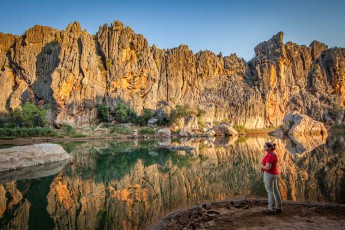
Morning Walk in the Bandilngan (Windjana Gorge).
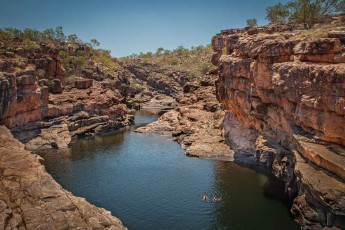
Two swimmers have claimed a natural oasis in Bell Gorge—crystal-clear water pools between rugged sandstone walls to form a perfect natural swimming hole, whilst all around the rock formations, sculpted over millions of years, glow in warm ochre tones beneath the Kimberley sun.
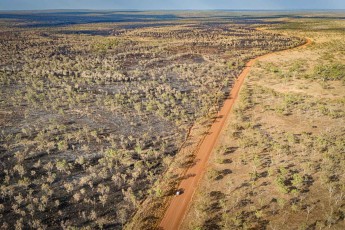
Like a rust-red thread, the Gibb River Road cuts through the pristine wilderness of the Kimberley region — 660 kilometres of pure adventure highway threading through one of Earth's last great wilderness areas, where boab trees and eucalyptus have grown undisturbed for millennia, and only the red dust betrays that humans occasionally pass this way.
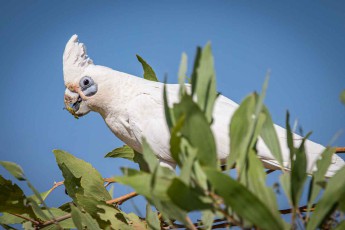
A sulphur-crested cockatoo deftly nibbles eucalyptus seeds in Warla Gorge — with its powerful beak and characteristic sulphur-yellow crest, this intelligent parrot ranks among the few bird species capable of using tools and travels through the Kimberley region in large, raucous flocks.
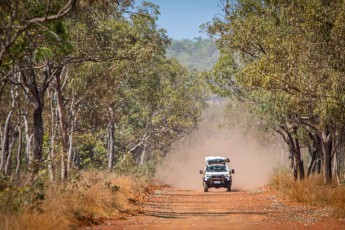
Annette races our off-road vehicle along the dusty Gibb River Road, where temperatures of over 40 degrees Celsius are commonplace and the air seems to vibrate with heat.
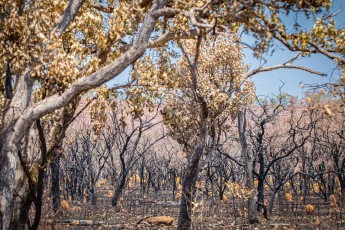
Black skeletons of twisted branches rise up between surviving eucalyptus trees – the scars of a bushfire scar the Kimberley landscape, while termite mounds rise like stone sentinels from the charred earth.
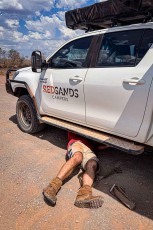
A stroke of luck: Mark Sulman makes a makeshift repair to the otherwise flawless off-road vehicle, enabling us to reach the next station ten kilometres away.
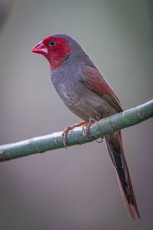
A crimson finch displays its brilliant crimson face and sturdy orange-red beak whilst perched on a slender branch. This small estrildid finch inhabits the tropical grasslands and riverbanks of the Kimberley region.
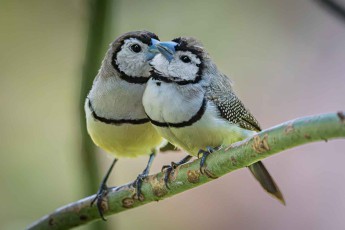
Two Double/barred finches snuggle up to each other. These delicate finches form lifelong partnerships and show their affection through such intimate contact.
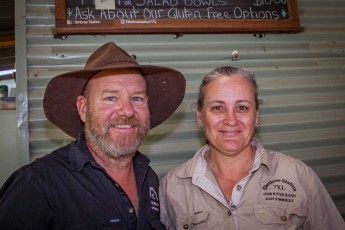
Mark and Fiona Sulman, the warm-hearted proprietors of Ellenbrae Station, welcome visitors with the genuine hospitality and down-to-earth friendliness of the Australian outback.
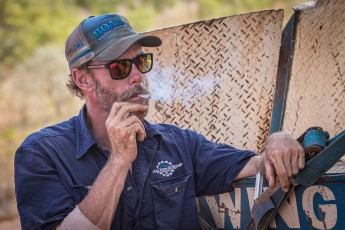
Tow truck driver Darren taking a well-deserved cigarette break in his vehicle on Gibb River Road. Behind mirrored sunglasses and a weather-beaten face lies someone who has rescued countless stranded travellers from predicaments. His sunburnt skin and relaxed demeanour tell tales of endless kilometres on gravel roads and encounters with the vagaries of the Kimberley wilderness.
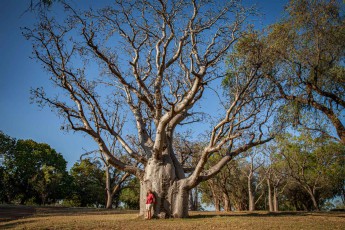
A majestic baobab tree stretches its mighty branches towards the sky, impressively illustrating the monumental dimensions of this Australian icon, which can live for up to 1,500 years.
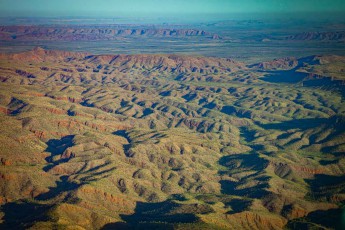
From an aerial perspective, the dramatic erosion landscape between Kununurra and Purnululu reveals itself as an immense relief of parallel furrows and ridges.
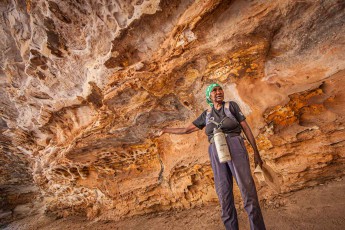
Indigenous leader Rebecca Sampy explores with us the fascinating rock landscape of Purnululu National Park in Western Australia, the traditional home of her people. The bizarre sandstone formations, shaped by wind and water, glow orange-red and ochre. They bear witness to millions of years of geological history and the deep spiritual significance of this site for the local Aboriginal people.
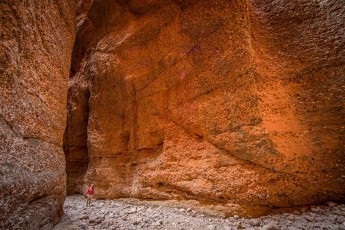
At one point in Echidna Chasm, the crevice widens into a hidden basin.
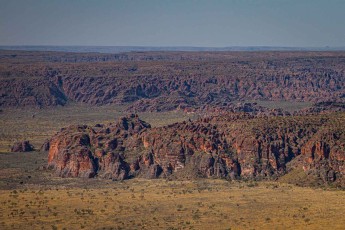
In the foreground, the characteristic orange-red rock towers and columns of the Bungle Bungles rise from the green plain, while behind them, undulating erosion structures stretch to the horizon.
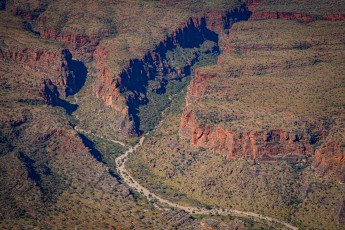
A dried-up riverbed winds its way like a pale scar through the deeply carved gorge of the Bungle Bungles.
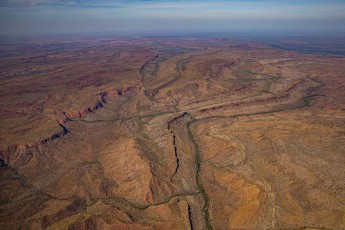
From a bird's eye view, the complex geology of the Kimberley region reveals itself here as an X-shaped mosaic of layered sedimentary rocks and erosion channels.
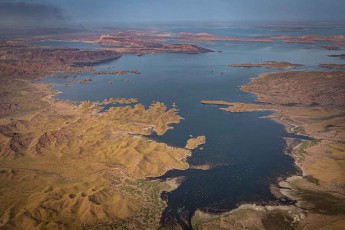
With a storage capacity of over 10,900 gigalitres, the enormous Argyle Reservoir is one of the largest artificial lakes in the southern hemisphere.
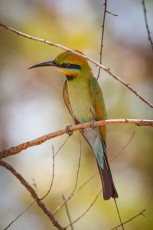
A rainbow bee-eater perches on its lookout. Emerald green, turquoise and golden ochre blend in its plumage like a living colour fan.
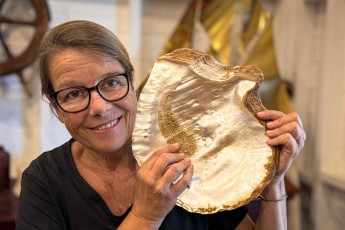
At Willie Creek Pearl Farm, a Pinctada maxima shimmers like liquid moonlight. The world's largest pearl-producing oyster once made Broome the pearl capital of the southern hemisphere.
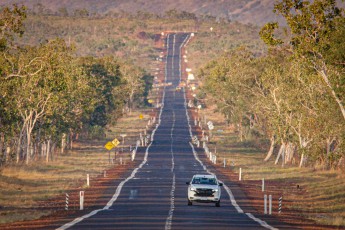
The motorway stretches straight towards the horizon. The heat makes the tarmac shimmer as the road winds its way towards the rust-coloured Cockburn Table Mountains.