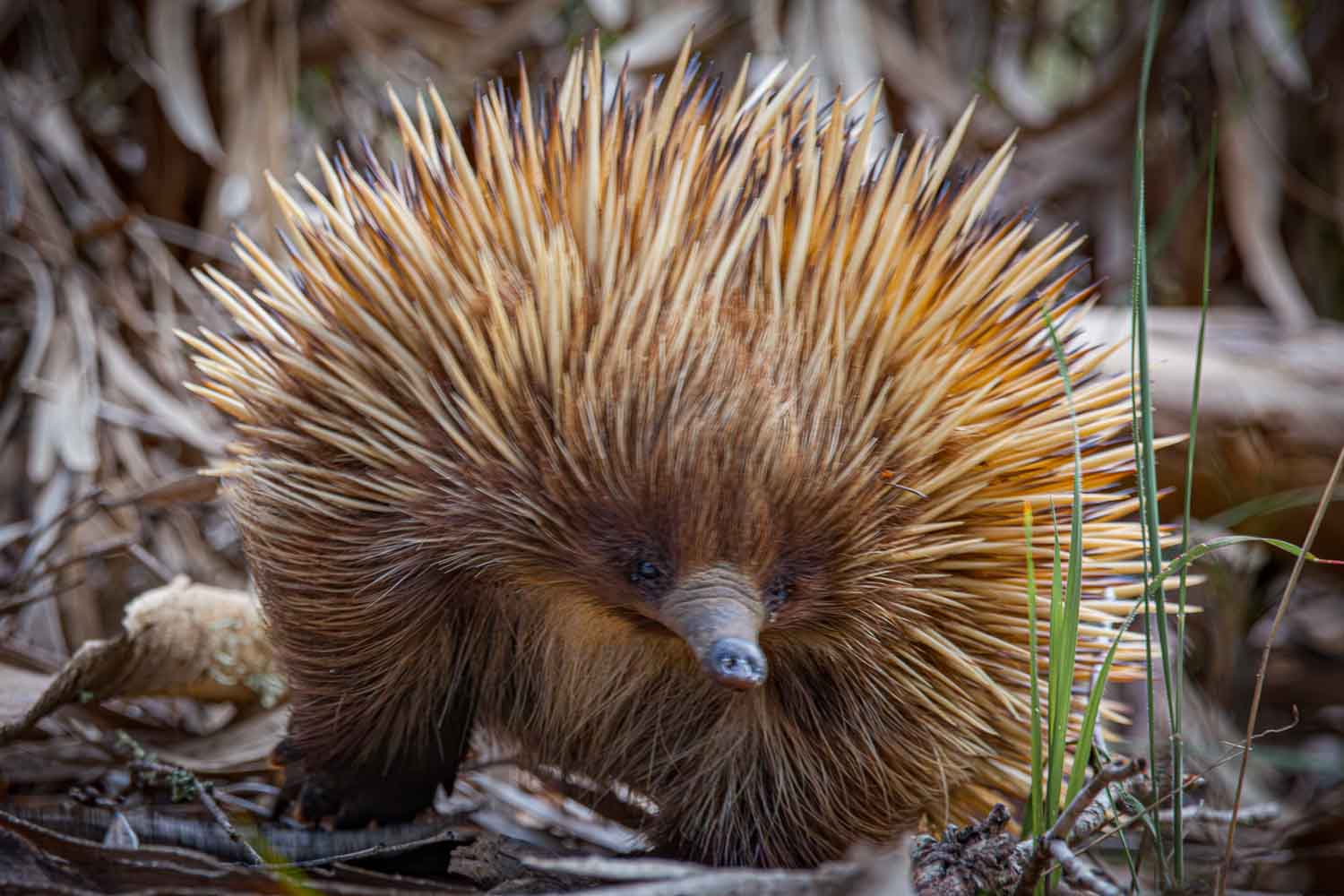
Kangaroo Island: A short-beaked echidna – golden-brown spines, tiny button eye, stoic expression. One of Earth's last egg-laying mammals.
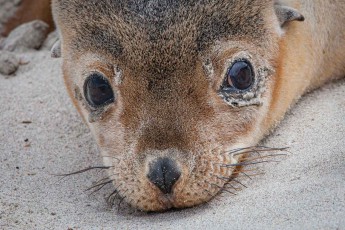
“Come and play with me!” this young Australian sea lion (Neophoca cinerea) – with eyes like black moons – seems to be signalling to its fellow sea lions.
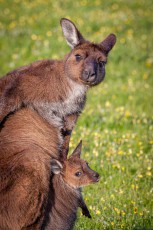
In a mother kangaroo’s pouch, a ‘joey’ stretches towards the daylight. Curious eyes are already scanning the flower-strewn meadow of Kangaroo Island.
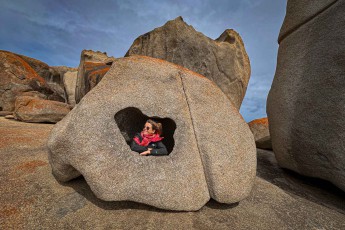
Kangaroo Island: Remarkable Rocks, framed in a unique way. 500 million years of erosion created this window.
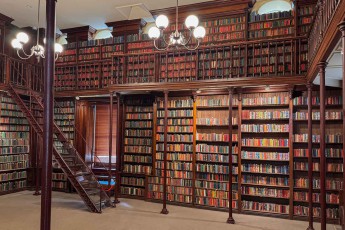
Mahogany shelves reaching the ceiling, thousands of volumes, chandelier light. Adelaide's Institute Library breathes history.
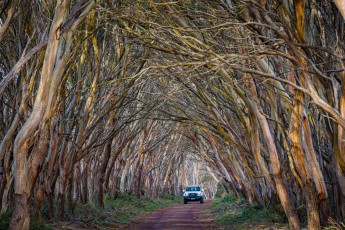
Kangaroo Island: Eucalyptus cneorifolia arches into a natural tunnel.
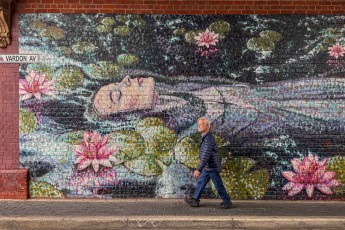
Vardon Avenue, Adelaide: a passer-by drifts past Jimmie C's Ophelia – Shakespeare's slumbering tragic heroine, cradled among water lilies.
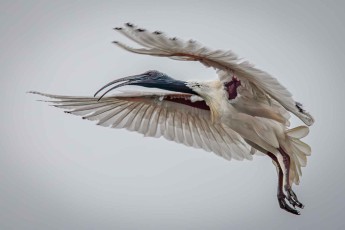
A white ibis in flight.
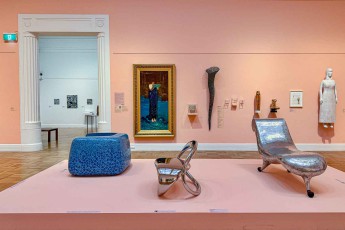
Contemporary seating, chrome-plated sculptures, pink walls – curatorial art at the Art Gallery of South Australia that breaks down boundaries.
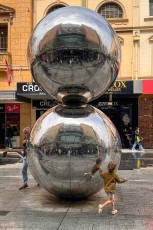
A child runs towards “Mall’s Balls” – Adelaide’s most photographed sculpture in Rundle Mall. Since 1977, the mirrored spheres have served as a meeting place, a landmark and a playground all in one.
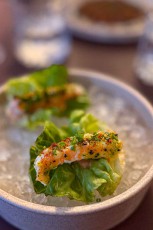
King Prawn Cocktail at Fugazzi Adelaide – reinterpreted. The king prawn rests on crisp butter lettuce, crowned with sauce rose marie and kaffir lime zest.
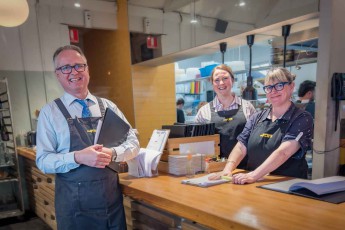
The Salopian Inn, McLaren Vale; from left to right: Oliver Budack, sommelier and front-of-house manager, and restaurant managers Sarah and Bec.
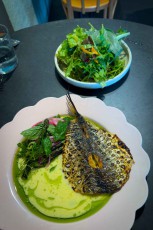
Salopian Inn: grilled Coorong wild mullet, herb-green beurre blanc, caper oil.
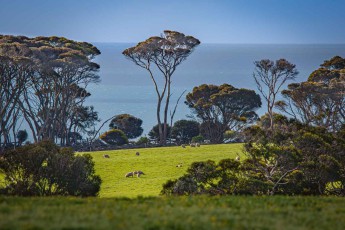
Kangaroo Island: sheep grazing on lush green pastures, wind-sculpted eucalyptus trees, and the shimmering sea beyond – a silence you can almost hear.
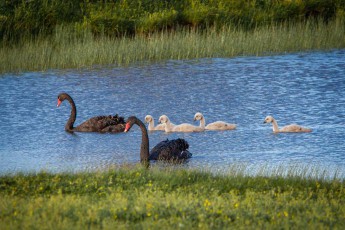
Two black swans escort five silver-grey cygnets through the reeds.
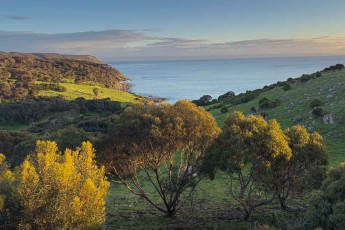
Kangaroo Island, Sea Dragon: The evening sun bathes the acacia trees in golden light – behind them, coastal hills and a calm sea.
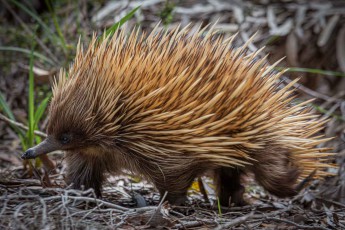
Kangaroo Island: A short-beaked echidna – golden-brown spines, tiny button eye, stoic expression. One of Earth's last egg-laying mammals.
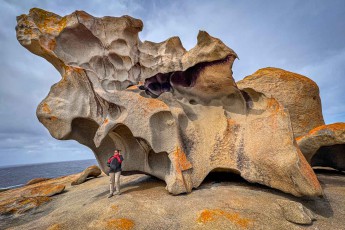
Kangaroo Island: The Remarkable Rocks – sculpted into bizarre shapes by wind and salt water over 500 million years. Annette, standing below, gives a sense of scale.
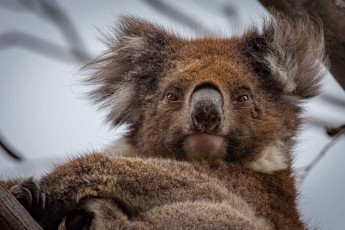
Tousled fur, piercing gaze – this koala sleeps for up to 22 hours a day to digest the low-nutrient eucalyptus leaves.
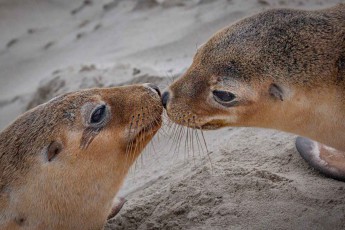
Two young Australian sea lions (Neophoca cinerea) are are sniffing each other curiously.
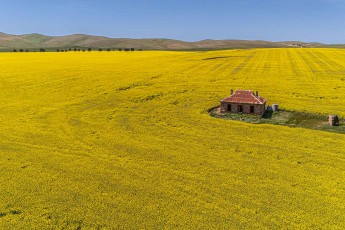
A weathered farmhouse is the last remaining reminder of a time when people still lived here. The cover of Midnight Oil’s album *Diesel and Dust* made this desolation world-famous.
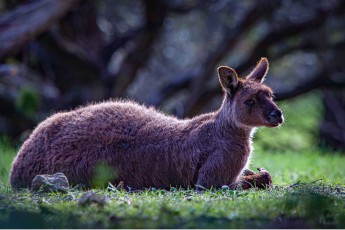
A young Kangoroo Island kangoroo rests in the morning light on sun-warmed grass.
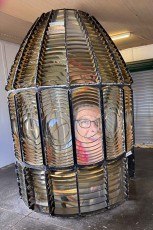
Annette is crouched inside the Fresnel lens of Cape Willoughby Lighthouse, her figure refracted countless times by hundreds of prismatic lenses, designed to cast light over twenty-five nautical miles out into the Southern Ocean.
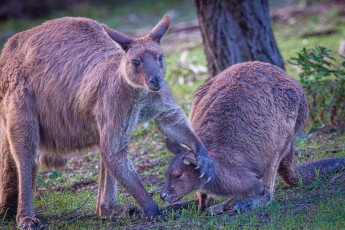
Two Western Grey Kangaroos – likely a female with adolescent offspring – in afternoon light near the Sea Dragon Lodge enclosures. Kangaroos on Kangaroo Island show little wariness; distance is only a few meters.
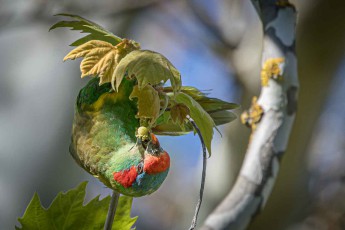
Presumably a musk lorikeet (Trichoglossus concinnus) drinks nectar from a flowering abutilon – in the garden of the Jesuit settlement of Sevenhill, Clare Valley, South Australia.
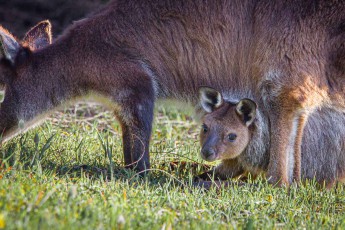
A baby kangaroo pokes its head and front paws out of its mother’s pouch; its exploration of the world begins.
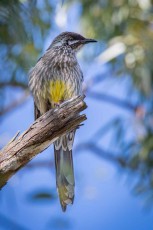
A red-cheeked honeyeater (Anthochaera carunculata) perches on a rotten eucalyptus branch in the Jesuit settlement of Seven Hills.
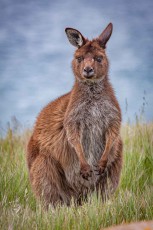
A kangaroo in the windswept coastal heathland near Cape Willoughby, Kangaroo Island. The island serves as a refuge for species that have long since been displaced on the mainland.
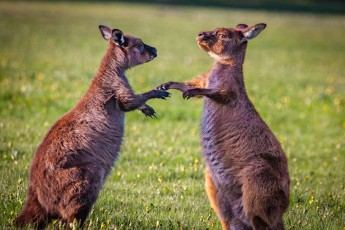
Two kangaroos in a ritualized combat - a contest of strength that can appear both playful and serious.
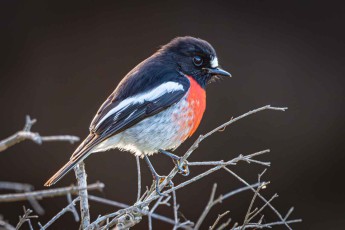
An Australian Scarlet Robin (Petroica boodang) spreads its crimson breast feathers in the morning light. Australia’s smallest flycatcher waits motionless for prey.
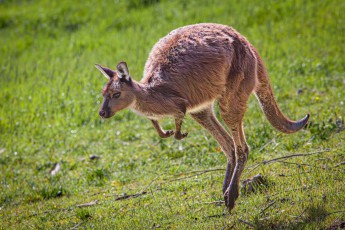
All four limbs hover above the grassland – an Kangaroo Island kangaroo explodes from its crouch, catapults its massive tail backward and slices through the humid morning air.
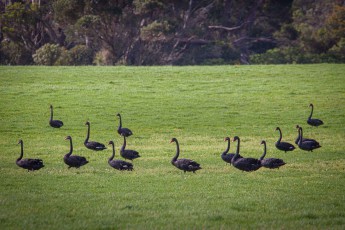
Black Swans graze on emerald pasture as if the meadow were a silent lake.
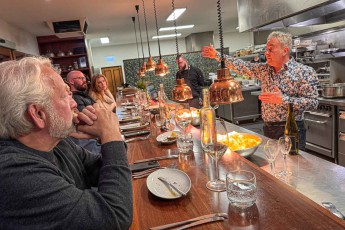
At the Penobscot Restaurant, the drama of the kitchen unfolds behind copper pots and flames. Head chef Warrick Duthy guides his guests through a 10-course menu.
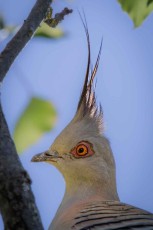
A Crested pigeon perched in the branches near the Jesuit settlement of Sevenhill. Its distinctive feature is its upright crest.
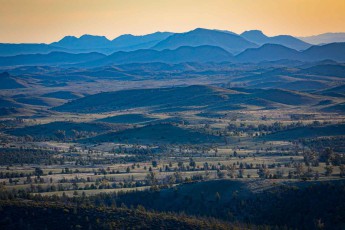
A layered cake of sandstone and time – the sun bathes the Flinders Ranges in ochre-yellow and sienna-brown stripes, speckled with dark dots of scattered eucalyptus trees.
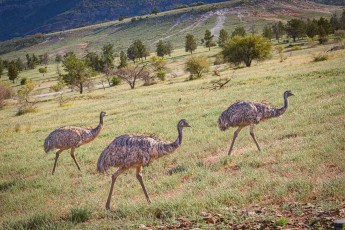
The emu (Dromaius novaehollandiae) is Australia’s largest bird and, after the African ostrich, the second-largest living bird in the world. These three are roaming the fields in search of food.
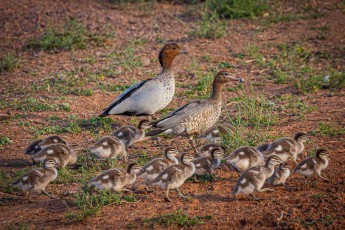
Australian Pratincoles guide their eighteen chicks through ochre grassland of the Flinders Ranges.
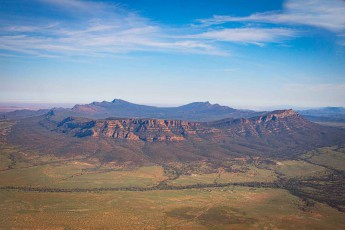
Sediment layers from the Ediacaran stack in ochre, rust-brown, and violet bands to form an amphitheater-like crater - a stone basin in the parched Outback.
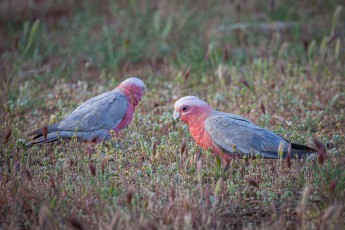
Two Galahs peck for seeds among withered grass tufts, their rose-colored crests glowing in the pale light of the Flinders Range.
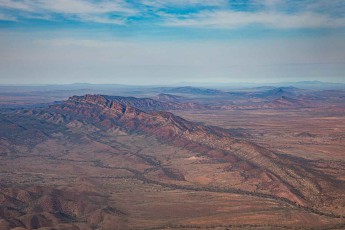
Rust-red mountain ridges fold from the parched plain, wind and time have carved ribs into the rock.
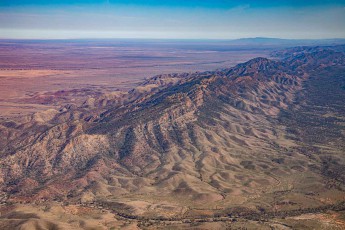
Over millions of years, wind and water have carved ridges into the rock of the Flinders Ranges, which now stretch towards the horizon like petrified waves.
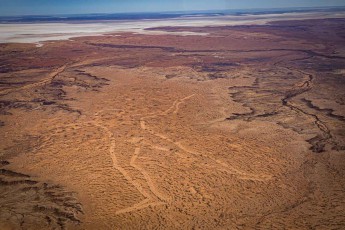
A gigantic human figure, the Marree Man – the largest ground drawing in the Southern Hemisphere – has been a mystery ever since its mysterious appearance in 1998: its creator is unknown and its purpose remains unclear.
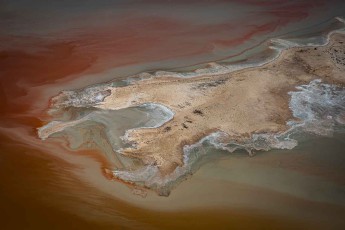
Crimson water glows in Lake Eyre, where salt crystals and sediments form organic patterns. Sand islands drift like weathered bones in the liquid desert. Minerals stain the shores in rust-red and ash-blue.
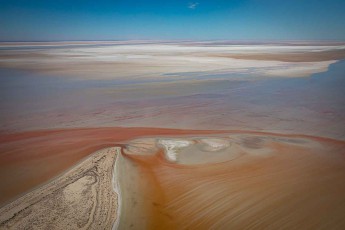
Salt crusts trace spirals across the almost dried-up lake bed. Wind currents have compacted the sediments into geometric patterns. The horizon merges with the sky into a single line that blurs all sense of direction.
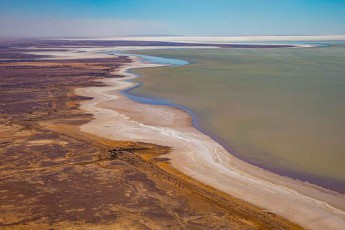
The salt-encrusted shoreline cuts between ochre mainland and milky turquoise. Minerals tint the shallow water in gradients from mud to aquamarine.
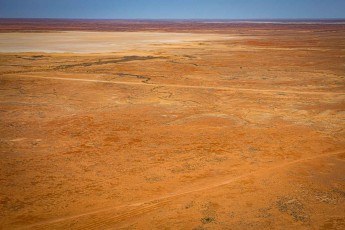
Ochre-coloured salt flats, patterned like cracked skin, stretch as far as the eye can see. The thin, light line in the foreground is an off-road track.
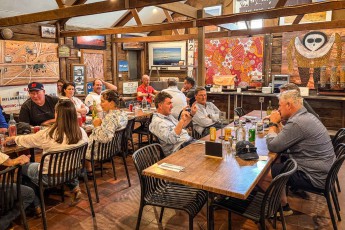
Tables made from recycled railway timber separate cattle farmers, motorcyclists, miners, aircraft mechanics and passengers like us. Anyone sitting in William Creek’s only pub has often travelled two hundred kilometres along a gravel track to get there.
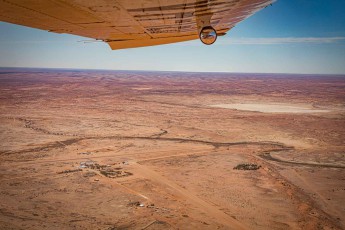
Beneath the Cessna’s wing, the outback stretches out in shades of ochre and dust all the way to the violet horizon. In the foreground lies William Creek, consisting of little more than a handful of buildings – and, with a population of just around 10, probably the smallest town in South Australia.
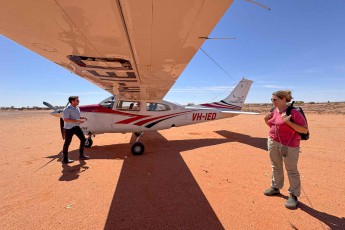
The midday heat shimmers over the reddish-brown runway at William Creek, where air taxis are the only link to civilisation.