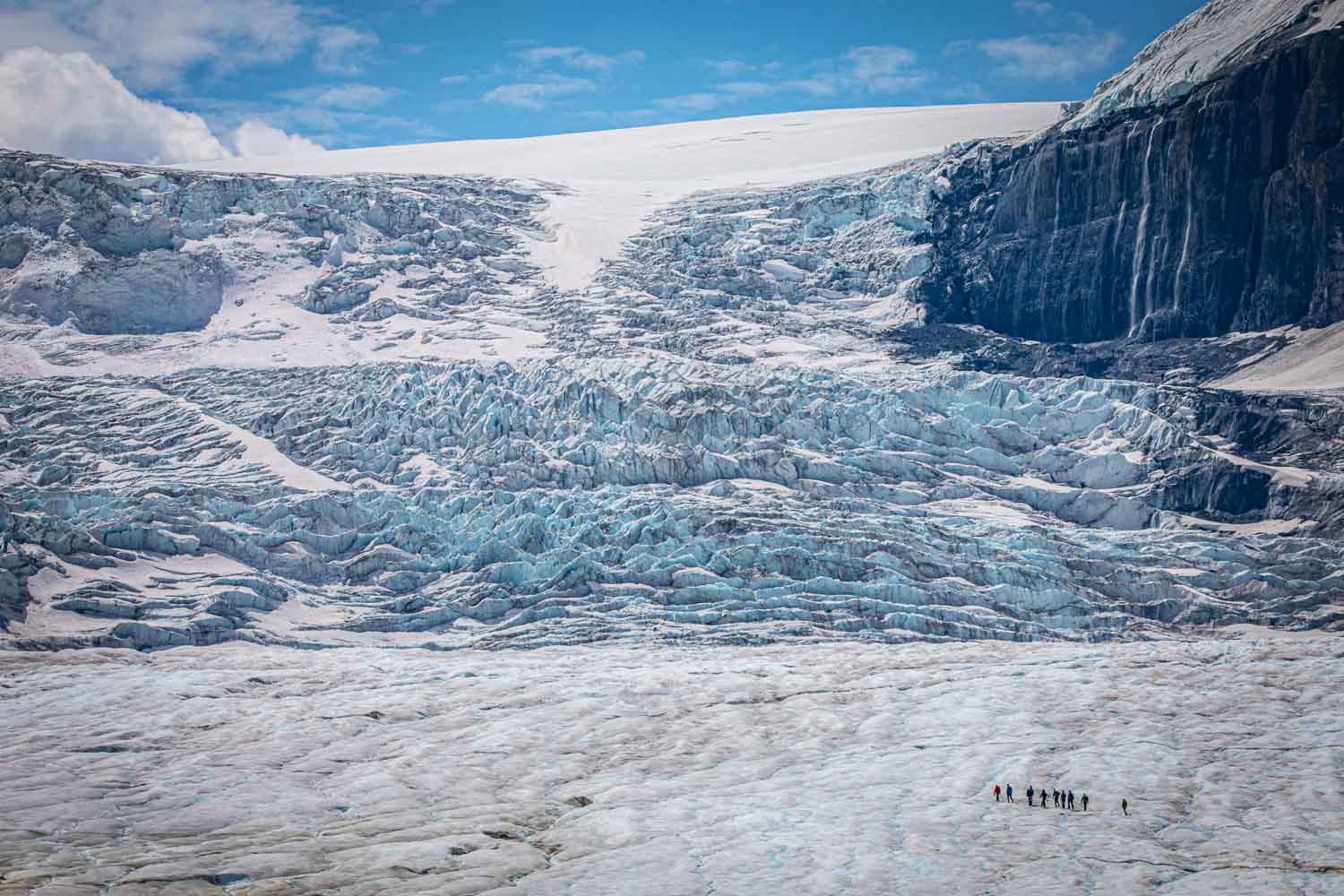
The grandeur and majesty of nature: a group of hikers, looking like ants, carefully make their way across the rugged, turquoise-blue Athabasca Glacier in Alberta, Canada.
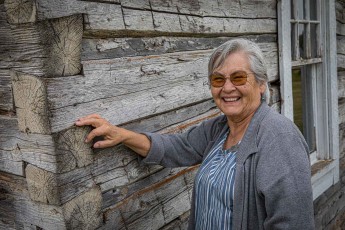
Lilyrose Meyers, a respected knowledge holder, next to a rustic log cabin belonging to her ancestors in Metis Crossing, Alberta.
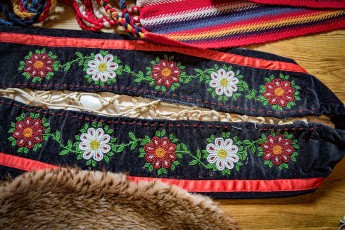
Artfully embroidered garments featuring traditional floral motifs in a historic cabin in Metis Crossing, Alberta.
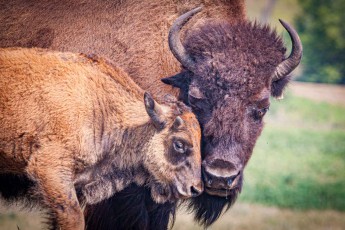
A bison mother and calf stand close together in Metis Crossing, Alberta – their massive, thick-coated bodies and imposing horns testify to the strength and resilience of these iconic animals, which were once central to the life and culture of the Métis people.
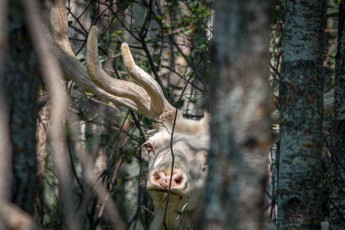
A white male moose. These gentle giants can reach up to 2 metres at the shoulder and weigh 600 kilos. According to my guide Lilyrose, he is the largest of a total of 24 white moose that have found a refuge at Métis Crossing.
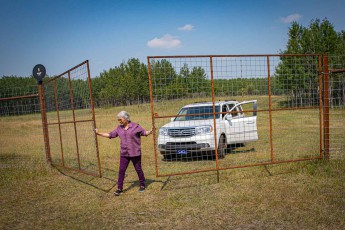
Lilyrose opens the gate to a spacious enclosure so that we can experience the very rare white bison (Bison leucistic) up close.
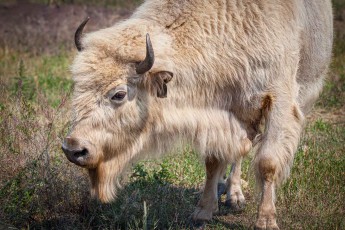
A majestic white buffalo (Bison leucistic) in the vast meadows of Metis Crossing, Alberta. As a rare genetic variant of the American bison, the white buffalo is also considered a symbol of hope, renewal and spirituality by the Metis people.
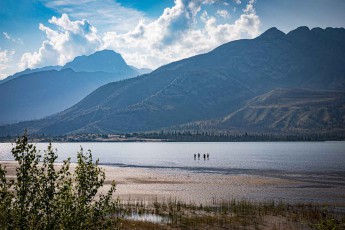
A moment of silence and contemplation amid the sublime nature of the Canadian Rockies: four visitors wade through the mirror-like waters of Lake Jasper.
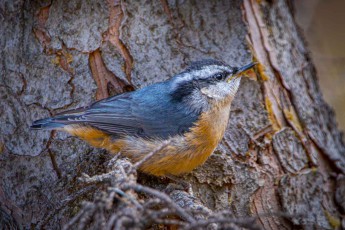
A Red-breasted Nuthatch (Sitta canadensis) perches on a gnarled branch in Jasper, Alberta.
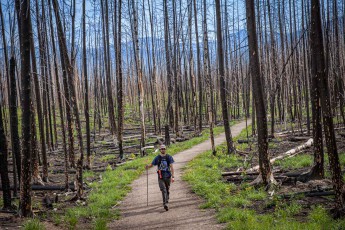
Nic Gosselin, my knowledgeable guide, hikes through the expansive landscape of the burnt forest near Jasper, Alberta - fresh greenery on the ground symbolizes hope for new life and the resilience of nature amidst the destruction.
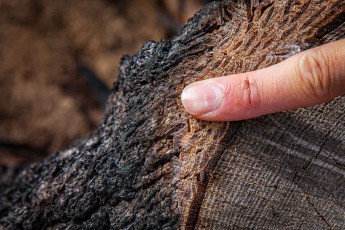
The charred cross-section of a Douglas fir trunk reveals the traces of the devastating 2024 wildfire - although the outer bark is burnt away, the sturdy heartwood has endured.
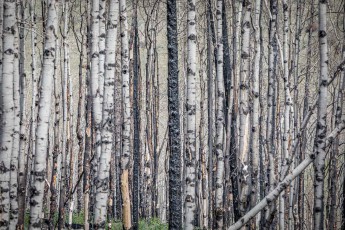
Only a few white-grey aspens were spared by the last major fire near Jasper in 2024.
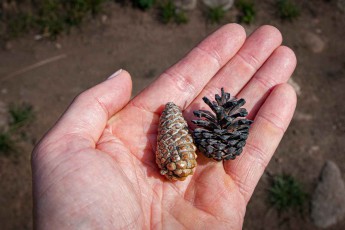
An intact and a burst pine cone. Only in the extreme heat of a fire do the cone scales open and scatter the seeds, quickly sowing new trees after devastating fires.
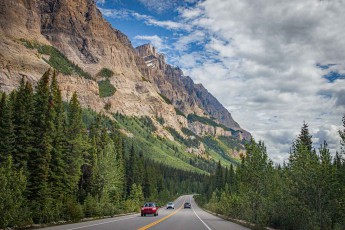
The picturesque road to Canmore offers magnificent views of rocky landscapes and natural panoramas.
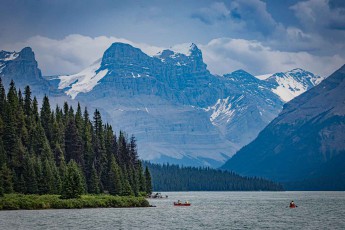
Sublime grandeur and beauty of untouched wilderness: the majestic peaks of the Canadian Rockies rise up on the horizon of Lake Maligne.
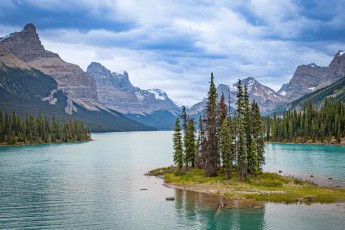
The essence of untouched wilderness: the picturesque Spirit Island rises from the turquoise waters of Lake Maligne in Jasper, Alberta, framed by the majestic peaks of the Canadian Rockies.
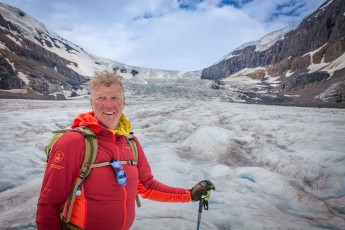
Wayne Sobool, an experienced glacier guide, stands amid the breathtaking ice landscape of the Athabasca Glacier in Alberta, Canada. He gives us a deeper understanding of the beauty, fragility and significance of this ice giant.
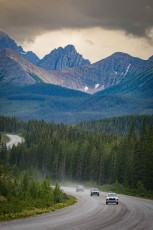
It could almost be an advert for a car: a winding road snakes through the picturesque valley towards Kananaskis, Alberta.
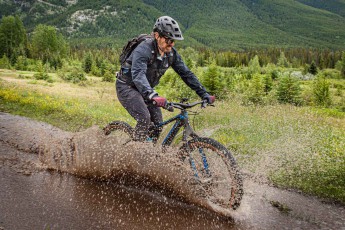
Mountain bike guide Paul Flavell is completely in his element: surrounded by the breathtaking scenery of the Rocky Mountains near Canmore, he skilfully races through a huge puddle.
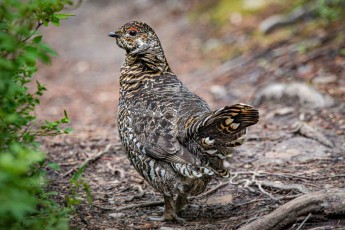
A Douglas fir grouse strides unconcernedly across the hiking trail near Kananaskis, Alberta, Canada – its iridescent plumage providing perfect camouflage in the shady undergrowth.
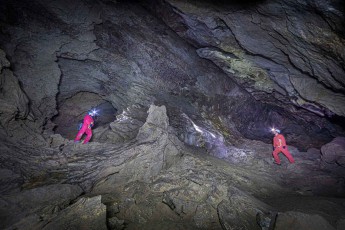
Rat's Nest Cave near Canmore is one of the longest caves in Canada, with an explored passage length of over 4 km. The main chamber is approximately 60 m long, 15 m wide and 15 m high.
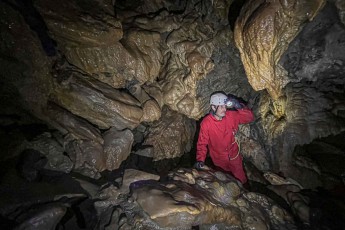
My cave buddy Bruce Marpole marvels at impressive rock formations in Rat's Nest Cave near Canmore – the bizarre structures, shaped by water, rise up like petrified waves in the darkness.
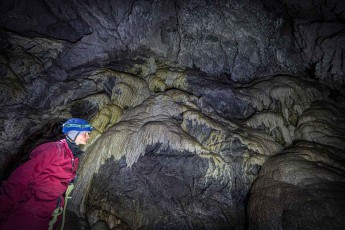
Annie Hewitt examines calcite formations in Rat's Nest Cave near Canmore. The metre-high sinter formations and flowstones were created an unimaginably long time ago, as calcite only grows about 2.5 cm per millennium.